
World
LSU Faces Financial Turmoil Following Coach Dismissal


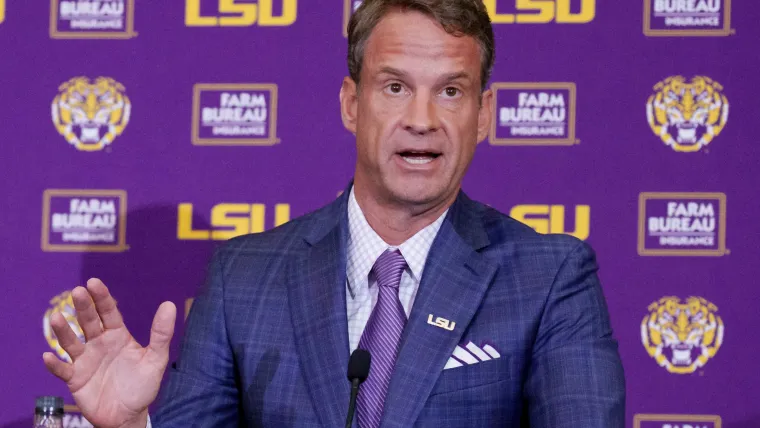
The recent dismissal of head coach Brian Kelly has thrust Louisiana State University (LSU) into a financial and administrative crisis, with the university now facing a staggering $53 million buyout bill. During a press conference, Louisiana Governor Jeff Landry criticized the management of LSU athletics, particularly targeting athletic director Scott Woodward for the lack of success under Kelly’s leadership. The governor’s remarks come at a time when the state is grappling with economic challenges, including a looming food stamp crisis.
Landry expressed his concerns about the financial implications of firing Kelly, stating, “My role is about the fiscal effect of firing a coach under a terrible contract. I care about what the taxpayers are on the hook for.” He further indicated plans to have the state’s attorney general review the contract of Kelly’s successor to clarify the state’s potential liabilities moving forward.
The governor’s public critique resonates beyond Louisiana, reflecting broader discontent in college athletics regarding escalating coaching contracts and buyouts. In the past month alone, ten Football Bowl Subdivision (FBS) schools have fired their head coaches, collectively incurring a debt of $169 million. This trend highlights the unsustainable financial model that many college athletic programs are currently navigating.
Escalating Costs in College Athletics
The financial landscape of college athletics is shifting dramatically. A recent settlement approved by U.S. District Judge Claudia Wilken mandates that colleges share a portion of their revenue with athletes, amounting to a projected $20.5 million this year, with increases expected annually. This added financial burden is occurring simultaneously with exorbitant coaching buyouts, raising serious questions about the long-term viability of such contracts.
Historical precedents suggest a complicated relationship between college sports, money, and politics. Governor Landry’s remarks echo sentiments expressed nearly a century ago by former Louisiana Governor Huey Long, who famously intertwined his political ambitions with LSU football. This connection raises eyebrows among those concerned about fiscal responsibility in an environment where spending far exceeds revenue growth.
As institutions like LSU and Penn State grapple with hefty buyouts—$49 million owed to head coach James Franklin at Penn State and the aforementioned $53 million to Kelly—the financial realities are stark. Between 2013 and 2023, Penn State’s football spending increased by 113%, while its total departmental revenues grew by only 83%. LSU experienced a similar trend, with a 44% increase in football spending compared to a 40% rise in revenues.
The Future of College Football Contracts
The implications of these financial strains extend beyond head coaches to their entire staff. For instance, LSU’s offensive coordinator, Joe Sloan, is entitled to $530,000 following his dismissal. At Penn State, defensive coordinator Jim Knowles is reportedly in the first year of a three-year contract valued at $3.1 million annually. The next head coach at LSU will likely face decisions about retaining current staff, all while navigating a significant financial burden.
Despite the challenges, the competition for top talent continues unabated. Universities are still willing to invest heavily, with some schools, including Virginia Tech, announcing plans to invest $229 million in their athletic programs over the next four years. This investment includes a reliance on deep-pocketed donors to offset costs associated with coaching salaries and facility improvements, particularly in light of the revenue-sharing requirements set forth by recent legal rulings.
As the landscape of college football continues to evolve, the pressing question remains: where will the funding come from? The reality is that many institutions may soon find themselves struggling to balance their budgets against the backdrop of escalating costs and diminishing returns.
In a world where athletic directors are negotiating contracts worth millions while simultaneously overseeing significant financial liabilities, the future of college athletics appears uncertain. As LSU embarks on the search for Kelly’s successor, it faces not only the challenge of finding a capable leader but also the daunting task of navigating an increasingly complex financial environment.






Catherine Gillach, the Associate Superintendent of Grand Forks Public Schools, has decided to withdraw from her acceptance of the superintendent position at Hawley Public Schools. Gillach announced her decision on December 17, 2023, citing personal reasons for her choice.
In a statement, Gillach described her decision as “really difficult,” emphasizing that it was made with her family’s best interests in mind. This withdrawal comes after she had previously accepted the role in Hawley, following multiple rounds of interviews that culminated in a unanimous vote from the Hawley School Board in her favor.
Gillach has been a part of the Grand Forks district since 2012, serving initially as the principal of Schroeder Middle School before stepping into her current role as associate superintendent in 2018. She clarified that she never officially resigned from her position with Grand Forks, although she did not confirm her plans for the next school year.
Reaction from School Officials
Melissa Bakke, Communications and Marketing Manager for Grand Forks Public Schools, expressed support for Gillach’s decision in an email. “Catherine’s decision to withdraw from the Hawley position reflects her careful consideration of what’s best for her and her professional path,” Bakke stated. “We respect her choice and are glad she’ll continue contributing her leadership within Grand Forks Public Schools.”
The Hawley School Board is now seeking a new candidate for the superintendent position, as current superintendent Phil Jensen confirmed that Gillach had not yet signed an official contract before her withdrawal. Negotiations were ongoing at the time she informed the board of her decision.
The Hawley district has reposted the open superintendent position and is accepting applications until January 12, 2024. The search for a suitable candidate continues as the board aims to fill the vacancy promptly.
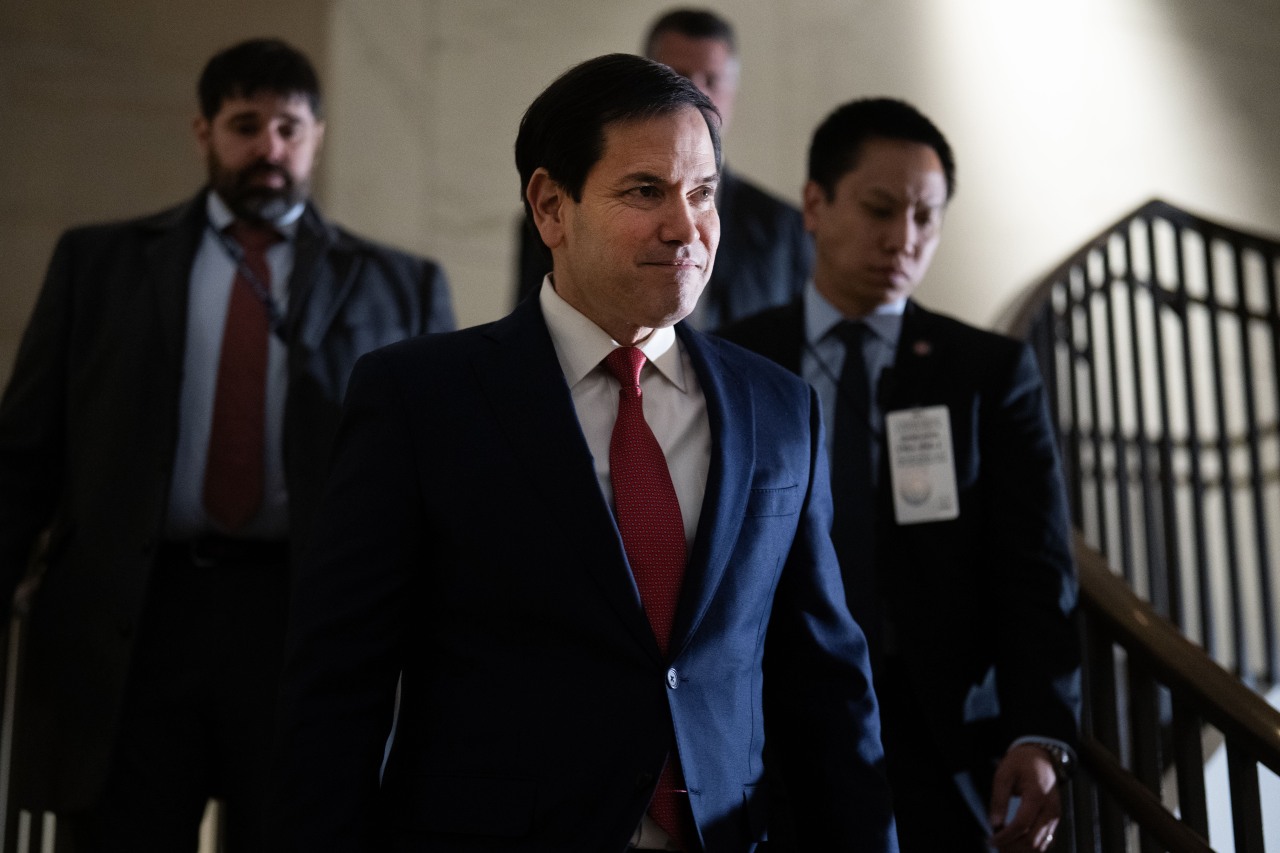
Marco Rubio, once a vocal critic of Donald Trump, has significantly shifted his political stance, emerging as one of the president’s closest advisers. This transformation reflects a broader trend within the Republican Party as it increasingly embraces the policies and rhetoric associated with Trump’s “Make America Great Again” (MAGA) movement.
Initially, Rubio, who represents Florida in the U.S. Senate, was a prominent figure during the 2016 Presidential Election, where he openly criticized Trump’s approach to governance and foreign policy. However, as Trump solidified his grip on the party, Rubio began to align himself more closely with the administration’s objectives, particularly concerning Latin America.
Shift in Political Alliances
Rubio’s shift is emblematic of a larger realignment within the Republican Party, which has increasingly adopted Trump’s nationalist and populist themes. By embracing this direction, Rubio has positioned himself as a key player in shaping U.S. foreign policy, particularly in relation to the Americas. His focus has been on addressing issues such as immigration and economic development in Latin America, areas he believes are critical to U.S. interests.
In a recent statement, Rubio emphasized the importance of a stable and prosperous Latin America, stating, “We cannot allow these countries to fall into chaos. A strong Latin America means a stronger United States.” This statement underscores his commitment to fostering relationships with leaders in the region while promoting policies that align with MAGA principles.
Rubio’s new role as Secretary of State has also elevated his influence in international affairs. His previous experience as the chair of the Senate Foreign Relations Committee has equipped him with the necessary knowledge and connections to navigate complex geopolitical landscapes. His appointment signals a strategic move for the Trump administration to leverage Rubio’s expertise in enhancing U.S. interests in Latin America.
Challenges Ahead
Despite his alignment with Trump, Rubio faces challenges ahead. The political landscape has transformed significantly since his initial critiques of Trump, and he must navigate the expectations of both traditional Republicans and the more hardline factions of the party. Additionally, as he focuses on Latin American policy, he must contend with the ongoing issues of immigration, trade, and diplomatic relations that have historically posed challenges for U.S. involvement in the region.
Rubio’s evolving political identity raises questions about the future trajectory of his career. His shift from critic to adviser illustrates a willingness to adapt to changing political climates, but it also risks alienating some of his original supporters. As he works to implement policies that reflect both his vision and that of the Trump administration, the implications for U.S.-Latin American relations remain to be seen.
In conclusion, the journey of Marco Rubio from a sharp critic of Donald Trump to a pivotal advisor within the administration is indicative of a broader shift in the Republican Party. As he embraces MAGA principles, his role in shaping U.S. foreign policy towards Latin America will be closely monitored, both for its potential impact on regional stability and its effect on his political future.

Alaska Airlines has officially unveiled its first Boeing 787-9 Dreamliner, designated as N784HA, showcasing the airline’s new Aurora livery. The aircraft was photographed leaving the paint shop at Fort Worth Meacham International Airport on January 6, 2025, and subsequently arrived in Seattle within four hours. This significant milestone marks a step forward in Alaska’s expansion of its long-haul operations.
Originally ordered by Hawaiian Airlines, the aircraft was intended to be the carrier’s fifth Boeing 787. However, following Alaska Airlines’ acquisition of Hawaiian in 2025, Alaska has assumed control of Hawaiian’s 787 orders. The airline plans to relocate the existing Hawaiian 787s to Seattle-Tacoma International Airport, while Hawaiian will streamline its long-haul services to exclusively utilize the Airbus A330-200.
Details of the New Aircraft
The newly painted Boeing 787-9 features two General Electric GEnx engines and is configured with a total of 300 seats. It is noteworthy that the aircraft was ferried to Boeing Field instead of directly to Seattle-Tacoma, likely for a press event scheduled for the morning of January 7, 2025. The debut flight is set to commence on January 8, with the inaugural route from Seattle to Tokyo-Narita.
Alaska Airlines aims to enhance its long-haul network with the introduction of these Boeing 787s, which will maintain a similar onboard experience to that of Hawaiian’s current 787 fleet. The interior configuration consists of 34 business class suites and 266 economy seats, mirroring the existing offerings on Hawaiian’s Boeing 787s.
Future Plans and Market Strategy
Alaska Airlines is strategically positioning itself to compete more effectively against Delta Air Lines, particularly at its Seattle hub. By incorporating 21 Boeing 787s into its fleet, Alaska plans to strengthen its long-haul capabilities. Alongside the 12 new-build 787-9s, Alaska will also integrate four 787-9s currently in operation by Hawaiian Airlines and five Boeing 787-10s, making it the second U.S. airline to place such an order.
Tickets for routes from Seattle to Tokyo-Narita and Seoul are already available for purchase, with plans to expand to London-Heathrow and Rome in the future. To support the increasing operations, Alaska Airlines will establish a Boeing 787 pilot base in the spring, indicating a significant ramp-up in long-haul flights.
The introduction of the Boeing 787-9 fleet will not only enhance Alaska’s long-haul offerings but also align with the airline’s commitment to modernizing its fleet. Although the new aircraft will initially lack Wi-Fi connectivity, Alaska has plans to retrofit its entire fleet with Starlink internet service by late 2026, starting with its regional jets.
As Alaska Airlines embarks on this new chapter with the Boeing 787-9, the airline is poised to redefine its long-haul strategy, providing travelers with an elevated experience while competing more robustly in the international market.
NRx Pharmaceuticals Inc. and neurocare Group AG have formed a strategic alliance to establish a nationwide network of clinics focused on integrated neuroplastic care for mental health conditions, including depression and post-traumatic stress disorder (PTSD). This partnership aims to address the fragmented and often ineffective landscape of mental health treatment in the United States.
The collaboration combines neurocare’s advanced neuromodulation technology with NRx’s innovative drug development through its brand, HOPE Therapeutics. Central to their plan is the immediate access to over 400 Apollo transcranial magnetic stimulation (TMS) machines already operational across the United States. This infrastructure allows the partners to scale their services rapidly without the need for extensive new construction.
Pilot programs have shown promising results, particularly one involving a state first-responder agency. By integrating TMS with ketamine and other neuroplastic medications, alongside hyperbaric oxygen therapy and structured psychotherapy, the initiative reported significant outcomes. The combination led to high remission rates among first responders experiencing PTSD and depression, groups that traditionally resist conventional treatments. According to recent peer-reviewed studies, response rates reached as high as 87 percent, with remission rates at 72 percent in patients with treatment-resistant depression when TMS was combined with neuroplastic drug therapy.
While the companies stress that these findings are preliminary and require further validation, they believe the data supports a broader clinical rollout and increased regulatory engagement.
In addition to depression and PTSD, NRx and neurocare are exploring clinical trials and regulatory pathways for conditions such as bipolar depression, autism spectrum disorder, and traumatic brain injury. These studies may involve NRx’s investigational drug, NRX-101. The partnership aims to create a standardized model for mental health care, similar to established practices in other medical specialties.
neurocare, founded by former executives of Fresenius Medical Care, has spent over a decade developing a platform that integrates neuromodulation technologies, clinician training, and proprietary software. This system is designed to standardize patient intake, treatment selection, and monitoring.
Meanwhile, NRx brings expertise in neuroplastic drug development and clinic-based care, with existing contracts with government programs, including the VA Community Care Network and the Department of Defense’s TRICARE system. Both organizations emphasize the necessity of accountable, integrated care models to engage payers in a market where standalone clinics often provide isolated therapies.
Initially, the alliance will leverage the existing neurocare and HOPE Therapeutics clinics, which currently number approximately 20 in the United States, while also inviting participation from independent providers using Apollo TMS systems. The goal is to make integrated neuroplastic treatment accessible within a short drive for most U.S. households by the end of 2026.
Executives view this initiative as a pivotal moment for both clinical care and business strategy. Serious central nervous system disorders currently affect more than 50 million people in the United States and around 500 million worldwide, highlighting a significant unmet need in healthcare.
By providing a unified approach to care, NRx and neurocare aim to mitigate treatment fragmentation while establishing a scalable business model in a sector increasingly scrutinized for its outcomes and cost-effectiveness. Leaders from both organizations plan to unveil their strategy at the upcoming JP Morgan Healthcare Conference in San Francisco, indicating their ambition to create a national platform rather than a limited clinical partnership.

Kate Cassidy Stuns Fans in Figure-Hugging Red Latex Dress

Ted Sarandos Embraces Fiction to Shape Leadership Style

Remembering Dan Ericson: A Life of Love, Laughter, and Legacy

Exercise Proves Nearly as Effective as Therapy for Depression

Kingston Trio Announces One-Night-Only Concert in Kingman!

Piper Rockelle Shatters Record with $2.3M First Day on OnlyFans

Meta’s 2026 AI Policy Sparks Outrage Over Privacy Concerns

Urgent Update: Denver Fire Forces Mass Evacuations, 100+ Firefighters Battling Blaze

OnlyFans Creator Lily Phillips Reconnects with Faith in Rebaptism

Oregon Pilot and Three Niece Die in Arizona Helicopter Crash
-
Top Stories6 days ago
Piper Rockelle Shatters Record with $2.3M First Day on OnlyFans
-
 Top Stories2 days ago
Meta’s 2026 AI Policy Sparks Outrage Over Privacy Concerns
-
Top Stories5 days ago
Urgent Update: Denver Fire Forces Mass Evacuations, 100+ Firefighters Battling Blaze
-
Top Stories6 days ago
OnlyFans Creator Lily Phillips Reconnects with Faith in Rebaptism
-
Top Stories3 days ago
Oregon Pilot and Three Niece Die in Arizona Helicopter Crash
-

 Entertainment2 days ago
Tom Brady Signals Disinterest in Alix Earle Over Privacy Concerns
-
 World6 days ago
Tragedy in Crans-Montana: Fire Claims Lives of Holiday Revelers
-

 Sports2 days ago
Leon Goretzka Considers Barcelona Move as Transfer Window Approaches
-
 World7 days ago
Fire Claims Lives at New Year’s Party in Swiss Ski Resort
-
 Entertainment7 days ago
Ice-T and Coco Celebrate 25 Years Together in Love and Laughter
-
 Technology7 days ago
Major Space Missions Set to Transform Exploration in 2026
-

 Top Stories2 days ago
Warnock Joins Buddhist Monks on Urgent 2,300-Mile Peace Walk