

User Switches from NotebookLM to Recall for Enhanced Workflow

Individuals seeking effective tools for productivity often find themselves inundated with options, particularly in the realm of artificial intelligence. One user recently transitioned from using NotebookLM to Recall, citing a specific limitation of NotebookLM that ultimately influenced their decision.
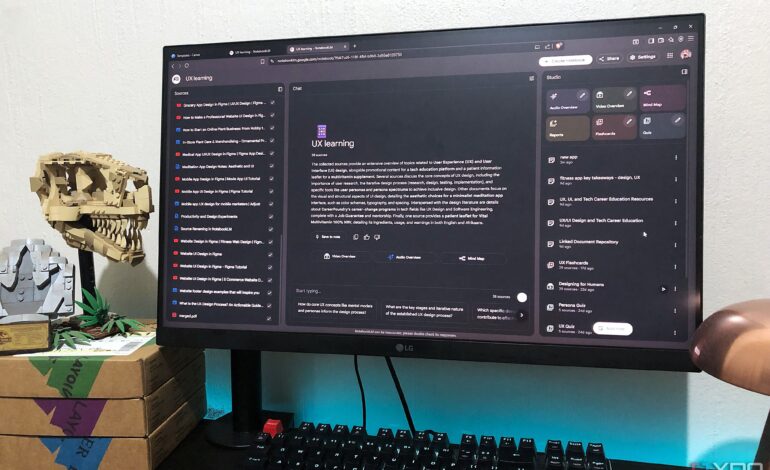
The main appeal of NotebookLM lies in its function as a retrieval-augmented generation (RAG) tool. This means it operates exclusively with the sources users upload, ensuring that the information it provides is grounded in reality rather than generated data. This characteristic has made NotebookLM a reliable choice for users wanting to avoid the inaccuracies that can occur with other AI systems.
Despite its strengths, NotebookLM has a significant drawback: it compartmentalizes information into isolated notebooks. For a user focused on studying, this means creating separate notebooks for each course and individual topics. While this allows for precise querying within a single subject, it complicates the process of connecting ideas across different notebooks. The inability to seamlessly transition between notebooks forces users to manually consolidate information, which can be tedious.
In contrast, Recall presents a solution that addresses the limitations of NotebookLM. Described as an AI-powered knowledge management tool, Recall integrates features from popular applications like Obsidian, Anki, and NotebookLM. This combination allows users to manage their knowledge more efficiently and effectively.
Recall operates with a browser extension available for both Chrome and Firefox. This tool enables users to clip content they encounter online directly into Recall. For example, if a user comes across a YouTube video, they can quickly save it to Recall, which will automatically generate a summary of the video’s key points. This summary is grounded in the content itself, ensuring accuracy and relevance.
As users continue to add content to their Recall database, the platform organizes this information into categories and subcategories. This automated organization builds a structured knowledge graph, enabling users to easily resurface ideas and connect concepts from varied sources. Categories such as Entertainment, Productivity, and Technology help streamline the process of information retrieval.
Recall also includes a feature similar to Obsidian’s Graph view, allowing users to visualize relationships between different pieces of content. Unlike Obsidian, where connections must be created manually, Recall automatically identifies keywords and shared concepts across the clipped content. Users can view these connections before adding new information, providing a clearer understanding of how new content fits into their existing knowledge framework.
Another significant advantage of Recall is its capability to engage users with the clipped material, allowing for interactive learning. Users can generate flashcards from their saved content and utilize Recall’s Review session feature to practice active recall, enhancing information retention.
This user’s shift from NotebookLM to Recall underscores the evolving landscape of productivity tools and the need for systems that adapt to user workflows. As AI continues to integrate into daily tasks, tools like Recall may provide the comprehensive solutions users seek to enhance their productivity and knowledge management.