Log2Motion AI Reveals Hidden Muscle Strain in Smartphone Use
New AI model converts touch data into full-body motion simulations, exposing the physical effort behind everyday smartphone interactions and helping designers create more comfortable interfaces.
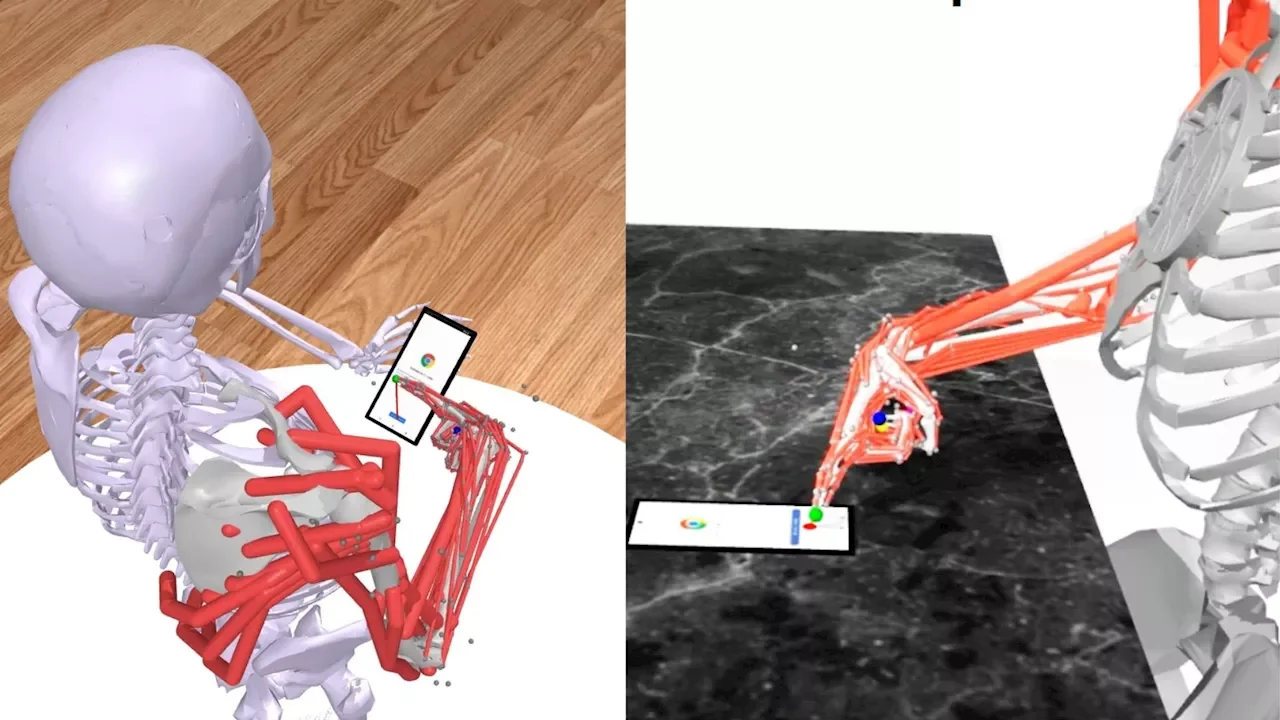
A groundbreaking artificial intelligence model developed by researchers from Aalto University and Leipzig University is transforming how we understand the physical demands of smartphone use. The system, called Log2Motion, converts simple touch data into comprehensive full-body motion simulations, revealing the actual muscle activity, movement accuracy, and energy expenditure involved in everyday smartphone interactions.
Smartphone users engage in thousands of swipes and taps daily, yet researchers have historically struggled to measure the physical toll these actions take on the human body. Traditional smartphone analytics provide insight into where users tap or swipe on the screen, but they offer no information about how physically demanding these gestures actually are. This gap has limited designers' ability to evaluate comfort and usability from a biomechanical perspective.
"It's the first time anyone has developed a tool that can help designers and developers quickly assess how physically tiring a real mobile user interface could be," explains Antti Oulasvirta, Professor at Aalto University and ELLIS Institute Finland. "So far, smartphone logs have only told us where a finger has touched the screen – not whether or not it's felt comfortable."
To address this challenge, the research team built Log2Motion using an advanced musculoskeletal model that recreates human anatomy with digital bones and muscles. The system then simulates how a finger moves across a smartphone screen while performing various interactions. By integrating reinforcement learning with a physics engine and software emulator, Log2Motion generates realistic motion sequences that translate raw touch data into detailed estimates of speed, precision, and physical effort.
The researchers validated their model using motion capture data collected from human participants, and the findings revealed surprising insights about smartphone interaction. Not all gestures demand equal physical effort. According to Oulasvirta, "We found that some gestures are harder to perform – in this case, up-down and down-up swipes. Small icons and locations toward the corners of the display also require additional effort."
These discoveries have significant implications for mobile interface design. While designers traditionally optimize for speed and aesthetic appeal, Log2Motion enables them to also consider physical strain and ergonomic comfort. Beyond general user experience improvements, the model supports accessibility enhancements for users with tremors, reduced strength, or prosthetics, allowing developers to test how different populations experience the same interface.
The system's versatility extends to simulating various usage scenarios, such as scrolling with one hand while lying down or holding a phone in different positions. This adaptability means designers can evaluate interfaces across multiple real-world contexts, not just laboratory conditions. The research team believes this computational approach, which treats motion synthesis from touch logs as a fundamental problem connecting user data with biomechanics, represents a scalable solution for the industry.
Looking forward, researchers expect broader adoption of such biomechanical simulations in mobile design. By combining Log2Motion with other AI tools, developers could eventually tailor interfaces to individual users' physical capabilities and preferences. This shift could transform smartphones from merely smart devices into truly comfortable tools, reducing subtle physical strain that accumulates over time. As mobile usage continues to increase globally, such innovations may prove essential in designing interfaces that feel as good as they look.