
Science
Missionaries Share Common Language to Navigate Homecomings

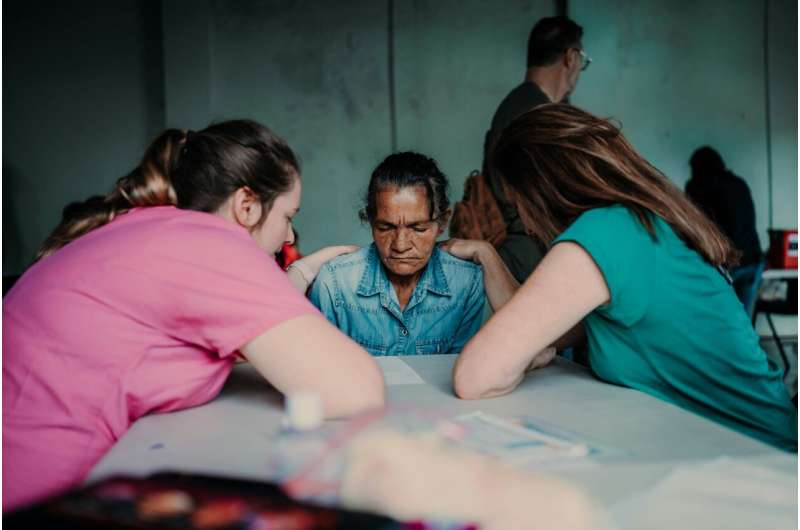
A recent study conducted by researchers from the University of Connecticut and the University of Oklahoma reveals that nearly two million Christian missionaries worldwide utilize similar communication strategies when sharing their experiences abroad and the challenges of returning home. The study highlights that missionaries frequently rely on biblical language, metaphors, and personification to articulate their feelings and adjust to life after their service.
According to R. Amanda Cooper, an assistant professor in UConn’s Department of Communication, the findings shed light on how individuals interpret and convey meaning during life transitions. “Life is full of challenging transitions, sometimes dramatic and sometimes less dramatic. Our study gives us insight into the ways people draw upon language to give meaning and make sense of something that’s challenging,” Cooper explains.
The study involved interviews with 26 missionaries who served for up to three and a half years in various locations, including Africa, the Philippines, Russia, and Brazil. Most participants were affiliated with the Church of Jesus Christ of Latter-day Saints, while others identified as nondenominational Christians or Catholics. The majority of the missionaries were single, white females in their twenties. Their research, titled “Extending communicated sense-making theorizing to social groups: missionaries’ use of metaphor, personification, and in-group vernacular,” was published in the journal Human Communication Research.
Cooper and her co-researcher, Alice Fanari, focused on how missionaries articulate their experiences upon returning home. “Often nobody tells you that going home can sometimes feel very different,” Fanari notes. Missionaries often undergo significant personal changes during their time abroad, which complicates their reintegration into their previous lives. Like military veterans or Peace Corps volunteers, they may experience challenges in adjusting back to life at home after extended periods away.
Upon returning, missionaries often grapple with a clash between their “old self” and “new self.” Cooper explains, “When they come home, they shed that identity and are supposed to integrate back into whoever they were before.” Participants described this conflict as a “wrestling match,” where they sought to reconcile the person they became during their service with their previous identity.
Interestingly, the study revealed that missionaries frequently incorporated biblical references and narratives into their descriptions of their experiences. Cooper anticipated they would create spontaneous metaphors, but the depth and richness of their biblical language were more profound than expected. For instance, one missionary compared her feelings about returning home to the “darkness” following the crucifixion of Jesus Christ, while simultaneously expressing hope for a “resurrection.”
Cooper emphasizes the importance of group vernacular in helping individuals articulate complex emotions. “What was unusual was the way the missionaries used their group vernacular to express something that was otherwise hard to put into words,” she states. Reflecting on her own missionary experience, Cooper recalls feeling apprehensive about returning home, noting, “For many years in my youth, I focused on wanting to serve as a missionary… I remember coming up to the end of my missionary service and thinking the future is black. I have nothing planned.”
Cooper also highlights the need for supportive environments when missionaries return home. “Creating a place for missionaries to share their stories would be helpful, along with warning them they may feel adrift when they return,” she suggests. Despite the transition’s challenges, Cooper encourages returnees to embrace their experiences, asserting that their time in service remains a vital part of their identity.
The research underscores how communication aids in processing complex life changes and presents valuable insights for organizations supporting missionaries. “We know that people who are returning from Christian missionary service often have uncertainties, so maybe one thing those sending organizations or the family they’re returning to can do is help them establish a plan or do some of these things to reduce their challenges upon reentry,” Cooper concludes.
This study not only enriches our understanding of the missionary experience but also provides guidance for addressing the unique challenges faced by individuals returning from various forms of service.

Anchorage School District and Educators Reach Tentative Agreement

U.S. Strike Eliminates Al-Qaeda Leader Linked to Deadly Attack

Iranian Cleric Calls for Protesters’ Executions, Threatens Trump and Netanyahu

GBI Investigates Death of Wanted Man in Tattnall County

Jayda Cheaves Claims Lil Baby and Ari Fletcher Had an Affair

Rachel Campos-Duffy Exits FOX Noticias; Andrea Linares Steps In

Piper Rockelle Shatters Record with $2.3M First Day on OnlyFans

Meta’s 2026 AI Policy Sparks Outrage Over Privacy Concerns

Leon Goretzka Considers Barcelona Move as Transfer Window Approaches
Jayda Cheaves Claims Lil Baby and Ari Fletcher Had an Affair
-
Top Stories1 month ago
Rachel Campos-Duffy Exits FOX Noticias; Andrea Linares Steps In
-
Top Stories2 weeks ago
Piper Rockelle Shatters Record with $2.3M First Day on OnlyFans
-
Top Stories2 weeks ago
Meta’s 2026 AI Policy Sparks Outrage Over Privacy Concerns
-
Sports2 weeks ago
Leon Goretzka Considers Barcelona Move as Transfer Window Approaches
-
Entertainment4 hours ago
Jayda Cheaves Claims Lil Baby and Ari Fletcher Had an Affair
-
 Top Stories2 weeks ago
Urgent Update: Denver Fire Forces Mass Evacuations, 100+ Firefighters Battling Blaze
-
 Health2 months ago
Terry Bradshaw Updates Fans on Health After Absence from FOX NFL Sunday
-
 Sports1 week ago
South Carolina Faces Arkansas in Key Women’s Basketball Clash
-
 Top Stories2 weeks ago
OnlyFans Creator Lily Phillips Reconnects with Faith in Rebaptism
-
 Top Stories1 week ago
CBS Officially Renames Yellowstone Spin-off to Marshals
-
 Top Stories2 weeks ago
Oregon Pilot and Three Niece Die in Arizona Helicopter Crash
-
 Entertainment2 weeks ago
Tom Brady Signals Disinterest in Alix Earle Over Privacy Concerns