
Business
S&P 500 Surges Towards 7,000 as AI and Economic Growth Fuel Gains

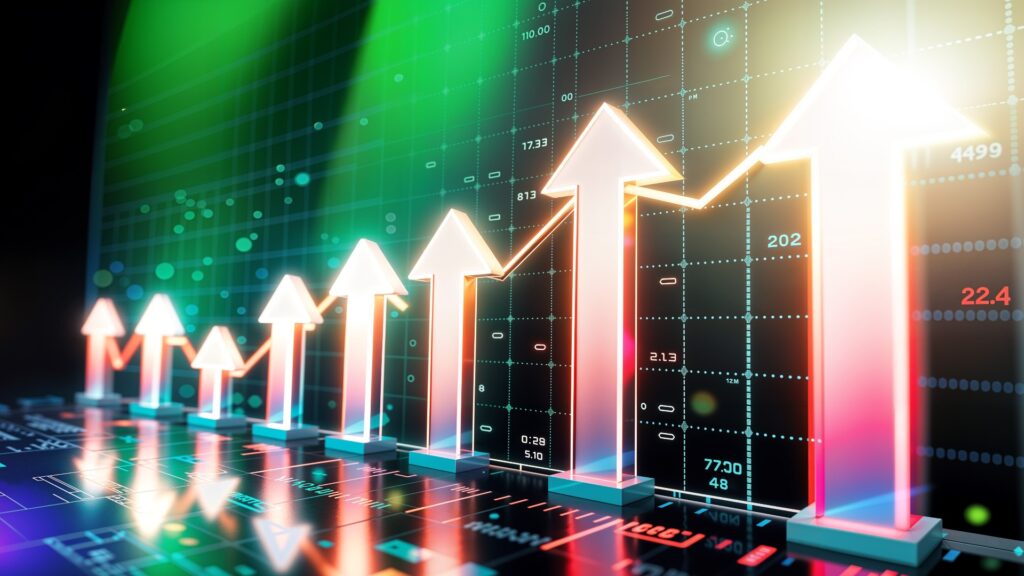
The S&P 500 has demonstrated remarkable strength, trending upward since mid-April 2025 and achieving new record highs. On January 15, 2026, it closed at 6,944.47, marking a 0.96% gain for the year. This performance raises questions about the sustainability of this momentum as the index approaches the significant threshold of 7,000 points.
Factors Driving the Momentum
The renewed enthusiasm surrounding artificial intelligence (AI) has been a key driver behind the S&P 500’s upward trajectory. This interest has not only propelled technology stocks but has also broadened market participation across various sectors. Analysts from prominent financial institutions, including JPMorgan and Goldman Sachs, observed that by late 2025, sectors such as financials and healthcare were showing notable growth.
Overall, the U.S. economy outperformed expectations in the previous year. Furthermore, the Federal Reserve implemented three interest rate cuts in 2025, which facilitated easier access to capital, further bolstering market confidence.
Potential for Sustaining Momentum in 2026
As the S&P 500 nears the 7,000 mark, maintaining this momentum seems plausible if current trends continue. Analysts predict earnings growth of approximately 13-15%, surpassing the previous year’s figures. According to J.P. Morgan Asset Management, this growth should positively impact the market. Meanwhile, LPL Financial estimates an average target for the index by the end of the year at around 7,269, indicating a potential increase of about 6% from its late 2025 closing.
Despite this optimism, Vanguard has issued warnings about increasing risks, particularly in sectors where valuations may be inflated. This suggests a cautious yet hopeful outlook for investors.
Key risks include high valuations, which make the index vulnerable to negative news regarding corporate earnings or a downturn in the AI trend. A significant decline in performance from major companies like Apple or Nvidia could have a ripple effect, impacting the entire market. Additionally, geopolitical tensions, shifts in Federal Reserve policy, and concerns over a potential recession could threaten the current upward momentum, necessitating vigilance among investors.
The S&P 500 Index’s Relative Strength Index (RSI) currently sits above 50, indicating a positive trend without being classified as overbought. The index is pivoting at the 10-day Simple Moving Average (SMA) of 6,933 and is trading above its 50-day SMA, which is approximately 6,826. Key resistance levels are identified between 6,980 and 7,000, while support exists around 6,900. Should the index dip below this level, further declines could test the 6,845 mark.
In conclusion, the key drivers of the S&P 500’s rise since mid-April 2025 include enthusiasm for AI, Federal Reserve rate cuts, robust economic growth, and strong corporate earnings. While significant risks loom, experts generally do not categorize the current market growth as a bubble. They argue that the price increases are substantiated by record company earnings and substantial investments in AI that generate revenue. As the market continues to evolve, investors will need to stay informed about both opportunities and potential pitfalls.

Anchorage School District and Educators Reach Tentative Agreement
U.S. Strike Eliminates Al-Qaeda Leader Linked to Deadly Attack

Iranian Cleric Calls for Protesters’ Executions, Threatens Trump and Netanyahu
GBI Investigates Death of Wanted Man in Tattnall County
Jayda Cheaves Claims Lil Baby and Ari Fletcher Had an Affair

Rachel Campos-Duffy Exits FOX Noticias; Andrea Linares Steps In

Piper Rockelle Shatters Record with $2.3M First Day on OnlyFans

Meta’s 2026 AI Policy Sparks Outrage Over Privacy Concerns

Leon Goretzka Considers Barcelona Move as Transfer Window Approaches

Urgent Update: Denver Fire Forces Mass Evacuations, 100+ Firefighters Battling Blaze
-
Top Stories1 month ago
Rachel Campos-Duffy Exits FOX Noticias; Andrea Linares Steps In
-
Top Stories2 weeks ago
Piper Rockelle Shatters Record with $2.3M First Day on OnlyFans
-
Top Stories2 weeks ago
Meta’s 2026 AI Policy Sparks Outrage Over Privacy Concerns
-
Sports2 weeks ago
Leon Goretzka Considers Barcelona Move as Transfer Window Approaches
-
Top Stories2 weeks ago
Urgent Update: Denver Fire Forces Mass Evacuations, 100+ Firefighters Battling Blaze
-
 Health2 months ago
Terry Bradshaw Updates Fans on Health After Absence from FOX NFL Sunday
-
 Sports1 week ago
South Carolina Faces Arkansas in Key Women’s Basketball Clash
-
 Top Stories2 weeks ago
OnlyFans Creator Lily Phillips Reconnects with Faith in Rebaptism
-
 Top Stories1 week ago
CBS Officially Renames Yellowstone Spin-off to Marshals
-
 Top Stories2 weeks ago
Oregon Pilot and Three Niece Die in Arizona Helicopter Crash
-
 Entertainment2 weeks ago
Tom Brady Signals Disinterest in Alix Earle Over Privacy Concerns
-
 Top Stories2 weeks ago
Warnock Joins Buddhist Monks on Urgent 2,300-Mile Peace Walk