Artemis II Astronauts Marvel at Earth's Beauty Amid Space Journey
Despite toilet malfunctions, the four-member crew approaching the moon reflects on the awe of deep space, with pilot Victor Glover calling Earth an 'oasis' in the vast cosmic emptiness.
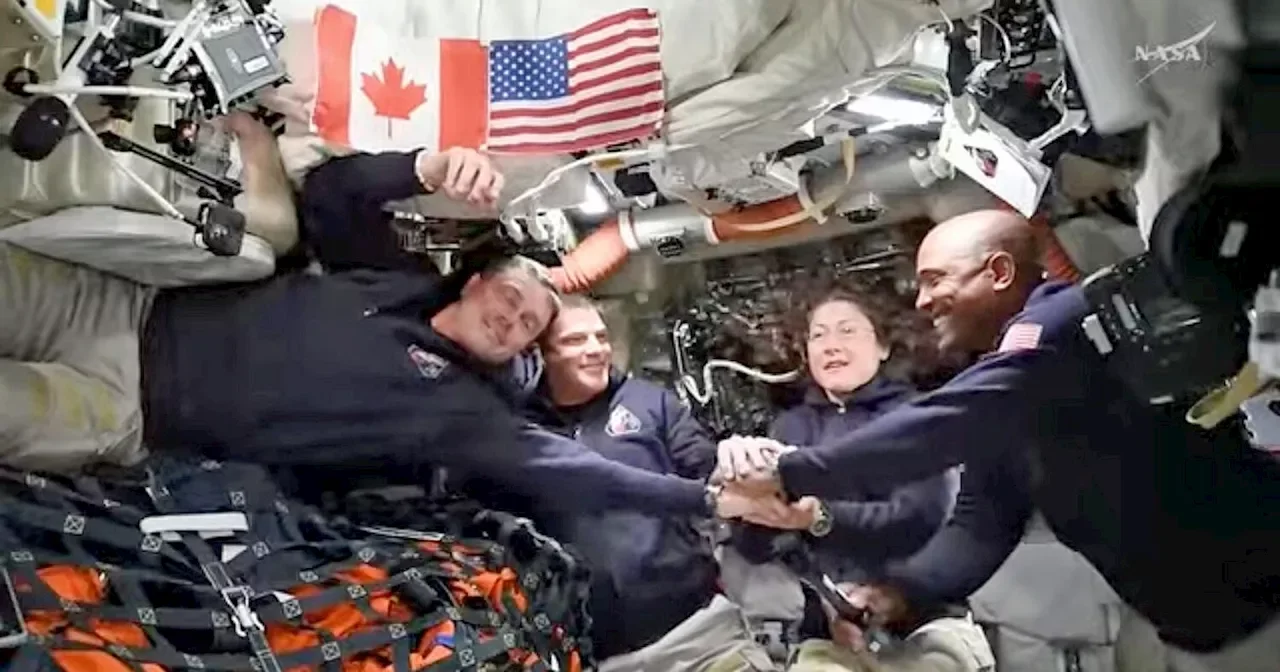
As the Artemis II spacecraft hurtles toward the moon, the four astronauts aboard are experiencing a profound sense of wonder at the cosmic perspective unfolding before them. Despite ongoing technical challenges with the spacecraft's waste management system, the crew has taken time to reflect on the beauty and significance of their unprecedented journey through deep space.
Pilot Victor Glover shared his philosophical observations during a Saturday interview with CBS News, describing the breathtaking view of Earth receding behind them and the moon growing larger ahead. 'You guys are talking to us because we're in a spaceship really far from Earth, but you're on a spaceship called Earth that was created to give us a place to live in the universe,' Glover remarked. He emphasized that the distance from home should inspire wonder not about the astronauts' achievement, but about the precious nature of Earth itself. 'You are special in all of this emptiness. This is a whole bunch of nothing, this thing we call the universe, the cosmos,' he said, describing Earth as an extraordinary 'oasis' in the vast void.
The moment took on added significance as the crew approached Easter Sunday. Glover encouraged a collective reflection on humanity's place in the universe, regardless of cultural or religious beliefs. 'This is an opportunity for us to remember where we are, who we are, and that we've got to get through this together,' he stated. Commander Reid Wiseman, mission specialist Christina Koch, and Canadian astronaut Jeremy Hansen joined Glover in clasping hands as they contemplated their unique vantage point.
Koch offered her own perspective on the experience, describing the moment she first saw Earth through the window in isolation. 'When I saw Earth for the first time on its own out the window, I was struck by the blackness around it,' she explained to CBS News. 'In the end, for me it leads back to gratitude, gratitude that out of this huge universe, we get to live together on planet Earth, and what an anomaly that is.' The crew has been enjoying remarkable views of the lunar surface through Orion's docking hatch window, with Koch describing it as 'a beautiful sight' as they observe the far side of the moon in increasing detail.
Mission control marked a significant milestone on Saturday morning when spacecraft communicator Jacki Mahaffey informed the crew that they had crossed the point where they were now closer to the moon than to Earth. Koch's enthusiastic response reflected the crew's collective excitement at this historic moment. 'We all kind of had a collective, I guess, expression of joy at that,' she reported, noting they were at 118,000 nautical miles from Earth.
Commander Wiseman also marveled at the visual splendor surrounding them, reporting to mission control: 'We have got the sun beaming in all the windows, morale is high on board and looking out window three, you can see a beautiful crescent Earth with the sunlight glinting off of the ocean and the swirling clouds. It's just a truly remarkable sight.'
The crew's journey has not been entirely without complications. Since launch on Wednesday, the Orion capsule's toilet system has experienced intermittent malfunctions. Early Saturday, flight controllers discovered they could not dump the toilet's stored urine overboard, possibly due to a frozen vent line. The crew has been instructed to use contingency collapsible urinals, or CCUs—plastic containers designed for urine collection—as a backup system. Each astronaut has two of these devices available.
Flight controllers attempted to resolve the issue by reorienting the Orion capsule to allow sunlight to warm the waste water vent line in hopes of thawing any frozen material. While the 'bake out' procedure was partially successful, the tank did not empty completely. Flight Director Judd Frieling advised maintaining the tanks at half capacity until engineers could fully diagnose the vent line issue. Mission Management Team Chairman John Honeycutt acknowledged the public's interest in the toilet trouble, noting that it reflects 'human nature' and the importance of such systems both on Earth and in space.
Beyond the technical challenges, Orion has been performing exceptionally well. Two planned trajectory correction thruster firings have been canceled after analysis showed the spacecraft maintaining a near-perfect trajectory toward the moon. On Saturday afternoon, Wiseman and Glover were scheduled to manually pilot the Orion capsule to provide engineers with valuable data on how the spacecraft performs in flight and to gather hands-on feedback for future Artemis missions.
The crew is preparing for their closest approach to the moon on Monday evening, when they will pass over the lunar far side at an altitude of approximately 4,100 miles. They plan to conduct video and camera mapping of the lunar surface during this historic pass. Scientists at NASA are particularly excited about the observations the crew will be able to make of lunar features that no human has ever directly experienced before. Kelsey Young, a lunar researcher at NASA's Goddard Space Flight Center, emphasized the scientific importance of these observations: 'The crew has spent many, many months training in a variety of different environments to make these really scientifically impactful observations, and so we're really excited as we're getting closer to the moon for all this really wonderful lunar science that we're going to be able to do.'
After looping around the moon's far side, the Artemis II crew will begin their long journey back to Earth, carrying with them not only invaluable scientific data but also a renewed appreciation for the unique position of humanity in the cosmos.