
Health
Declutter Your Bedroom to Improve Sleep Quality, Experts Advise

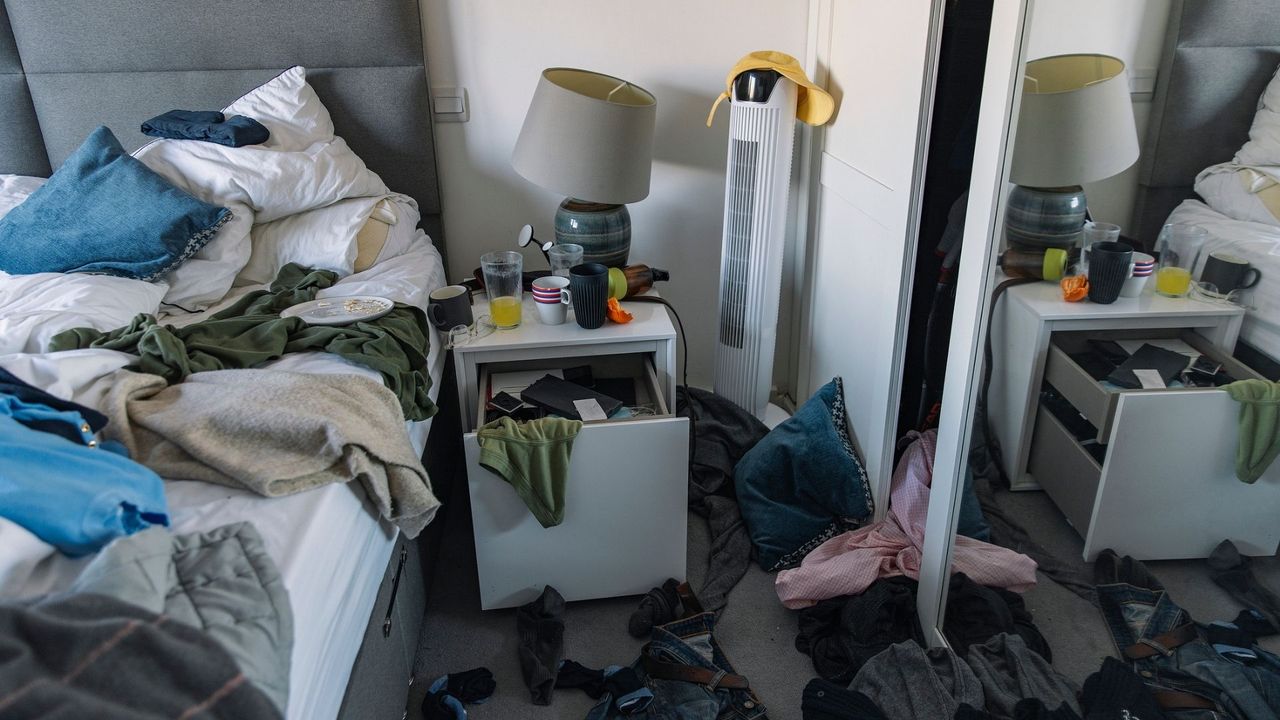
Sleep experts highlight a surprising connection between bedroom clutter and sleep disturbances, particularly waking up in the early morning hours. According to board-certified psychiatrist Dr. Nona Kocher and sleep medicine physician Dr. William Lu, the state of one’s sleeping environment can significantly impact cortisol levels, which influence sleep quality.
Many individuals, including those who write about sleep habits, often overlook how their surroundings affect their rest. The chaos of a messy bedroom may actually be contributing to frequent awakenings at night. Stress and anxiety raise cortisol levels, and clutter exacerbates these feelings, leading to a cycle that can disrupt sleep patterns.
Understanding the Impact of Clutter on Cortisol Levels
Research indicates that a cluttered environment can elevate stress levels, particularly among women. Dr. Kocher emphasizes that a bedroom should serve as a sanctuary where the nervous system can unwind. “When it’s scattered with piles of clothes, stacks of papers, or visual chaos, the brain doesn’t interpret that as ‘resting.’ It interprets that as ‘unfinished business,’” she explains.
This constant mental distraction keeps cortisol levels elevated, making it harder to fall asleep and easier to wake up during the night. Dr. Kocher notes, “Even if you’re not consciously thinking about the clothes or the bills, your mind is keeping score of what needs to be done.”
The relationship between cortisol and sleep disturbances is particularly pronounced during the early morning hours. The body naturally releases cortisol around 03:00 to assist in waking up. This phenomenon, known as the Cortisol Awakening Response (CAR), helps transition the body from sleep to wakefulness. Dr. Lu explains, “If this increase happens too early, it can wake you at 3 or 4 am,” often triggered by stress or anxiety.
Practical Strategies for Decluttering Your Bedroom
Recognizing that clutter can contribute to poor sleep is an important first step. For those who find it difficult to tackle messiness, professional organizer Olivia Parks offers several manageable decluttering strategies.
1. **Set a Timer for 15 Minutes**: Parks recommends starting small. “Pick a time that feels manageable to you, and stop when the timer ends,” she advises. By focusing on one surface, like a nightstand, individuals can achieve quick wins that sustain motivation.
2. **Start Small and Make It Easy**: It is essential to break the task into smaller, more achievable goals. Instead of attempting to declutter the entire room, choose one area to focus on. “Start by picking one area in the bedroom you’d like to declutter first, such as a drawer or a corner of your floor,” Parks suggests.
3. **Listen to Music or a Podcast**: Making the process enjoyable can turn decluttering into a more pleasant experience. Parks recommends turning on a favorite podcast or playlist while tidying to alleviate some of the stress associated with the task.
By implementing these strategies, individuals can create a more restful environment, which may help alleviate sleep disturbances linked to clutter and stress. A well-organized bedroom not only promotes better sleep but can also enhance overall well-being.
Understanding the interplay between environment and sleep is crucial. Clutter can be more than just an eyesore; it can impact health and well-being. Therefore, taking actionable steps to declutter may ultimately lead to improved sleep quality and reduced stress.

Anchorage School District and Educators Reach Tentative Agreement

U.S. Strike Eliminates Al-Qaeda Leader Linked to Deadly Attack

Iranian Cleric Calls for Protesters’ Executions, Threatens Trump and Netanyahu

GBI Investigates Death of Wanted Man in Tattnall County

Jayda Cheaves Claims Lil Baby and Ari Fletcher Had an Affair

Rachel Campos-Duffy Exits FOX Noticias; Andrea Linares Steps In

Piper Rockelle Shatters Record with $2.3M First Day on OnlyFans

Meta’s 2026 AI Policy Sparks Outrage Over Privacy Concerns

Leon Goretzka Considers Barcelona Move as Transfer Window Approaches
Jayda Cheaves Claims Lil Baby and Ari Fletcher Had an Affair
-
Top Stories1 month ago
Rachel Campos-Duffy Exits FOX Noticias; Andrea Linares Steps In
-
Top Stories2 weeks ago
Piper Rockelle Shatters Record with $2.3M First Day on OnlyFans
-
Top Stories2 weeks ago
Meta’s 2026 AI Policy Sparks Outrage Over Privacy Concerns
-
Sports2 weeks ago
Leon Goretzka Considers Barcelona Move as Transfer Window Approaches
-
Entertainment4 hours ago
Jayda Cheaves Claims Lil Baby and Ari Fletcher Had an Affair
-
 Top Stories2 weeks ago
Urgent Update: Denver Fire Forces Mass Evacuations, 100+ Firefighters Battling Blaze
-
 Health2 months ago
Terry Bradshaw Updates Fans on Health After Absence from FOX NFL Sunday
-
 Sports1 week ago
South Carolina Faces Arkansas in Key Women’s Basketball Clash
-
 Top Stories2 weeks ago
OnlyFans Creator Lily Phillips Reconnects with Faith in Rebaptism
-
 Top Stories1 week ago
CBS Officially Renames Yellowstone Spin-off to Marshals
-
 Top Stories2 weeks ago
Oregon Pilot and Three Niece Die in Arizona Helicopter Crash
-
 Entertainment2 weeks ago
Tom Brady Signals Disinterest in Alix Earle Over Privacy Concerns