


UK Military Sought UFO Technology in 1990s, Secret Files Reveal
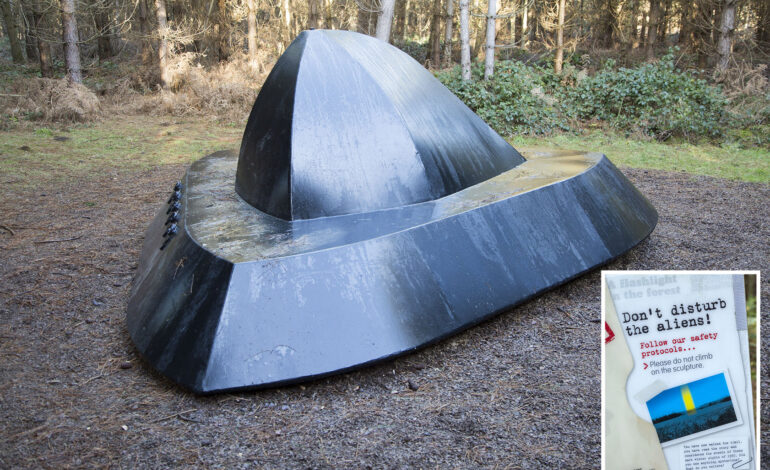

The British military actively pursued the acquisition of extraterrestrial technology during the 1990s, according to recently unsealed documents. These files reveal that intelligence officers believed innovations from unidentified aerial phenomena (UAP) could enhance the UK’s defense capabilities. The investigation was prompted by numerous sightings reported over Belgium from November 1989 to April 1990.
An internal memo from March 1997 indicated that the UK’s Defence Intelligence Staff, now known as Defence Intelligence, viewed the UAP sightings as potentially significant. It stated, “Logic would indicate that if significant numbers are reporting seeing strange objects in the sky then there may be a basis in fact.” The memo suggested that these phenomena could pose a threat to national security, emphasizing a need for investigation.
Unexplained Sightings Prompt Military Action
The 1990s saw a surge in reports of “large, silent, low-flying black triangles” exhibiting propulsion capabilities beyond any known technology. This spurred intelligence officials to consider the implications of acquiring such advancements. One report mentioned, “UAPs do not appear to use conventional reaction propulsion,” citing the Belgian sightings, which were confirmed by the Belgian Ministry of Defence. These objects reportedly hovered for extended periods and achieved supersonic speeds, outpacing F-16 fighter jets.
An additional document referenced the infamous Rendlesham Forest incident, which occurred in 1980 near the US Air Force base in Woodbridge, Suffolk. This report claimed that a glowing craft of unknown origin briefly landed before ascending rapidly. The event was affirmed by the US unit commander and others present at the time.
The documents also explored the international interest in UAP technology. The correspondence noted that both the Belgian and Rendlesham Forest incidents indicated that the observed phenomena did not utilize conventional propulsion systems. “The French have always had an interest in this topic,” the report stated, while also acknowledging an informal intelligence grouping in the United States.
Challenges in Assessing UAP Reports
While the documents acknowledged that most UFO sightings lacked credibility, they highlighted a small number that could not be easily explained through conventional science. “Some reports described objects in terms of manoeuvre, speed and shape which lie beyond our engineering knowledge,” the correspondence noted. The challenge remained in prioritizing these accounts quickly enough to provide appropriate responses, whether the concerns were terrestrial or extraterrestrial.
The unsealed files recognized that the research into UAPs would likely generate skepticism among intelligence officials. They encouraged maintaining an open mind, acknowledging the “fringe element of ‘crazies’” associated with the topic. The previously classified documents have been made available at the National Archives in Kew, southwest London.
In December 2024, the UK’s Minister for Defence Readiness, Luke Pollard, stated that the Ministry of Defence had ceased investigating reports of UFOs or UAPs in 2009. He confirmed that there were “no current plans” to allocate resources for future investigations into alleged sightings.
This revelation adds a fascinating chapter to the ongoing discourse surrounding UAPs and their implications for national security and scientific inquiry.