


U.S.-China Decoupling Strategy Fails to Deliver Results
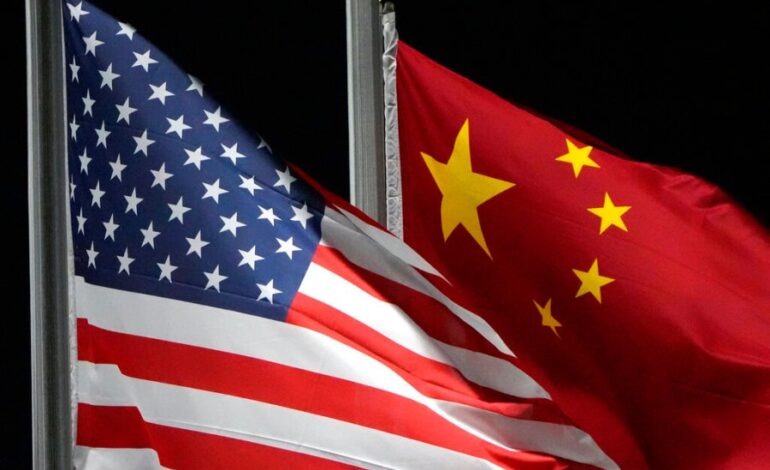

The United States’ strategy of decoupling from China is not yielding the intended results, leading to significant financial losses for American businesses, confusion among European allies, and a rapid advancement of China’s technological independence. This policy, aimed at reducing economic reliance on China, has instead created complications that threaten U.S. innovation and competitiveness.
Critics of this decoupling approach argue that it has resulted in a counterproductive environment. According to the U.S. Department of Commerce, American businesses are facing an estimated $400 billion in losses due to trade disruptions and increased tariffs on Chinese imports. These financial impacts create a ripple effect, influencing supply chains and market strategies across various sectors, particularly in technology and manufacturing.
Impact on Global Alliances
The strategic shift has also raised concerns among U.S. allies, particularly in Europe, where confusion about the decoupling policy has emerged. Many European nations rely on trade with China, and the National Security Council has noted that the lack of a cohesive plan has led to uncertainty regarding shared economic interests. This disarray may weaken transatlantic ties, as European countries navigate their own relationships with China while trying to align with U.S. policies.
The absence of clear communication from Washington has left allies unsure about their commitments to U.S. initiatives. For example, a July 2023 report from the Global Technology Report 2023 highlighted that European firms are hesitant to fully support U.S. sanctions against China due to fears of economic repercussions. As a result, a fragmented approach to decoupling may inadvertently strengthen China’s global position.
China’s Technological Advancements
While the U.S. aims to curtail China’s technological growth, the reality is that the decoupling strategy has accelerated China’s efforts toward self-sufficiency. With increased funding and government support, Chinese firms are rapidly advancing in key technological fields such as artificial intelligence, semiconductors, and renewable energy. This shift not only undermines U.S. objectives but also poses long-term challenges for American companies that may find themselves outpaced by their Chinese counterparts.
The recent developments in China’s tech ecosystem demonstrate the effectiveness of its strategy to foster domestic innovation. Chinese tech giants have reported substantial gains in various sectors, as they capitalize on the gaps left by American firms withdrawing from the market. This trend poses a direct threat to U.S. economic interests and undermines the competitive edge that the United States has long maintained.
In summary, the U.S. policy of strategic decoupling from China has not only failed to achieve its intended objectives but has also inadvertently harmed American businesses and strained international alliances. As China continues to solidify its technological independence, the need for a reevaluation of U.S. strategies and a more nuanced approach to global trade becomes increasingly critical.