
World
Syrian Refugees in Lebanon Face Allegations of Assad Loyalty

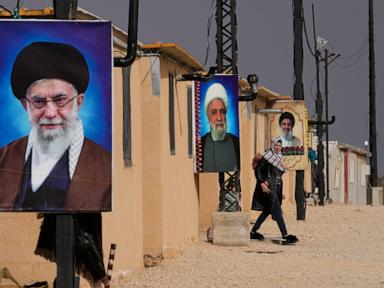
A walled compound in Hermel, Lebanon, housing hundreds of Syrian refugees, has sparked controversy as allegations arise that the residents are loyalists of former president Bashar Assad. These claims, which the residents firmly reject, highlight the ongoing sensitivities surrounding Syria’s transformation after a prolonged civil conflict. The compound, known as the Imam Ali Housing Compound, is home to many Shiite Muslims and has been scrutinized due to its connections to figures associated with Hezbollah and Iran.
The Associated Press recently visited the 228-unit compound in northeastern Lebanon, situated near the Syrian border. The compound features portraits of Assad allies, including Iranian leaders and Hezbollah commanders. Many of the residents are Shiite Muslims who have lived in villages along the Lebanese border for generations. Allegations that they are conspiring against Syria’s new Sunni Islamist authorities have led to multiple raids by the Lebanese army, which reported finding no illegal activities.
The mayor of Hermel, Ali Taha, noted that the inception of the compound was driven by the urgent need for housing following the influx of approximately 50,000 Syrian refugees into the town after Assad’s regime fell in December 2024. The municipality owned the land, and the construction was funded by Shiite religious institutions from Iraq and Iran. Taha denied that the compound serves any conspiratorial purpose against Syrian authorities, asserting that such claims are politically motivated.
Concerns have been raised regarding the potential use of the compound by Hezbollah for recruitment purposes following the group’s significant losses in its recent conflicts. Ghada Ayoub, a legislator with the anti-Hezbollah Lebanese Forces Party, has formally inquired about the compound’s establishment without government oversight. Ayoub reported that she has yet to receive a response from the government and intends to continue her follow-up.
Residents such as Mohammed Assoura, a 57-year-old Syrian citizen, express their desperation. Assoura and his wife moved into the compound in October after struggling to find affordable housing. They fled Syria on a motorcycle, fearing retaliation for perceived connections to Assad’s regime. “Do I look like a fuloul of the regime?” Assoura asked, using the Arabic term for “remnants” to suggest that such accusations are unfounded. He now relies on aid from local NGOs to survive and hopes to return to Syria soon.
The humanitarian crisis stemming from Syria’s civil war, which began in 2011, has resulted in over 5 million refugees. Lebanon has been host to an estimated 1.5 million of these individuals. Despite some half a million Syrians returning home since Assad’s fall, new refugees continue to arrive. Many are Shiites or members of the Alawite sect, fleeing from sectarian violence that has escalated in the aftermath of Assad’s regime.
The United Nations refugee agency has stated that it has no presence at the compound and lacks information about the situation inside. Residents, like Maha al-Abeer, a widow from Qusair, have voiced their relief at finding shelter, with al-Abeer stating, “Thank God we are sheltered. It’s better than staying in tents and mosques.”
Another resident, Shayban Midlij, 73, who fled from Fadlieh village, described their previous living conditions as “like hell,” filled with crowded mosques where illnesses spread easily. He and his family, fearing reprisals, now share a unit in the compound. “We are all old people waiting to die and be buried,” his wife, Ihasn, added, emphasizing their vulnerability in the current climate.
The situation in Hermel and the Imam Ali Housing Compound illustrates the complex interplay of identity, fear, and survival for refugees in the region. As Lebanon navigates its own response to the ongoing crisis, the voices of those affected continue to resonate, underscoring the urgent need for clarity and support in a landscape marked by uncertainty.

Rediscovering Joy: How the Game Sable Revived My Passion for Gaming

URGENT: Major Earthquake Strikes Turkey, Thousands Affected

Nevada GOP Rep. Mark Amodei Announces Retirement, Seats at Risk

Simplify Your Windows 11 Experience: Remove These 7 Features

TKO Group Announces Six to Seven Fights at White House Event

Jayda Cheaves Claims Lil Baby and Ari Fletcher Had an Affair

Rachel Campos-Duffy Exits FOX Noticias; Andrea Linares Steps In

Piper Rockelle Shatters Record with $2.3M First Day on OnlyFans

Harvard Physicist Proposes Cosmic Location for Heaven at 273 Billion Trillion Miles

Terry Bradshaw Updates Fans on Health After Absence from FOX NFL Sunday
-
Entertainment3 weeks ago
Jayda Cheaves Claims Lil Baby and Ari Fletcher Had an Affair
-
Top Stories2 months ago
Rachel Campos-Duffy Exits FOX Noticias; Andrea Linares Steps In
-
Top Stories1 month ago
Piper Rockelle Shatters Record with $2.3M First Day on OnlyFans
-
Science2 weeks ago
Harvard Physicist Proposes Cosmic Location for Heaven at 273 Billion Trillion Miles
-
Health3 months ago
Terry Bradshaw Updates Fans on Health After Absence from FOX NFL Sunday
-
 Top Stories1 month ago
Meta’s 2026 AI Policy Sparks Outrage Over Privacy Concerns
-
 Sports1 month ago
Leon Goretzka Considers Barcelona Move as Transfer Window Approaches
-
 Top Stories1 month ago
Urgent Update: Denver Fire Forces Mass Evacuations, 100+ Firefighters Battling Blaze
-
 Top Stories1 month ago
OnlyFans Creator Lily Phillips Reconnects with Faith in Rebaptism
-
 Top Stories3 weeks ago
Patriots Face Altitude Challenge in AFC Championship; Experts Weigh In
-
 Top Stories1 month ago
Oregon Pilot and Three Niece Die in Arizona Helicopter Crash
-
 Sports4 weeks ago
South Carolina Faces Arkansas in Key Women’s Basketball Clash