


Scotland’s Intellectual Revival: A New Enlightenment Emerges
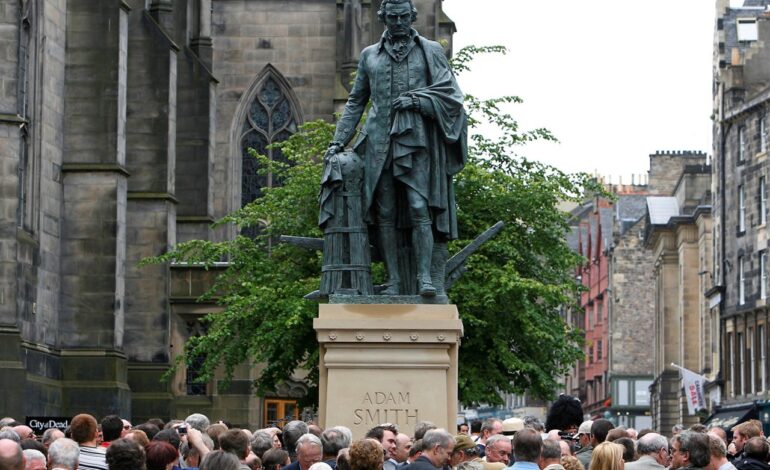

Fraser Nelson has responded to fellow commentators Barton Swaim and Allan Massie, suggesting that a new phase of intellectual revival in Scotland, reminiscent of the Scottish Enlightenment, may be on the horizon. This discussion arises in the context of Scotland’s evolving political and cultural landscape, where issues of identity and governance are increasingly at the forefront of public debate.
The original commentary by Swaim and Massie touches upon the historical significance of the Scottish Enlightenment, which produced profound thinkers such as David Hume and Adam Smith. Nelson argues that the current era in Scotland is ripe for a similar intellectual resurgence, fueled by a combination of historical reflection and contemporary challenges. He emphasizes the importance of engaging with Scotland’s past to inspire new ideas that can address modern societal issues.
Scotland’s Cultural Renaissance
Nelson highlights various factors contributing to this potential revival. He points to a growing interest among younger generations in Scotland’s history and its role in shaping modern thought. This cultural renaissance is marked by an increasing number of public discussions, academic publications, and media coverage focusing on Scotland’s unique contributions to philosophy, economics, and science.
Furthermore, Nelson notes that the recent political climate has sparked renewed interest in Scottish autonomy and identity. As debates about governance and the future of Scotland continue, there is a significant opportunity for intellectual discourse to flourish. The interplay between politics and philosophy could lead to groundbreaking ideas that resonate both locally and internationally.
The Role of Education and Dialogue
Central to the prospect of a new Scottish Enlightenment is the role of education and open dialogue. Nelson stresses that universities and educational institutions should embrace their responsibility to foster critical thinking and encourage students to engage with Scotland’s intellectual heritage. By doing so, they can cultivate a generation of thinkers who are equipped to tackle the complexities of today’s world.
In addition, fostering public discourse through forums, lectures, and community events can bridge the gap between academia and the general public. Nelson believes that such initiatives will encourage a vibrant exchange of ideas, which is essential for the growth of an enlightened society.
As the conversation around Scotland’s intellectual future continues, it is clear that scholars, policymakers, and citizens alike have a role to play. The prospect of a new Scottish Enlightenment offers a compelling vision for the future, one that is deeply rooted in the past yet oriented toward addressing contemporary challenges.
In conclusion, while the notion of a new intellectual revival may seem ambitious, Nelson’s commentary serves as a call to action for all Scots to engage with their rich history. By fostering a culture of inquiry and dialogue, Scotland may well be on the brink of another significant period of enlightenment.