Protests Expand in Iran Amid Economic Crisis; Six Fatalities Reported
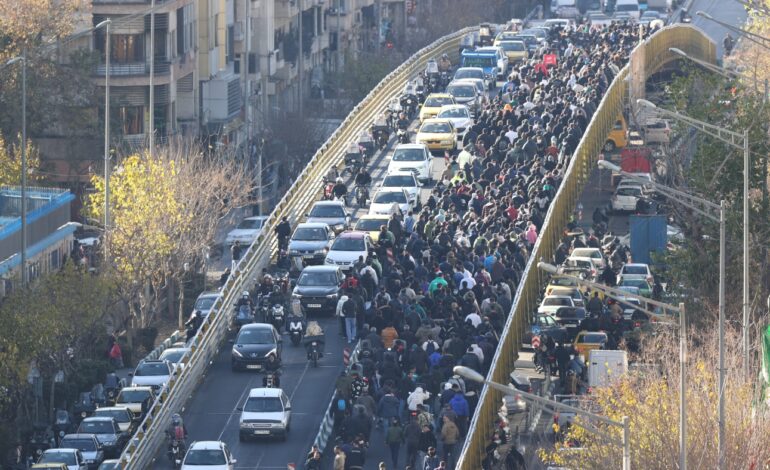

Demonstrations across Iran intensified on March 15, 2024, as widespread protests related to the country’s struggling economy spread to rural provinces. At least six fatalities have been reported among security forces and protesters, marking a significant escalation in the government’s response to the unrest.
The protests began in major urban centers but have now reached cities primarily inhabited by the Lur ethnic group, highlighting a growing discontent with the Islamic Republic’s economic policies. Notably, the death toll includes one fatality on Wednesday and five on Thursday, indicating a potential shift towards a more aggressive stance from the Iranian authorities.
Violence Erupts in Key Cities
The most severe clashes occurred in Azna, located in Lorestan province, approximately 300 kilometers (185 miles) southwest of Tehran. Eyewitness accounts and social media footage depicted scenes of chaos, with protesters reportedly shouting, “Shameless! Shameless!” as gunfire rang out. The semiofficial Fars news agency confirmed three deaths in Azna, a report echoed by various media outlets, although state-run channels have been less forthcoming about the violence.
Meanwhile, in Lordegan, also in Chaharmahal and Bakhtiari province, additional videos showed crowds gathering amid the sound of gunfire. Fars, citing an anonymous official, reported two fatalities in this city, which has a history of protests, notably in 2019 when demonstrators reacted to a public health crisis.
The ongoing protests have been fueled by economic hardship, with inflation and currency devaluation driving many Iranians to the streets. According to the Abdorrahman Boroumand Center for Human Rights in Iran, the fatalities in Lordegan included individuals identified as demonstrators.
Government Response and Public Sentiment
The protests have drawn attention to the struggles of ordinary citizens facing skyrocketing prices and a plummeting currency. As of now, $1 is equivalent to approximately 1.4 million rials, a staggering figure that underscores the economic difficulties faced by many.
In conjunction with the unrest, Iranian officials have attempted to downplay the severity of the situation while acknowledging the underlying issues. Saeed Pourali, a deputy governor in Lorestan province, pointed to “economic pressures, inflation, and currency fluctuations” as catalysts for the protests. He emphasized that the grievances of citizens must be addressed but cautioned against allowing these demands to be influenced by “profit-seeking individuals.”
The Revolutionary Guard, a key state institution, has been involved in the response to the protests. On March 15, the state-run IRNA news agency reported the death of a 21-year-old paramilitary member during the unrest, attributing his death to demonstrators. This claim has been met with skepticism, as it coincides with reports of injuries sustained by both security personnel and protesters.
Despite the government’s attempts to project stability, protests have persisted, with local prosecutor Kazem Nazari announcing the arrest of 20 individuals in Kouhdasht following demonstrations there. He claimed calm had returned to the city after the unrest.
As the situation develops, the Iranian government has declared a public holiday, ostensibly to alleviate the impact of cold weather, a move that may also serve to reduce tensions in the capital. The Iranian weekend falls on Thursday and Friday, with Saturday marking Imam Ali’s birthday, a significant occasion for many.
The ongoing protests reflect deep-seated frustrations among Iranians, who are not only expressing dissatisfaction with their economic circumstances but also calling for broader political change. The echoes of past protests, particularly those following the death of Mahsa Amini in police custody in 2022, resonate as these demonstrations unfold.
While the Iranian government has signaled a willingness to engage with some aspects of the protestors’ concerns, significant challenges remain. The country continues to grapple with the fallout of regional tensions and external pressures, including a recent military conflict with Israel, which has further complicated its economic landscape.
As the protests evolve, the world watches closely to see how the Iranian government will navigate this precarious situation and whether the voices of the citizens will be heard amidst the turmoil.