


Israel Strikes Hamas Commander, Escalating Tensions in Gaza
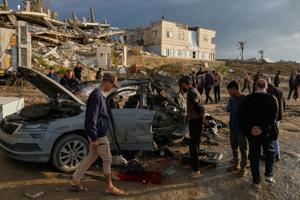

Israel announced on Saturday that it had killed a senior Hamas commander, Raed Saad, during a military operation in the southern region of Gaza. This action follows an earlier incident in which an explosive device wounded two Israeli soldiers. The statement from Israeli authorities described Saad as one of the key architects behind the October 7, 2023Shifa Hospital. Additionally, three others sustained injuries, as reported by Al-Awda Hospital. The violence has raised alarms as both Israel and Hamas accuse each other of breaching the truce.
Since the ceasefire began, at least 386 Palestinians have died due to Israeli airstrikes and military actions, according to the Palestinian Health Ministry. Israeli officials contend that these strikes are retaliatory measures against ongoing militant aggression. They have also stated that their troops have engaged in fire against Palestinians approaching the “Yellow Line,” a demarcation separating Israeli-controlled areas from the rest of Gaza.
Israel has made clear demands for the return of the remains of the final hostage, Ran Gvili, as a precondition for advancing to the next phase of the ceasefire. This phase aims to establish a framework for dismantling Hamas’ authority and facilitating the rebuilding of Gaza under international oversight.
The initial Hamas-led assault on southern Israel in October 2023 resulted in approximately 1,200 fatalities and the abduction of 251 hostages. Most hostages or their remains have been recovered through various ceasefire agreements.
In the broader context, Israel’s military operations in Gaza have led to over 70,650 Palestinian deaths, with around half being women and children, according to the Health Ministry, which operates under Hamas’ governance. This ministry is recognized for maintaining detailed health records that are generally accepted as credible by the international community.
The humanitarian situation in Gaza remains dire, with extensive destruction and displacement affecting the territory’s population of over 2 million. Aid delivery continues to fall short of the levels specified in ceasefire agreements, leading to critical shortages, particularly for those requiring medical assistance. Many individuals who suffered severe injuries during the conflict face long wait times for prosthetic limbs and other necessary medical evacuations.
As tensions escalate in the region, the implications of these developments continue to unfold, with both sides entrenched in their positions and international observers closely monitoring the situation.