
Urgent Bird Flu Outbreak Confirmed in 60 Dead Geese in Iowa
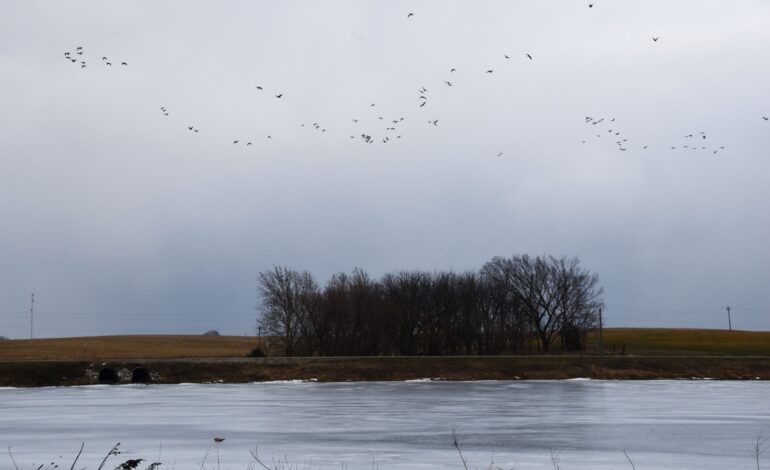

URGENT UPDATE: An outbreak of H5 avian influenza has been confirmed in an estimated 60 dead geese collected at Green Valley State Park, Iowa. The Iowa Department of Natural Resources (DNR) reported the findings on December 14, 2023, following tests conducted at Iowa State University’s Veterinary Diagnostic Lab.
Reports of dead geese began on December 11, prompting local staff to initiate collection efforts. However, adverse weather conditions halted these efforts until conditions improved. As milder weather returned, collection resumed, revealing the troubling extent of the outbreak.
The DNR estimates that thousands of geese are currently at Green Valley Lake as part of their fall migration. The population of Canada geese has surged over the past few weeks, with a 30% increase noted in the December 12 waterfowl survey. The influx is largely due to the freezing of northern lakes and marshes, which has forced the birds southward.
Dr. Rachel Ruden, the state wildlife veterinarian, warned, “We are getting reports of influenza activity across the western half of the state, and, for the first time, mass mortality events impacting Southwest Iowa, which has remained fairly insulated since 2022.” The DNR is closely monitoring the situation, although the duration of the outbreak remains uncertain.
As weather conditions improve, waterfowl are likely to disperse to open feeding and roosting locations, potentially reducing the risk of further transmission. Residents are urged to maintain a safe distance from any sick or dead birds and to prevent pets from interacting with them. While no human cases of H5 avian influenza have been reported in the U.S. linked to wild birds, there have been numerous cases associated with close contact with infected poultry.
Residents who observe clusters of 20 or more carcasses are encouraged to contact local wildlife officials. Dr. Ruden emphasized the importance of community vigilance: “We encourage the public to report sick birds or other wildlife to your local wildlife biologist or conservation officer to help us track impacts of this disease. We all have a part to play in keeping Iowa’s wildlife healthy.”
In addition to Green Valley State Park, avian influenza has also been confirmed in the Canada goose population at Lake of Three Fires.
Avian influenza, particularly the H5N1 strain, poses a significant threat. It is highly transmissible among certain waterfowl and shorebirds and has previously affected wild birds across North America at an alarming scale. The virus can remain viable in deceased birds and contaminated water for several weeks, raising concerns over environmental health.
Waterfowl hunters are advised to take precautions, including cooking game meat to an internal temperature of 165°F to ensure safety. Hunters should also avoid interacting with sick birds and dispose of carcasses properly to minimize risk to scavengers.
This situation is developing rapidly, and the DNR continues to monitor avian influenza across the state. Stay tuned for further updates as officials work to contain this outbreak and protect Iowa’s wildlife.