


Trump Administration Unveils New National Security Strategy Today
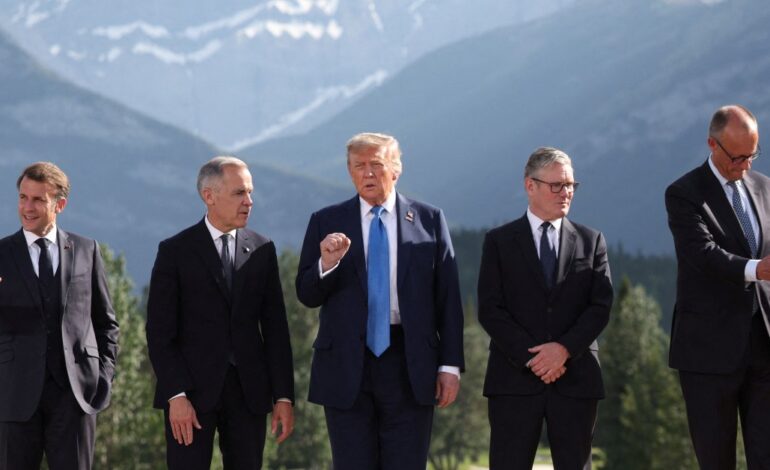

UPDATE: The Trump administration has just released its highly anticipated National Security Strategy (NSS) for 2025, marking a significant shift in America’s foreign policy approach. Unveiled during the G7 Summit in Alberta, Canada on June 16, 2025, the document focuses heavily on Europe, signaling a new clash between American interests and European liberalism.
The NSS, completed over the summer but delayed for months due to internal debates, emphasizes a departure from traditional diplomatic norms. Treasury Secretary Scott Bessent reportedly sought to soften critical language regarding China to protect ongoing trade negotiations, reflecting the document’s contentious nature. Authored primarily by former policy director Michael Anton, the strategy is characterized by a strong MAGA stance, attacking foreign policy elites and promoting an America First ideology.
This new strategy prioritizes the Western Hemisphere, focusing on combating mass migration and “narco-terrorists.” Notably, it introduces a “Trump corollary” to the Monroe Doctrine, aimed at preventing non-Hemispheric powers like China from gaining influence in the region. The document maintains a cautious stance on Taiwan, affirming its strategic importance without altering America’s longstanding ambiguous position on Taiwanese sovereignty.
What stands out most is the NSS’s alarming assessment of Europe, warning that the continent faces “civilizational erasure.” The strategy criticizes the European Union and other transnational bodies for undermining political liberty and national identities. It states that Europe could be “unrecognizable in 20 years” if current trends continue. The administration encourages European political allies to resist these trends and promote a revival of patriotic principles.
German Foreign Minister Johann Wadephul responded critically, asserting that Germany does not require “outside advice” on its internal affairs. This highlights the growing friction between the U.S. and its European allies as the document implicitly suggests that democracy in Western Europe is under severe threat, a sharp contrast to its more respectful tone towards sovereignty in the Middle East and Africa.
The NSS does not shy away from condemning European nations for continued reliance on Russian gas, yet it fails to address the problematic alliances the Trump administration has with far-right leaders in Europe, including Hungary’s Viktor Orban.
With this strategy, the Trump administration appears to be crafting a more aggressive American role on the global stage, prioritizing ideological battles over traditional diplomatic engagement. As this document gains traction, its implications for international relations are profound, especially regarding U.S.-European dynamics.
This urgent update underscores the necessity for immediate discussions and reactions across political spheres in Europe and the United States. The full ramifications of this strategy will unfold in the coming days, making it critical for analysts and policymakers to monitor developments closely.
Stay tuned for further updates as reactions continue to pour in from global leaders and influential figures.