
Top Stories
Tesla Sales Plunge to Lowest in Four Years, Musk Faces Backlash

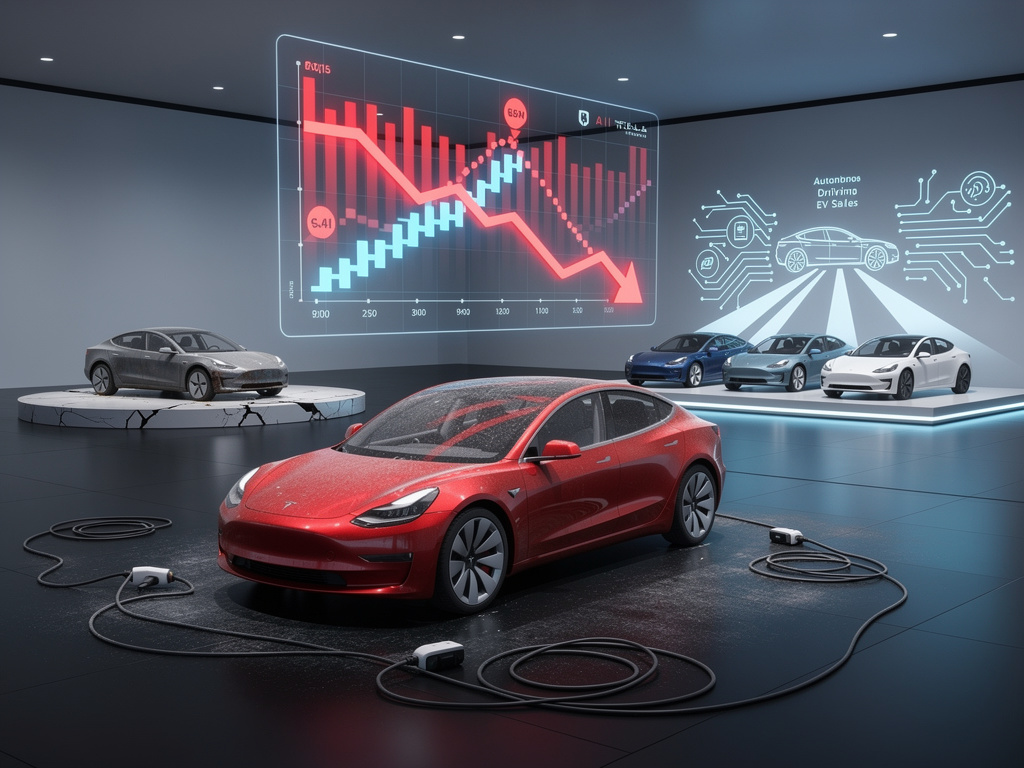
BREAKING: Tesla Inc. faces a crisis as U.S. sales fell below 40,000 units in November 2025, marking the company’s lowest monthly sales in nearly four years. This alarming trend could lead to a second consecutive year of declining sales, prompting urgent questions about the electric vehicle market and Elon Musk’s leadership.
Recent reports confirm that despite aggressive discounting and new, lower-priced models, Tesla’s sales have plummeted 20% from October, impacting its ability to meet global targets of 1.8 million vehicles for the year. With only weeks remaining in 2025, analysts warn that without a dramatic surge in December, Tesla may experience its first back-to-back annual sales decline since its early days.
The expiration of federal EV tax credits at the end of 2024 has compounded these challenges, removing vital incentives that previously drove demand. In response, Tesla has slashed prices on its flagship Model 3 and Model Y, offering “Standard” variants starting at $35,000 to attract budget-conscious consumers. However, these strategies have failed to revive sales momentum.
Musk has attributed some of the downturn to high interest rates and a slowdown in global EV adoption. Yet, analysts and insiders highlight that Tesla’s aging lineup, dominated by older models, leaves it vulnerable to competition from manufacturers like BYD Co. and Ford Motor Co.
In a bid to reverse this troubling trend, Tesla has rolled out aggressive promotions, including zero-interest financing for up to 72 months and substantial referral bonuses. However, these measures have not translated into increased sales, raising concerns about the company’s future.
Internationally, Tesla’s performance mirrors the struggles faced in the U.S. Sales in China fell by 6% in November, as local competitors undercut prices with government-backed incentives. Similarly, European sales dropped by 30% due to regulatory hurdles and economic slowdowns.
Musk’s public persona and political engagements have also polarized consumers, with many potential buyers feeling alienated by his outspoken views. In key markets like California, Tesla sales dipped 15% year-over-year in the third quarter, showcasing the impact of Musk’s controversial image on consumer sentiment.
As Tesla grapples with these challenges, the company is doubling down on innovation. Plans to unveil a revamped Model Y in 2026 and tease robotaxi services are part of Tesla’s strategy to regain market share. However, analysts remain skeptical about whether these long-term bets can offset the immediate sales downturn.
Looking ahead, Tesla’s future hinges on its ability to execute effectively. Insiders suggest that accelerating the launch of the affordable “Model 2” could recapture entry-level buyers, particularly in emerging markets. Regulatory changes could also play a critical role, with potential policy shifts that may reinstate incentives in the U.S.
As Tesla navigates these turbulent waters, the urgency for a turnaround has never been more pressing. With the clock ticking down on 2025, all eyes are on Musk and his team to see if they can restore Tesla’s once-dominant position in the electric vehicle space.

NASA Targets Moon Return as Goddard’s Rocket Legacy Endures

Steve Kerr Celebrates Oscar Win for Documentary Short Today!

Major Leadership Changes in Advertising and Marketing Shaping Strategies

Former Facebook Engineer Michael Sayman Joins Whop, Eyes AI Opportunities

Revolution Dominates Cincinnati in 6-1 Victory at Gillette Stadium
Jayda Cheaves Claims Lil Baby and Ari Fletcher Had an Affair

Rachel Campos-Duffy Exits FOX Noticias; Andrea Linares Steps In
Terry Bradshaw Updates Fans on Health After Absence from FOX NFL Sunday

Piper Rockelle Shatters Record with $2.3M First Day on OnlyFans

Rosenior Slams Referee Decision After Chelsea’s 2-2 Draw with Leeds
-
Entertainment2 months ago
Jayda Cheaves Claims Lil Baby and Ari Fletcher Had an Affair
-
Top Stories4 months ago
Rachel Campos-Duffy Exits FOX Noticias; Andrea Linares Steps In
-
Health4 months ago
Terry Bradshaw Updates Fans on Health After Absence from FOX NFL Sunday
-
Top Stories3 months ago
Piper Rockelle Shatters Record with $2.3M First Day on OnlyFans
-
Sports1 month ago
Rosenior Slams Referee Decision After Chelsea’s 2-2 Draw with Leeds
-
 Science2 months ago
Harvard Physicist Proposes Cosmic Location for Heaven at 273 Billion Trillion Miles
-
 Sports3 months ago
Leon Goretzka Considers Barcelona Move as Transfer Window Approaches
-
 Top Stories3 months ago
Meta’s 2026 AI Policy Sparks Outrage Over Privacy Concerns
-
 Top Stories4 weeks ago
EASA Issues Urgent Airspace Risk Advisory for Middle East
-
 Top Stories3 months ago
Urgent Update: Denver Fire Forces Mass Evacuations, 100+ Firefighters Battling Blaze
-
 Entertainment4 weeks ago
SAG Awards 2026 Honors Late Stars in Emotional In Memoriam Segment
-
 Top Stories3 months ago
OnlyFans Creator Lily Phillips Reconnects with Faith in Rebaptism