

Scientists Reveal 3D Image of Popocatepetl Volcano’s Interior

BREAKING NEWS: Researchers have just unveiled the first-ever three-dimensional image of the interior of the Popocatepetl volcano in Mexico, a monumental breakthrough that could have significant implications for millions living in its vicinity. This urgent development provides crucial insights into magma accumulation, enhancing our understanding of volcanic activity and aiding in disaster preparedness.
The study, led by Marco Calo from the National Autonomous University of Mexico (UNAM), focuses on one of the world’s most active volcanoes, which threatens approximately 25 million people within a 62-mile radius. With its history of eruptions, the potential consequences for nearby communities are alarming, emphasizing the need for advanced monitoring and safety measures.
Using an expanded network of seismographs—now totaling 22—Calo’s team analyzed ground vibrations, generating seismic data at an impressive rate of 100 times per second. Karina Bernal, a doctoral student, applied artificial intelligence to enhance the analysis, allowing the team to identify various seismic signals and infer the materials, temperatures, and depths inside the volcano.
The resulting 3D image extends 11 miles below the crater and reveals multiple magma pools at varying depths, offering a far more intricate representation of the volcano than previously available. This advanced mapping is set to revolutionize how scientists understand and predict volcanic behavior, significantly improving safety measures for those living in affected areas.
Popocatepetl, known affectionately as El Popo, has been continuously active since 1994, regularly emitting smoke, ash, and gas. The volcano’s dynamic nature necessitates constant monitoring, especially given the past impacts on communities—such as devastating eruptions that have historically altered local landscapes.
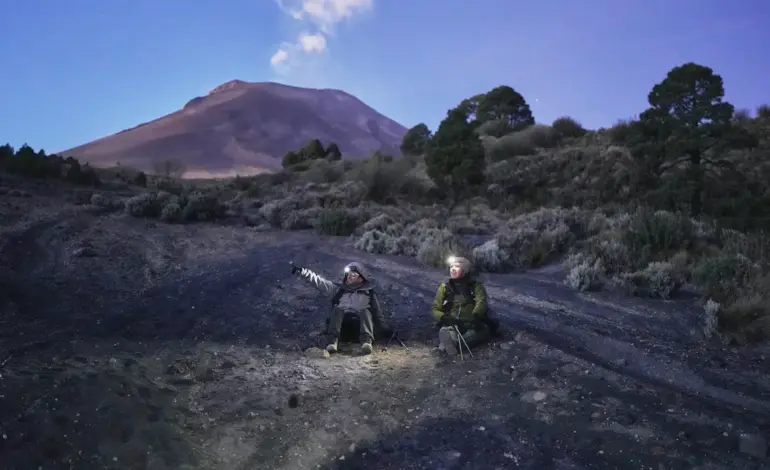
The team’s latest expedition involved setting up camp at 12,500 feet, offering a vantage point to observe the volcano’s activity. Researchers reported hearing small tremors and ash falling like rain during heightened activity periods. The crater rim glows ominously at night, underscoring the volcano’s volatile state.
Calo emphasizes that hands-on experience is essential for understanding volcanic systems. The team’s work not only enhances scientific knowledge but is vital for public safety, helping authorities to develop more effective preparedness strategies in the face of potential eruptions.
As this story unfolds, the research team is expected to continue analyzing data to refine their understanding of Popocatepetl’s internal environment. Their findings will be crucial for forecasting volcanic hazards and ensuring the safety of the millions who could be impacted by future eruptions.
Stay tuned for more updates on this developing story as scientists delve deeper into the mysteries of one of the world’s most significant natural threats.