

Paraplegic Engineer Makes History as First Wheelchair User in Space
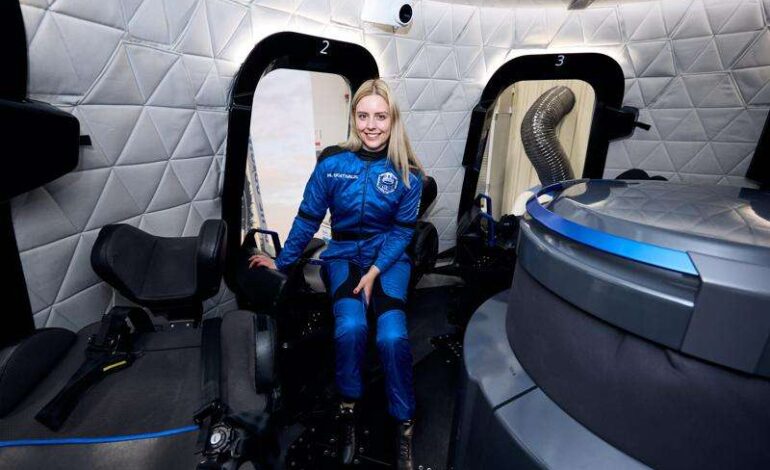

UPDATE: In a groundbreaking achievement for accessibility, Michaela Benthaus, a 33-year-old paraplegic engineer from Germany, has become the first wheelchair user to journey into space. The historic flight took place on July 15, 2023, launching from West Texas aboard Blue Origin’s New Shepard rocket, alongside five other passengers.
This remarkable mission marks a significant milestone not only for Benthaus but also for the future of space travel, emphasizing inclusivity for individuals with disabilities. Severely injured in a mountain bike accident seven years ago, Benthaus left her wheelchair behind as she ascended for a 10-minute flight that allowed her to experience weightlessness and witness Earth from above.
The flight, which was organized by Hans Koenigsmann, a retired executive from SpaceX, included only minor adjustments to the capsule to enhance accessibility. Blue Origin engineer Jake Mills stated that the New Shepard capsule was designed with inclusivity in mind, accommodating a diverse range of passengers, including those with limited mobility and sensory impairments.
Benthaus’s journey was made possible with thoughtful preparations, including a patient transfer board and a carpet laid out by the recovery team to facilitate her transition back into her wheelchair post-landing. Koenigsmann played a crucial role as her emergency helper, ensuring her safety and comfort throughout the mission.
Reflecting on her extraordinary opportunity, Benthaus shared her initial disbelief about being selected for the flight. “I never really thought that going on a spaceflight would be a real option for me… There is like no history of people with disabilities flying to space,” she said in an interview ahead of the launch.
This private mission, separate from her work at the European Space Agency, holds profound significance for Benthaus, who aims to pave the way for greater accessibility not only in space but also on Earth. “I hope I’m only the start,” she expressed, emphasizing her desire to inspire further advancements in inclusivity.
The mission contributes to Blue Origin’s growing list of 86 space travelers since its first passenger flight in 2021, initiated by billionaire founder Jeff Bezos. Among her fellow passengers were business executives and a computer scientist, all sharing the extraordinary experience of space travel.
While the ticket prices for this mission remain undisclosed, the impact of Benthaus’s journey is undeniable. Her flight not only showcases the potential for individuals with disabilities to partake in space exploration but also serves as a catalyst for change in how society views inclusivity.
As the world watches this historic event, the hope is that it will inspire more opportunities for people like Benthaus, ultimately leading to a more inclusive approach to space travel and beyond. The significance of this flight extends far beyond its duration, marking a momentous step toward breaking barriers for individuals with disabilities in all areas of life.