


Fei-Fei Li Urges Balanced AI Messaging Amid Extreme Rhetoric
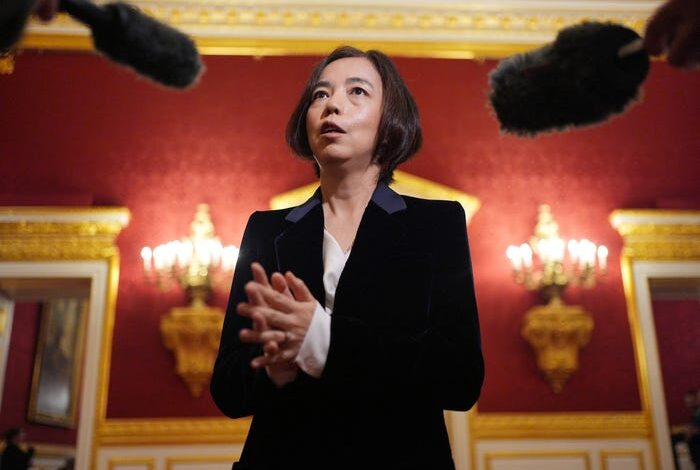

UPDATE: Fei-Fei Li, renowned as the Godmother of AI, has just expressed her deep disappointment with the current extreme messaging surrounding artificial intelligence. Speaking at Stanford University on July 20, 2023, Li criticized the prevailing rhetoric as either portraying a doomsday scenario or an unrealistic utopia, arguing that such extremes mislead the public.
In her urgent address, Li emphasized, “We’ve got the total extinction, doomsday, and all that talk about AI will ruin humanity, machine overlord.” On the flip side, she highlighted the overly optimistic claims suggesting post-scarcity and infinite productivity due to AI advancements. She stated, “I like to say I’m the most boring speaker in AI these days because precisely my disappointment is the hyperbole on both sides.”
Li, a professor at Stanford and co-founder of World Labs, which focuses on developing AI models for 3D environments, warned that this “extreme rhetoric” is not just unhelpful but dangerous. “The world’s population, especially those who are not in Silicon Valley, need to hear the facts,” she said. “That kind of public education is not as good as I hope it is.”
Li’s remarks resonate with other prominent figures in the AI community. In a July talk, Andrew Ng, founder of Google Brain, described the concept of artificial general intelligence (AGI) as overhyped, asserting that “for a long time, there’ll be a lot of things that humans can do that AI cannot.” Meanwhile, Yann LeCun, former chief AI scientist at Meta, stated that while large language models are “astonishing,” they do not lead towards human-level intelligence.
As the conversation around AI intensifies, Li’s urgent call for balanced communication underscores a critical need for clarity in public discourse. She passionately advocates for a more factual and nuanced approach to educating the public about AI’s real capabilities and limitations.
The implications of extreme AI messaging are vast, affecting policy, public perception, and ultimately the integration of AI technologies into society. With influential voices like Li, Ng, and LeCun advocating for a measured narrative, the tech community is urged to recalibrate its discourse.
As this conversation evolves, the tech world and the general public will be closely watching how leaders in AI respond to this critical call for balance. The future of AI communication could significantly shape understanding and acceptance of the technology across global populations.
Stay tuned for more updates as this story develops.