
Accused Tupac Shakur Killer Seeks to Block Key Evidence in Case
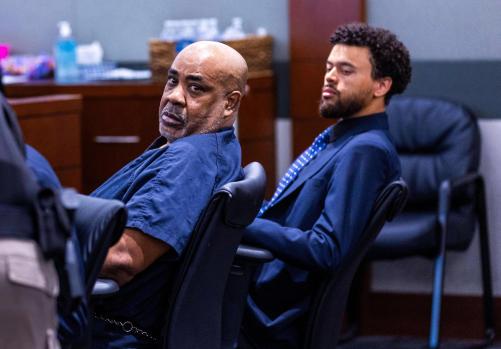

UPDATE: The legal battle intensifies as Duane “Keffe D” Davis, the man accused of murdering rap legend Tupac Shakur in 1996, is seeking to suppress evidence gathered during what his attorneys describe as an “unlawful nighttime search.” This urgent motion was filed this week in Las Vegas, escalating the already high-stakes case.
Davis, charged with first-degree murder in the notorious drive-by shooting that shocked the music world, argues that the search warrant was issued based on a “misleading portrait” of him as a dangerous drug dealer. His defense claims this portrayal misrepresented his current lifestyle, stating that he has been a retired cancer survivor since 2008, working in oil refinery inspections and living with his family in Henderson, a suburb of Las Vegas.
According to Davis’ attorneys, the judge authorized a nighttime search without proper justification. They assert that the circumstances did not meet the legal standards required for such an action, which is typically reserved for urgent situations where evidence might be destroyed if officers wait until daylight. “The court wasn’t told any of this,” his attorneys emphasized, arguing that the decision was based on “clearly erroneous” facts.
The Las Vegas Metropolitan Police Department executed the search, seizing electronic devices, “purported marijuana,” and numerous photographs. They have refrained from commenting on the details of the case due to ongoing litigation, but indicated that conducting the search at night allowed officers to secure the area more safely, minimizing risk to neighboring residents.
Davis, now 60 years old, maintains his innocence following his arrest in September 2023. He entered a not guilty plea and has sought release from custody since shortly after his detainment. His defense team claims that his arrest is based on dubious public statements he made, suggesting he was present during the shooting, which they argue lack corroboration.
The attorneys have pointed out that Davis has financially benefitted from his claims regarding the case, having shared his story in documentaries and a 2019 book. “Shakur’s murder was essentially the entertainment world’s JFK assassination,” they stated in their motion, highlighting the sensational nature of the case and its impact on public discourse.
As this legal saga unfolds, the implications extend beyond Davis himself, touching on broader themes of justice, celebrity culture, and the long-lasting effects of violence in the music industry. Observers are keenly awaiting the court’s decision on this critical motion, which could significantly alter the trajectory of the case.
What happens next? Legal experts and fans alike will be closely monitoring the court’s response to this motion, as it could either bolster Davis’s defense or further complicate the already convoluted proceedings surrounding Tupac Shakur’s legacy. Stay tuned for more updates on this developing story.