


Simplifying Docker Management: How DockTail Transforms Setup
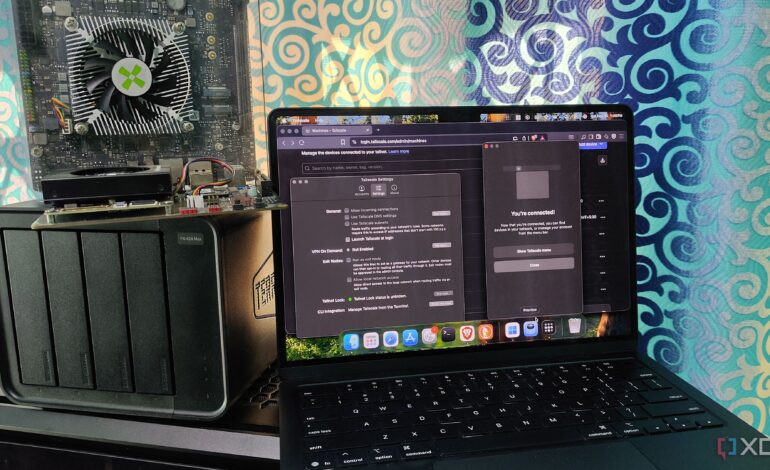

In a significant development for home server users, DockTail has emerged as a game-changing tool that simplifies the management of Docker services. Designed to streamline the process of connecting containers to private networks, DockTail eliminates the complexities associated with traditional reverse proxy setups.
For years, users managing multiple Docker services have faced the challenge of maintaining reverse proxies. The process often involves intricate configurations including subdomains, SSL certificates, and forwarding rules, which can become overwhelming. Many users find themselves spending hours troubleshooting when services fail to load or behave unexpectedly.
Revolutionizing Access with Tailscale Integration
DockTail integrates seamlessly with Tailscale, a service that creates secure private networks for devices. Traditionally, users would need to run a separate Tailscale sidecar container for each Docker service. DockTail automates this process, monitoring containers and automatically informing Tailscale which ones should be accessible on the user’s virtual network.
This automation significantly reduces the need for complex routing rules, allowing users to focus on their services without the constant worry of misconfigurations. By simply labeling a service, DockTail ensures it is instantly available on the Tailscale network. This simplicity makes DockTail particularly appealing for home users who typically do not require public internet access to their servers.
Real-World Benefits and User Experiences
The impact of DockTail becomes evident when migrating existing services. For instance, a user shared their experience of transitioning from a traditional reverse proxy to DockTail. They started by moving a utility container and immediately witnessed it appear in DockTail’s interface. Encouraged by the ease of this transition, they subsequently migrated their media server, dashboard, note-taking tool, and even Navidrome. Each service connected without any need for DNS adjustments or port openings.
This ease of management has freed users from the burdens of maintenance associated with conventional proxy setups. For many, this means reducing the number of configuration files and eliminating unnecessary network components. The result is a cleaner, more organized server environment, enhancing overall usability and reliability.
As a testament to its effectiveness, one user noted that their server has never felt more streamlined. The removal of extra layers and complexity has not only made their setup easier to maintain but has also fostered a more enjoyable experience for experimenting with new applications. With DockTail, the process of adding new containers has become as simple as tagging them for visibility on the Tailscale network.
In conclusion, DockTail represents a significant step forward for those looking to simplify their Docker management. Its ability to integrate with Tailscale allows for a more intuitive and less daunting approach to self-hosting. Users can expect a streamlined process that minimizes the friction involved in managing services, making it an essential tool for anyone looking to enhance their home server experience.
For those interested in accessing Docker containers remotely, DockTail offers an innovative solution that merits further exploration.