

Samsung Unveils Wider Foldable Designs with Galaxy Z TriFold
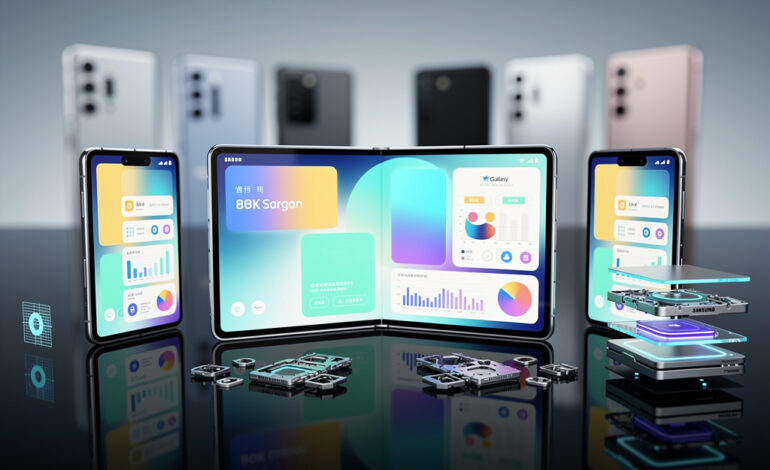

Samsung Electronics Co. is taking significant strides in the foldable smartphone market, unveiling innovative designs that could redefine user interaction with mobile devices. Recent reports indicate that the South Korean tech giant is soliciting consumer feedback through surveys featuring concept images of a notably wider foldable phone. This initiative arises in response to increasing competition from Chinese manufacturers and the anticipated entry of major players like Apple Inc.
The move towards broader designs is aimed at addressing longstanding user concerns regarding screen space and usability in foldable technology. According to a report from Android Authority, the new concepts show a device that unfolds into a wider aspect ratio, potentially offering a more tablet-like experience within a compact format. Unlike the current Galaxy Z Fold series, which features taller and narrower profiles, these wider designs could enhance multitasking capabilities, video consumption, and overall productivity. Industry experts suggest that this shift may be a reaction to user feedback highlighting the constraints of existing foldable models.
Galaxy Z TriFold Marks a New Era
Samsung’s introduction of the Galaxy Z TriFold signifies a notable advancement in foldable design. As detailed in a report from Samsung Newsroom, this device unfolds twice to reveal a 10-inch display, merging the convenience of a smartphone with the functionality of a tablet. Initially launched in South Korea, the U.S. rollout is planned for 2026. The TriFold is priced at a premium, targeting professionals who require high productivity on the go, managing tasks such as spreadsheets, video calls, and creative projects.
The competitive landscape is intensifying, with companies like Huawei already showcasing tri-fold devices, including the Mate XT, which has generated considerable interest. Samsung’s TriFold incorporates advanced features such as AI-enhanced multitasking and cinematic viewing modes, potentially setting new benchmarks for immersive mobile experiences.
Discussion on social media platforms like X (formerly Twitter) reveals a growing excitement about these developments. Users and tech enthusiasts are speculating on how wider foldables could revolutionize everyday use. While these online sentiments reflect potential interest, they underscore Samsung’s ambition to make foldables a significant part of its premium lineup by 2025.
Engineering Innovations and Market Implications
At the core of Samsung’s wide foldable concepts are considerable engineering challenges. Achieving a broader design necessitates innovative hinge mechanisms to alleviate stress on the display, as previous generations have faced issues with creases and durability. Reports indicate that Samsung’s research and development efforts are utilizing ultra-thin glass and reinforced polymers to maintain sleek profiles while enhancing width.
Battery life and thermal management are additional hurdles in wider designs, as larger screens require more power. Industry insiders note that Samsung’s integration of efficient chipsets, including the latest Exynos processors, aims to address these challenges. Furthermore, the company is striving for thinner devices overall, with suggestions of a 2025 lineup that could introduce rollable elements alongside wide foldables, further blurring the lines between smartphones and tablets.
From a manufacturing standpoint, scaling production for these complex devices presents its own challenges. Samsung Display, the company’s display-making subsidiary, has heavily invested in flexible OLED technology, facilitating the seamless panels seen in the new concepts. This investment not only supports Samsung’s internal products but also positions the company as a key supplier for competitors in the foldable ecosystem.
The broader implications for the smartphone market are significant. As reported by CNBC in early December 2025, Samsung’s multi-folding initiatives reflect a response to pressures from innovative Chinese rivals, creating a competitive race for dominance in emerging mobile categories. Wider foldables could appeal to creative professionals and gamers seeking expansive screens without sacrificing portability, potentially broadening the market appeal beyond early adopters.
Consumer sentiment, as derived from discussions on X, showcases a blend of enthusiasm and skepticism. Many users express excitement about the potential for improved multitasking, envisioning devices that function as mobile workstations. Conversely, there are concerns regarding pricing, with the TriFold’s high cost being compared to luxury items rather than mainstream technology. Samsung’s approach of incorporating consumer feedback into design development, as highlighted in the Android Authority report, positions the company to address user pain points effectively.
Looking ahead, the anticipated entry of Apple’s foldable device by 2026 could pose challenges for Samsung’s market position. Analysts predict that the iPhone Fold may capture over 20% of the foldable market in its first year, leveraging Apple’s ecosystem to facilitate user adoption. Consequently, Samsung’s focus on wider designs represents a preemptive strategy to secure consumer loyalty through superior hardware innovation.
Samsung’s broader vision includes redesigning its entire foldable portfolio by 2025. Industry watchers speculate that this may involve new fold styles prioritizing width for enhanced media consumption, shifting away from the traditional book-like designs of the Z Fold series. TM Roh, Samsung’s mobile chief, has emphasized the goal of making foldables mainstream by enhancing premium user experiences.
Integration with emerging technologies, such as augmented reality (AR) glasses and extended reality (XR) headsets, adds another layer to Samsung’s strategy. Speculation on X suggests that wider foldables might complement Samsung’s upcoming XR products, fostering seamless ecosystems that adapt to user needs. This comprehensive approach could distinguish Samsung in an increasingly crowded market, where integrated experiences become paramount.
Economically, the push into wide foldables reflects Samsung’s ambition to increase profit margins. With traditional smartphone sales plateauing, foldables present an opportunity for higher average selling prices—often double that of flagship models. By innovating in width and multi-fold capabilities, Samsung seeks to justify these price premiums through enhanced productivity and entertainment benefits.
Rivalry from brands like Google and Oppo continues to heighten competition. Samsung is reportedly teasing high-end foldables specifically for markets like China, where demand for cutting-edge technology remains high. This targeted rollout strategy allows Samsung to test its wide concepts in competitive environments before a broader global expansion.
The phased launch of the Galaxy Z TriFold, as discussed in CNET, highlights logistical challenges, particularly concerning supply chain constraints for advanced components. Nevertheless, this strategy builds anticipation, with buzz around its 10-inch screen that fits conveniently in a pocket, positioning it as a potential game-changer in mobile computing.
As Samsung refines its wide foldable concepts, a focus on durability is crucial. Advancements in water resistance and drop protection, as highlighted in Reuters coverage, aim to alleviate consumer hesitations that have impeded adoption. By 2026, as Apple’s entry approaches, Samsung’s innovations may either solidify its lead or necessitate adaptations based on market reception.
Collaboration with software developers will be vital for the success of wide foldables. Ensuring that applications scale effectively on expanded screens will determine the viability of this new category, akin to Samsung’s partnerships for the original Fold’s ecosystem. Conversations on X indicate a willingness among developers to explore new form factors.
In summary, Samsung’s exploration of wide foldables signals a maturing mobile category ready for widespread acceptance. By integrating consumer insights with advanced engineering, the company is not merely iterating but reimagining mobile possibilities. This evolution could usher in an era where device width becomes a pivotal factor in enhancing user experience.