


How One User Rediscovered News with a Self-Hosted RSS Reader
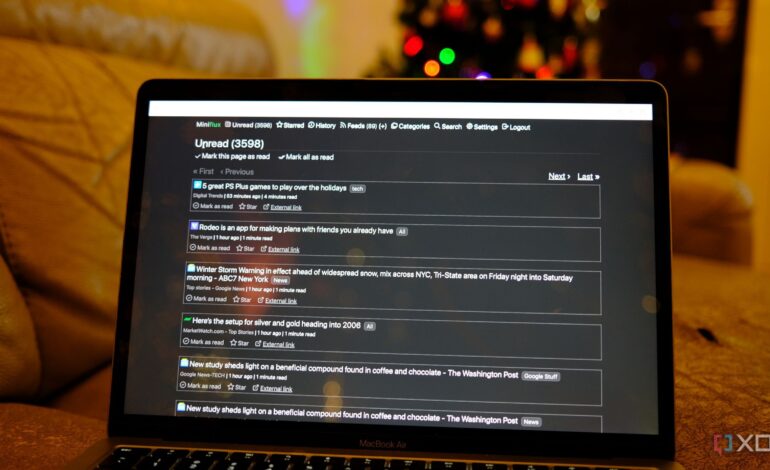

A user has successfully transitioned from social media to a self-hosted RSS reader, significantly improving their news consumption habits. After years of relying on social media for updates, the individual found that the distractions and noise often hindered their productivity. By adopting Miniflux, an open-source RSS reader, they have regained control over their news reading experience.
Breaking Free from Social Media
Initially, social media served as a convenient platform for reading news and connecting with others. Over time, it became evident that this convenience came at a cost. The user found themselves increasingly addicted to social media, where the intended goal of accessing news was overshadowed by distractions and irrelevant content.
After the discontinuation of Google Reader, alternatives like Feedly were utilized. Yet, the reliance on social media continued to dominate their reading habits. The turning point came when they decided to self-host an RSS reader as part of a home lab project, leading to a profound shift in their approach to news consumption.
Setting Up Miniflux
Upon rediscovering the benefits of RSS feeds, the user chose to deploy Miniflux, well-regarded among self-hosting communities, including members of XDA Developers. The installation process was straightforward, involving the setup of a PostgreSQL database and configuration adjustments for secure access via an Nginx reverse proxy.
After completion, the user imported an OPML file from Feedly, curating their sources to focus on quality over quantity. This meticulous organization allowed for a streamlined experience free from advertisements and engagement traps, typical of social media platforms. By utilizing RegEx in Global Block Rules, they filtered out repetitive content, enhancing the overall quality of the news consumed.
A Renewed Approach to News Reading
With Miniflux, the user has transformed not only the medium through which they access news but also the manner in which they engage with it. The absence of a constantly refreshing timeline has alleviated the pressure to consume information hastily. This change has fostered a more thoughtful approach to reading, allowing them to delve into articles rather than skimming headlines.
Keyboard shortcuts facilitate easy navigation, and feeds that remain unread are automatically removed after a week. This structure encourages a conscious decision to engage with news, rather than an automatic response driven by habitual scrolling. The minimalist design of Miniflux promotes focus and reduces the clutter often associated with social media.
While self-hosting requires effort and commitment, the benefits are evident. The user highlights that though Miniflux may not appeal to everyone due to its simplicity, it offers a refreshing alternative to platforms filled with autoplay videos and algorithmically driven recommendations. The liberation from social media’s distractions has allowed them to regain control over their reading experience.
This shift has proven beneficial not just for personal productivity but also for mental clarity, as the user continues to prioritize high-quality news content over the chaos of social media feeds. The journey back to RSS has not only redefined how they consume news but has also helped reclaim valuable time and attention.