Artemis II Crew Prepares for Critical Re-entry After 400,000-Mile Journey
NASA's Artemis II crew faces the most demanding phase of their mission as they prepare to re-enter Earth's atmosphere at 25,000 mph, testing every spacecraft system in the final crucial moments.
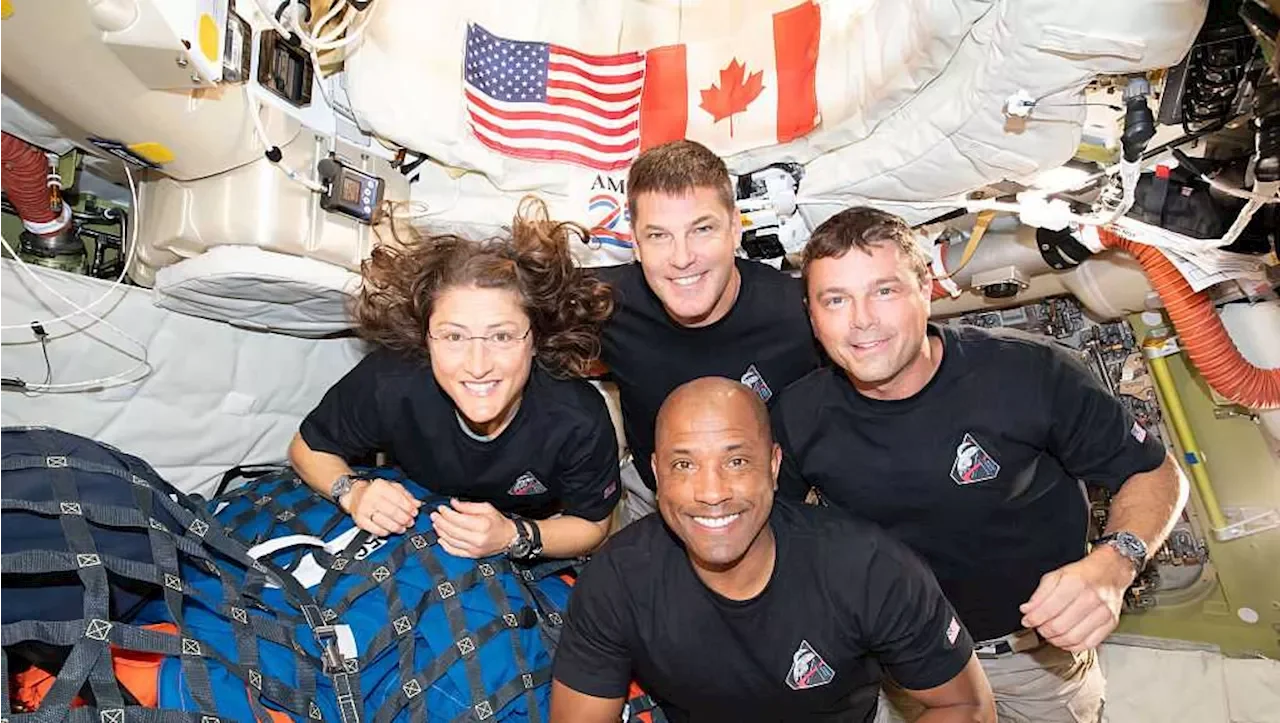
NASA's Artemis II crew is set to return to Earth, facing a critical re-entry sequence that tests every system aboard the Orion spacecraft. When astronauts return from deep space, the mission isn't truly over until the spacecraft safely touches the ocean. For NASA's Artemis II crew, that moment will come after traveling nearly 400,000 miles, testing the systems that will shape the future of human exploration beyond Earth.
According to Amit Kshatriya, the mission's final stage represents the culmination of everything the spacecraft and crew have accomplished during their journey. "This evening, Reid, Victor, Christina, and Jeremy — the crew of Artemis II — will come home. They will have traveled 400,000 miles. They will have seen what no living person has seen. We will have tested every system on the spacecraft in the environment it was built for." Those final moments are not simply ceremonial; they are the most demanding phase of the entire mission.
As the spacecraft approaches Earth, the Orion spacecraft will slam into the atmosphere at speeds approaching 25,000 miles per hour. The capsule's heat shield — built to withstand temperatures approaching those on the surface of the Sun — must protect the crew as the spacecraft decelerates during fiery re-entry. Every system tested during the mission comes together in this final sequence: life support, navigation, propulsion, communications, and recovery operations.
Kshatriya emphasized the enormous trust the astronauts place in those systems: "We have high confidence in the system and the heat shield and the parachutes and the recovery systems we put together. The engineering supports it. Artemis I flight data supports it. Our analysis supports it. And tomorrow the crew is going to put their lives behind that confidence."
Inside mission control, the focus is even sharper. Jeff Radigan, a NASA flight director, describes the landing phase as a chain of events that must unfold perfectly. "It's 13 minutes of things that have to go right. I have a whole checklist in my head — the forward bay cover has to come off, the drogue parachutes have to deploy, the main chutes have to deploy, the reefing systems have to cut, and we have to get touchdown angle alignment."
However, this description simplifies what actually happens. Radigan explains that the process begins long before the capsule reaches the atmosphere. "It's not so much 13 minutes. It's more like an hour and a half of things that have to go right." Before atmospheric entry even begins, the spacecraft must separate from its service module and ensure the heat shield is positioned correctly for the intense heat of re-entry.
On their final full day in space, the Artemis II crew began their morning with the song "Lonesome Drifter" by Charley Crockett as they approached Earth from roughly 147,000 miles away. The crew includes NASA astronauts Reid Wiseman, Victor Glover, and Christina Koch, along with Jeremy Hansen of the Canadian Space Agency. Their day involved detailed preparations for re-entry, including cabin configuration with secured equipment and installed crew seats, trajectory corrections with Orion's thrusters, weather and recovery briefings, and scheduled burns to align the spacecraft for atmospheric entry.
The spacecraft's return sequence unfolds with precise timing. Twenty minutes before entry, Orion separates from its service module southeast of Hawaii. At entry interface, the spacecraft reaches a maximum velocity of about 23,864 mph. During peak heating, plasma forms around the capsule, causing a six-minute communications blackout. The forward bay cover then jettisons, drogue parachutes deploy at 22,000 feet, and three main parachutes deploy at 6,000 feet. The crew will experience up to 3.9 Gs during descent.
The spacecraft is expected to splash down in the Pacific Ocean off the coast of San Diego. Recovery operations will involve helicopters and the amphibious transport dock USS John P. Murtha. Within about two hours, the astronauts will be extracted from Orion and flown to the ship, where they will undergo initial medical checks before returning to NASA Johnson Space Center in Houston.
Artemis II is more than a single flight. The mission's data — from life support systems to re-entry performance — will guide every crewed mission that follows in NASA's Artemis program. If the final sequence goes as planned, the mission will mark a major step toward returning humans to the Moon and eventually sending astronauts to Mars. For mission control and the crew alike, the focus remains on those final minutes — the carefully choreographed chain of events that brings explorers safely home.