A321XLR's Fuel Tank: Visible or Hidden?
The A321XLR's massive Rear Centre Tank isn't visible from outside, but creates a noticeably larger belly fairing. This integrated fuel system enables the aircraft's impressive 4,700 nautical mile range.
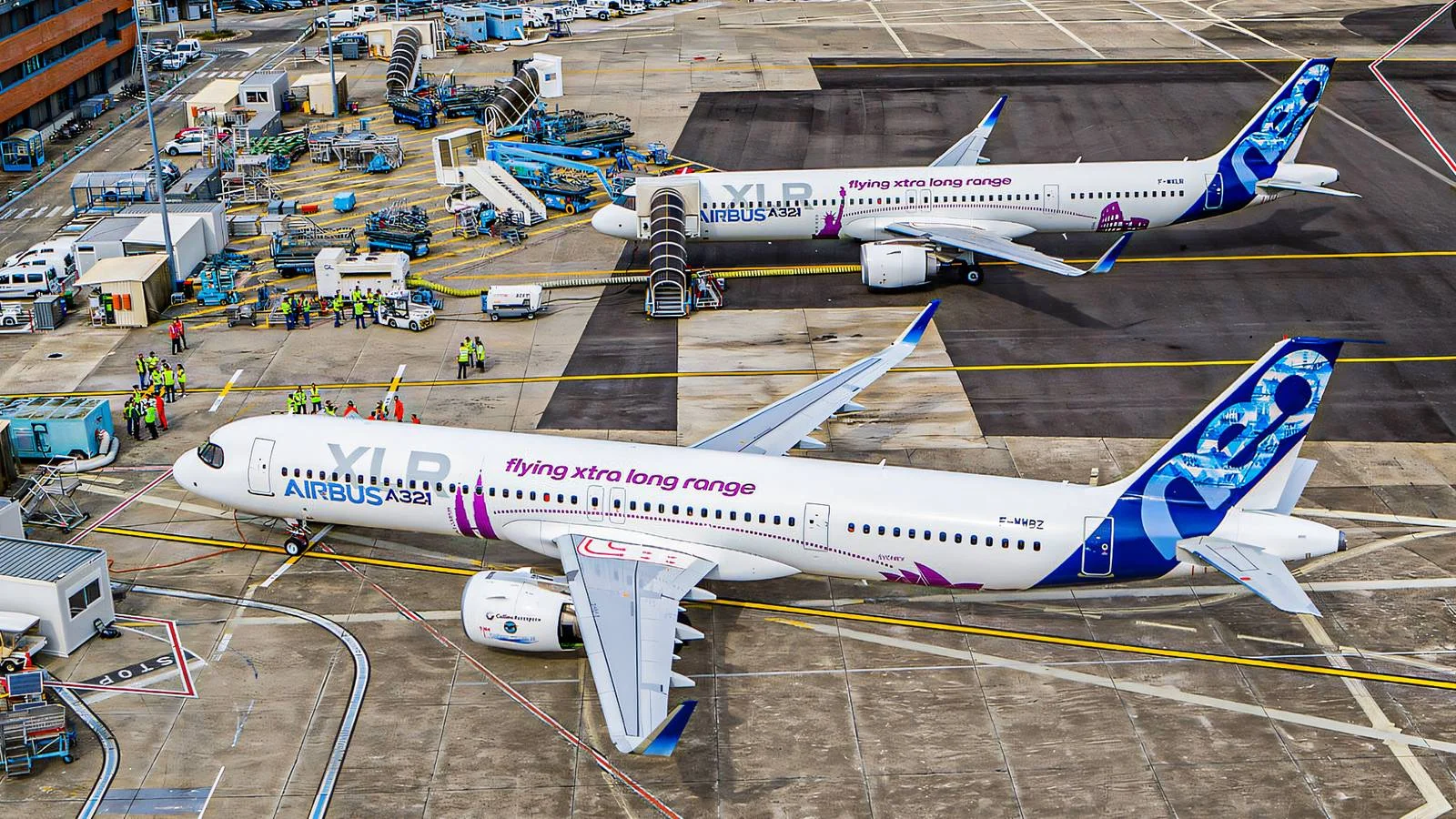
The Airbus A321XLR's distinctive fuel tank system represents one of the most significant technical innovations in modern narrowbody aircraft design. While the 13,100-liter Rear Centre Tank is not actually visible from the outside of the aircraft, its internal structure and placement create a noticeably larger belly fairing along the bottom of the fuselage, making it one of the few visual differences between the XLR and other A321 family variants.
The A321XLR was designed as an extra-long-range variant of the highly successful A321neo family. With a maximum range of up to 4,700 nautical miles (8,700 km), the aircraft enables airlines to operate "long and thin" routes—long-haul routes where demand might not be sufficient to justify deploying a widebody aircraft. This capability opens countless new routes for carriers, such as Dallas to Lisbon, Paris to Vancouver, or New York to Buenos Aires.
The aircraft shares many advantages with the A321neo, including 30% lower fuel burn and CO2 emissions per seat, along with half the noise footprint of earlier-generation aircraft. The A321XLR has a maximum takeoff weight of 101.5 tonnes, an increase of 4.5 tonnes compared to the NEO variant. This additional weight capacity allows the aircraft to carry extra fuel while maintaining payload capacity, essential for long-haul narrowbody operations. Inside, the A321XLR appears identical to the A321neo, with maximum seating capacity up to 244 passengers, though most configurations seat between 150 and 200 passengers.
The Rear Centre Tank is the most distinctive technical feature enabling the A321XLR's extended range. Unlike earlier A321LR variants equipped with auxiliary fuel tanks in the cargo hold, the RCT is built directly into the aircraft's fuselage structure. Located in the rear portion of the lower fuselage behind the wing and main landing gear, it utilizes space that would otherwise remain unused. The tank essentially stretches the main fuel tanks and belly underneath the wings further back to accommodate additional fuel capacity.
According to Airbus specifications, the Rear Centre Tank holds up to 3,460 gallons (13,100 liters) of fuel. Airlines can also install an optional Additional Centre Tank in the cargo hold, providing another 820 gallons (3,100 liters) for a total of 4,280 gallons (16,200 liters). In comparison, the A321LR equipped with three ACTs has only 2,350 gallons (8,890 liters) of additional fuel capacity, giving the A321XLR an 82% fuel capacity advantage over a standard A321neo.
The integrated design of the RCT reduces the need for structural modifications post-production and allows more efficient fuel weight distribution. Additionally, it preserves cargo space onboard, as volume previously occupied by three ACTs becomes available for revenue cargo operations. This is particularly important for emerging long-haul transatlantic routes where cargo plays a significant revenue role.
While the RCT is internal, its presence creates a visual distinction on the A321XLR. The modified belly fairing along the aircraft's bottom, particularly aft of the wing's trailing edge to the third set of doors, appears larger and more robust than on other A321 variants. The fairing extends to the aft edge of the mid-aircraft door on the XLR, while on standard A321neo aircraft, it stops short of the forward edge of that door. This subtle difference serves as one of the few visual clues distinguishing an A321XLR from standard A321neo or A321LR variants.
The unique RCT placement required additional regulatory scrutiny. Aviation regulators, including aviation authorities, expressed initial safety concerns about locating a fuel tank inside the fuselage rather than in the wings, where traditional airliner fuel tanks are mounted. The lower ground position of the RCT compared to wing tanks raised concerns about potential post-crash ground fires and passenger safety in emergencies.
To address these concerns, Airbus implemented advanced fire-resistant materials and rigorous evacuation testing. The external walls of the fuel tank, which also serve as aircraft skin, were engineered to prevent penetration upon impact, ensuring the A321XLR meets all safety standards for long-haul operations.
The significance of the Rear Centre Tank becomes evident when comparing aircraft ranges. The standard A321neo offers approximately 3,300 nautical miles (5,920 km), sufficient for medium-haul routes but limiting long-haul capabilities. The A321XLR's extended 4,700 nautical mile range represents a 1,500 nautical mile increase, enabling connections between cities previously requiring widebody aircraft. Airlines including Iberia now operate nonstop narrowbody flights on routes like Madrid to Boston and Washington D.C.
The range improvement results in flight durations sometimes stretching nine to ten hours—significant time aboard a narrowbody aircraft with smaller cabins and less effective comfort systems compared to widebodies. However, the XLR's superior operating economics often translate to lower fares, benefiting both airlines and passengers. The A321XLR's rapidly growing popularity, currently accounting for around one-tenth of all A321neo orders, demonstrates its transformative impact on global aviation, reshaping long-haul travel with narrowbody economics.