

Cristobal Reflects on Tough CFP Decisions Affecting Miami and Notre Dame
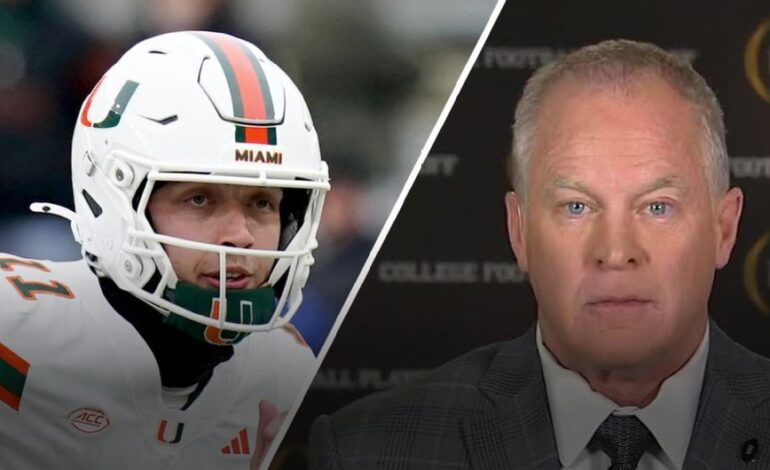

Mario Cristobal, head coach of the Miami Hurricanes, recently shared insights regarding the challenges of the College Football Playoff (CFP) selection process. Having spent four seasons under the mentorship of Nick Saban at Alabama, Cristobal recalled a poignant lesson from Saban: “If you want to make everybody happy, don’t coach and get involved in football. Go sell ice cream, because the ice cream man makes everybody happy.” This reflection underscores the inherent difficulties within the sport, particularly highlighted by the recent CFP decisions.
This season, the Miami Hurricanes finished with a record of 10-2 and secured a playoff spot, contrasting with the Notre Dame Fighting Irish, who also ended their season at 10-2 but were overlooked by the CFP committee. The decisive factor came down to Miami’s 27-24 victory over Notre Dame in their season opener, which ultimately influenced the committee’s decision to select Miami for the playoff while ending Notre Dame’s season.
Implications of the CFP Selection Process
In response to the committee’s selection, Notre Dame opted to decline bowl invitations, focusing instead on a potential national title bid in 2026. Cristobal showed respect for the Irish program, stating, “Notre Dame’s a great football team.” He acknowledged the complexities of the selection process, indicating that all involved parties are striving to improve it. “It’s a tough business, man. It’s a really, really tough business,” he added, emphasizing the emotional toll on teams and their players.
The CFP selection committee recently revisited the Miami-Notre Dame matchup, with committee chair Hunter Yurachek noting that observations revealed Miami’s athleticism gave them an edge. He stated, “There was observation from the coaches in the room where Notre Dame did a lot of chasing of some of the athletic receivers, especially on the Miami side.” He added that Miami’s defense effectively stifled Notre Dame’s running game, which had not been accomplished by any other team throughout the season.
Future Changes to the CFP Process
As the CFP landscape evolves, potential tweaks to the selection process are anticipated. Miami faced a challenging five-way tiebreaker for a berth in the ACC title game, which raised questions about the rules governing the league. Had Miami won that tiebreaker, it might have altered the playoff scenario significantly, allowing Notre Dame to potentially secure a playoff position as well.
Despite the controversies, a memorandum of understanding signed last year guarantees that the playoff field will expand to at least 12 teams starting in 2026. This change ensures that Notre Dame will receive a guaranteed spot if they finish in the top 12. Additionally, a deal established in March guarantees CFP spots for conference champions from the ACC, Big Ten, SEC, and Big 12, as well as the highest-ranked Group of 5 champion.
Reflecting on the broader implications of these decisions, Cristobal remarked on the multitude of factors influencing game outcomes. “It’s a hard job. It’s a tough industry. Where else are so many variables so influential in the outcome of a game?” he questioned. He also noted the impact of human error, officiating, and injuries on the sport, emphasizing the complexity of the decision-making process by the selection committee.
Had Miami not qualified for the CFP, the team might have faced a lower-tier bowl game, an option many players would likely consider skipping, especially those eyeing the 2026 NFL Draft. Cristobal acknowledged that bowl games often lose their appeal when teams miss the playoff. “The passion behind college football is at an all-time high,” he stated, expressing satisfaction that the team’s on-field performance was not compromised in the selection process.
As the landscape of college football continues to shift, Cristobal remains optimistic that the efforts of athletes and coaches will be recognized, stating, “With all the chaos in college football right now, I’m glad that we didn’t punish the student athletes who actually laid it on the line – on the field.”
The complexities of the CFP selection continue to evoke strong reactions, as teams navigate the pressures of competition and the desire for recognition. As the situation develops, the focus remains on ensuring that the best teams are rewarded for their efforts on the field.
The Associated Press and ESPN’s Heather Dinich and Andrea Adelson contributed to this report.