

Vega C Rocket Launches Advanced Korean Earth-Observation Satellite
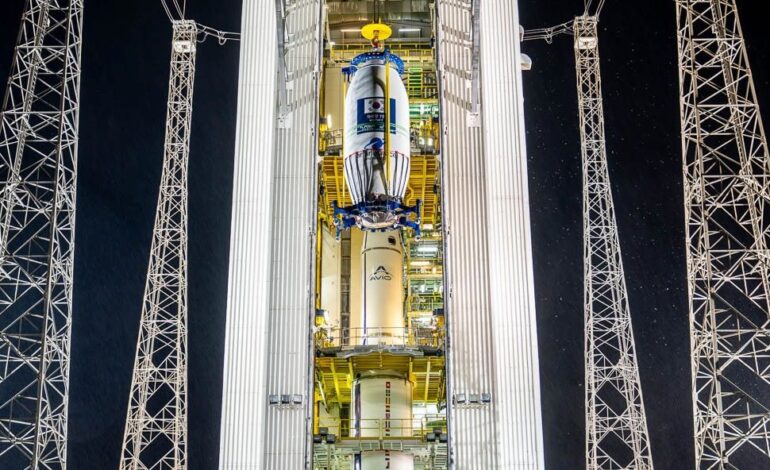

A European rocket successfully launched the advanced Earth-observation satellite, KOMPSAT-7, into orbit on December 1, 2023. The satellite lifted off from Europe’s Spaceport in Kourou, French Guiana, aboard a Vega C rocket at 12:21 p.m. EST (17:21 GMT; 2:21 p.m. local time). The launch was facilitated by the French company Arianespace, which provided live coverage of the event.
KOMPSAT-7, weighing approximately 3,990 pounds (1,810 kilograms), was developed by the Korea Aerospace Research Institute as the next-generation successor to KOMPSAT-3A, which entered orbit in March 2015. Arianespace’s press materials describe KOMPSAT-7 as “one of the world’s most advanced ultra-high-resolution optical satellites.” This technology aims to enhance observations of the Korean Peninsula and address the increasing demand for high-quality satellite imagery in the region.
Technological Advancements in Earth Observation
KOMPSAT-7 introduces innovative optical data transmission technology, marking a significant milestone as the first Korean satellite equipped with this capability. It enables real-time processing of extensive Earth-observation imagery through advanced electro-optical modules combined with onboard storage and processing systems. These advancements are expected to improve the efficiency and quality of data collected for environmental monitoring, urban planning, and disaster management.
Today’s mission, referred to as VV28, represents the sixth flight of the Vega C rocket, which stands at 115 feet (35 meters) tall and features four stages. Developed by the European Space Agency, the Vega C has had a mixed track record, with four of its five previous launches classified as successful. The only failure occurred during its second mission in December 2022. If the current launch proceeds as planned, KOMPSAT-7 will be deployed into a sun-synchronous orbit (SSO) at an altitude of 358 miles (576 kilometers) approximately 44 minutes after liftoff.
Importance of Sun-Synchronous Orbits
Satellites in sun-synchronous orbits circle the Earth’s poles, enabling them to pass over the same geographic area at the same solar time each day. This consistency provides uniform lighting conditions, making SSOs ideal for various Earth-observing missions, including agricultural monitoring, forestry management, and urban development planning.
The successful launch of KOMPSAT-7 underscores the growing collaboration between European and Korean space agencies and highlights advancements in satellite technology that will support critical observations of our planet. As nations continue to invest in Earth observation capabilities, the data generated by KOMPSAT-7 is poised to play a vital role in addressing global challenges.