

Thwaites Glacier Faces Critical Threat of Collapse, Study Reveals
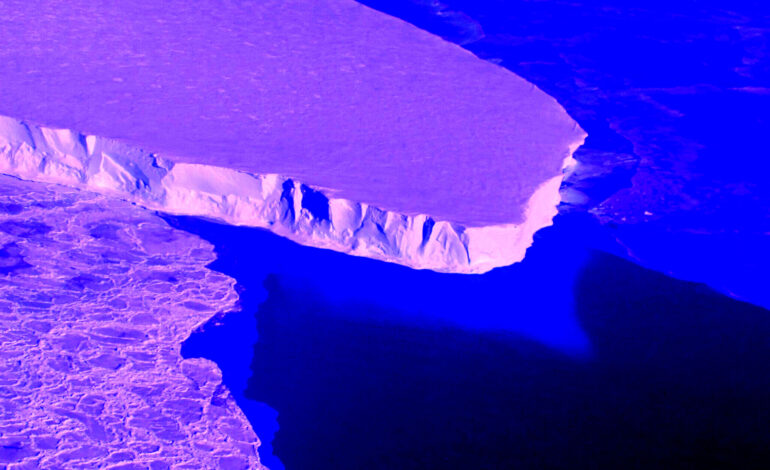

The Thwaites Glacier, often referred to as the “Doomsday Glacier,” is facing an alarming threat of collapse, which could have serious implications for global sea levels. Recent findings from a study conducted by the International Thwaites Glacier Collaboration (ITGC) reveal that the glacier’s retreat has accelerated significantly, with large cracks compromising its structural integrity. If the glacier were to collapse under its own weight, scientists estimate it could contribute as much as 11 feet to global sea level rise, potentially displacing tens of millions of people.
The situation has drawn the attention of researchers from the University of Manitoba, who analyzed satellite data spanning from 2002 to 2022. Their observations indicate that fractures in the Thwaites Glacier have expanded notably around a shear zone. The study detailed that the total area length of fractures has increased from approximately 100 miles to over 200 miles. Notably, the average length of these fractures has decreased, suggesting the presence of significant new stresses acting on the glacier.
Warming Oceans and Feedback Loops Intensify Risks
Beneath the surface, a similarly concerning situation is evolving. A recent study highlights how warming ocean waters are exacerbating the melting of ice shelves like Thwaites. Researchers have noted that changes can occur not just over years but within hours and days as swirling eddies of water, measuring up to six miles across, interact with the glacier.
The international research team has also identified a troubling feedback loop: when cold water from the glacier mixes with warmer, saltier ocean waters, it creates turbulence that accelerates further melting. According to Lia Siegelman, an assistant professor at UC San Diego and coauthor of the study, “This positive feedback loop could gain intensity in a warming climate.”
The ITGC has reported that the glacier’s retreat has “accelerated considerably over the past 40 years.” Although a complete collapse is not expected in the immediate future, their findings indicate that the glacier is likely to continue retreating at an increasing pace throughout the 21st and 22nd centuries.
Urgency for Climate Action
The urgency of the situation underscores the need for immediate climate change mitigation efforts. The ITGC emphasizes that “immediate and sustained climate change mitigation (decarbonisation) offers the best hope of delaying this ice loss and avoiding the initiation of similar unstable retreat in marine-based sectors of East Antarctica.”
As scientists continue to study the complexities of the Thwaites Glacier, the potential for catastrophic outcomes remains a significant concern. With each passing year, the implications of its retreat become more dire, highlighting the critical need for global awareness and action against climate change.