
Science
SpaceX Set to Launch Falcon 9 for Starlink Mission After Stand Down

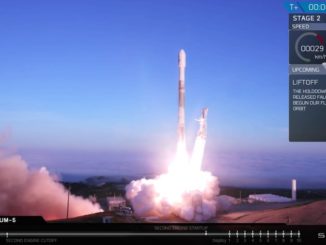
SpaceX is poised to launch its Falcon 9 rocket on February 7, 2024, marking a return to flight after a brief stand down period that lasted less than a week. The mission, designated Starlink 17-33, aims to deploy 25 additional Starlink satellites into the company’s expanding megaconstellation in low Earth orbit. Currently, more than 9,600 satellites are orbiting the Earth, according to data compiled by astronomer and orbital tracker Jonathan McDowell.
The liftoff from Vandenberg Space Force Base (VSFB) is scheduled for 9:21 a.m. PST (12:21 p.m. EST / 17:21 UTC). The Falcon 9 will follow a south-southwesterly trajectory during its ascent. Coverage of the launch will begin approximately 30 minutes prior to liftoff, providing real-time updates on this significant event.
Mission Details and Rocket Recovery
SpaceX plans to utilize the Falcon 9 first stage booster with the tail number 1088 for this mission. This launch will mark its 13th flight, following successful missions such as NASA’s SPHEREx, Transporter-12, and two batches of satellites for the National Reconnaissance Office.
Around 8.5 minutes after liftoff, the booster is scheduled to land on the drone ship ‘Of Course I Still Love You’, stationed in the Pacific Ocean. If successful, this will be the 176th landing on this particular vessel, contributing to SpaceX’s impressive record of 568 booster landings to date.
Following a period of unusual quiet and delays, SpaceX is returning to its more typical launch cadence. The company was initially set to launch the Starlink 6-103 mission from Space Launch Complex 40 at Cape Canaveral Space Force Station on February 3. However, an in-flight anomaly was reported after the payload deployment during the Starlink 17-32 mission, which took place on February 2.
Investigation and Future Launches
In a statement released on February 2, SpaceX acknowledged that the second stage experienced an “off-nominal condition” while preparing for the deorbit burn. The vehicle successfully completed its designated functions and deployed all 25 satellites into their intended orbit.
While NASA conducted a fueling test of its Space Launch System rocket, SpaceX moved the satellites for the Starlink 6-103 mission back to its Hangar X facilities at NASA’s Kennedy Space Center. Subsequently, the booster with tail number 1101 was prepared for the upcoming Crew-12 launch scheduled for the following week.
On February 2, the Federal Aviation Administration (FAA) announced the conclusion of the SpaceX-led investigation into the anomaly, allowing the company to resume FAA-licensed flights. The FAA confirmed that the probable cause of the incident was the Falcon 9 stage 2 engine’s failure to ignite prior to the deorbit burn. SpaceX has since identified technical and organizational measures to prevent a recurrence of such events.
With the Falcon 9 authorized to return to flight, SpaceX is set to continue its mission of enhancing global internet access through its Starlink program, while maintaining its commitment to safety and reliability in its operations.

iShares Semiconductor ETF Soars 12% in January Surge

Upgrade Your Home Network to Ensure Super Bowl Streaming Success

U.S. Olympic Figure Skaters Shine with Soviet Legacy

Four Olympians from U.S. Figure Skating Have Elite Soviet Roots

Amish Mother Shares Heartfelt Moments with Her Six Children

Jayda Cheaves Claims Lil Baby and Ari Fletcher Had an Affair

Rachel Campos-Duffy Exits FOX Noticias; Andrea Linares Steps In

Piper Rockelle Shatters Record with $2.3M First Day on OnlyFans
Harvard Physicist Proposes Cosmic Location for Heaven at 273 Billion Trillion Miles

Terry Bradshaw Updates Fans on Health After Absence from FOX NFL Sunday
-
Entertainment3 weeks ago
Jayda Cheaves Claims Lil Baby and Ari Fletcher Had an Affair
-
Top Stories2 months ago
Rachel Campos-Duffy Exits FOX Noticias; Andrea Linares Steps In
-
Top Stories1 month ago
Piper Rockelle Shatters Record with $2.3M First Day on OnlyFans
-
Science2 weeks ago
Harvard Physicist Proposes Cosmic Location for Heaven at 273 Billion Trillion Miles
-
Health3 months ago
Terry Bradshaw Updates Fans on Health After Absence from FOX NFL Sunday
-
 Top Stories1 month ago
Meta’s 2026 AI Policy Sparks Outrage Over Privacy Concerns
-
 Sports1 month ago
Leon Goretzka Considers Barcelona Move as Transfer Window Approaches
-
 Top Stories1 month ago
Urgent Update: Denver Fire Forces Mass Evacuations, 100+ Firefighters Battling Blaze
-
 Top Stories1 month ago
OnlyFans Creator Lily Phillips Reconnects with Faith in Rebaptism
-
 Top Stories3 weeks ago
Patriots Face Altitude Challenge in AFC Championship; Experts Weigh In
-
 Top Stories1 month ago
Oregon Pilot and Three Niece Die in Arizona Helicopter Crash
-
 Sports1 month ago
South Carolina Faces Arkansas in Key Women’s Basketball Clash