

U.S. Executes Operation to Arrest Nicolás Maduro on Drug Charges
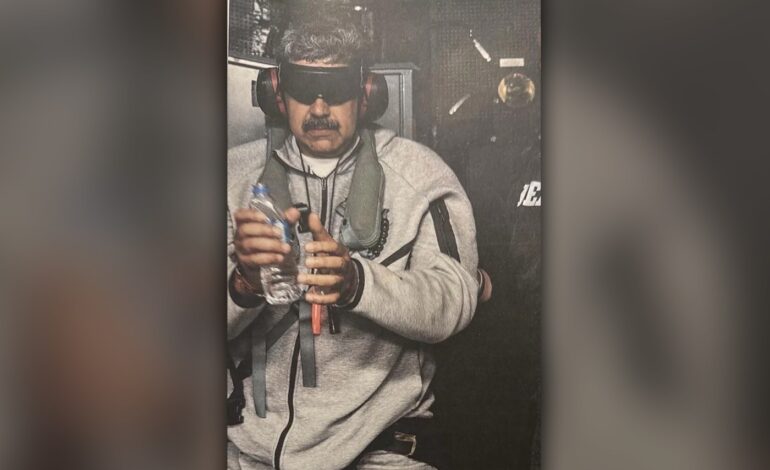

The U.S. government successfully executed a covert operation to arrest Venezuelan President Nicolás Maduro and his wife, Cilia Flores, on narcoterrorism charges on March 15, 2024. This mission, dubbed Operation Absolute Resolve, was conducted by the Department of Defense in collaboration with the FBI, aiming to bring the couple to justice following longstanding allegations of drug trafficking.
According to General Dan Caine, Chairman of the Joint Chiefs of Staff, the operation was executed in the early hours without any military invasion. The Defense Department’s mission involved flying in undetected, landing helicopters, and apprehending the Maduros, who surrendered peacefully. This swift operation took less than two hours from arrival in Caracas to their departure over international waters.
While former President Donald Trump characterized the action as an unprecedented assault, Caine clarified that it was not an act of war or a regime change, which would require Congressional approval. Instead, this was a focused arrest operation aimed at a wanted fugitive with a $50 million bounty on his head. Maduro has faced legal challenges since 2020, culminating in additional charges filed by Manhattan U.S. Attorney Jay Clayton for operating a drug cartel.
The situation in Venezuela remains uncertain following the arrest. Maduro, who presided over controversial elections in both 2018 and 2024, had lost any legitimate claim to leadership but maintained control until now. His potential successor, Vice President Delcy Rodríguez, may find herself navigating a power vacuum as discussions about the country’s future ensue.
Trump’s comments during a press conference at Mar-a-Lago suggested that the U.S. would take an active role in the transitional governance of Venezuela. However, it is unclear if any American troops will remain in the country following the operation. Observers are wary that the absence of military presence could lead to instability or chaos as the political landscape shifts.
Maduro had multiple opportunities to negotiate a peaceful exit from power, including recent communications with Trump. Instead, he attempted to seek refuge in a fortified safe room before being captured. His failure to depart has led him to a flight aboard the USS Iwo Jima and ultimately to a facility at Stewart Air National Guard Base in New York, where he awaits trial.
As this dramatic turn of events unfolds, the implications for Venezuela and its citizens remain significant. The recent developments highlight the complexities of U.S. foreign policy and the challenges of ensuring stability in a country long marked by turmoil.