

Trump’s Influence Reshapes the Role of House Speaker
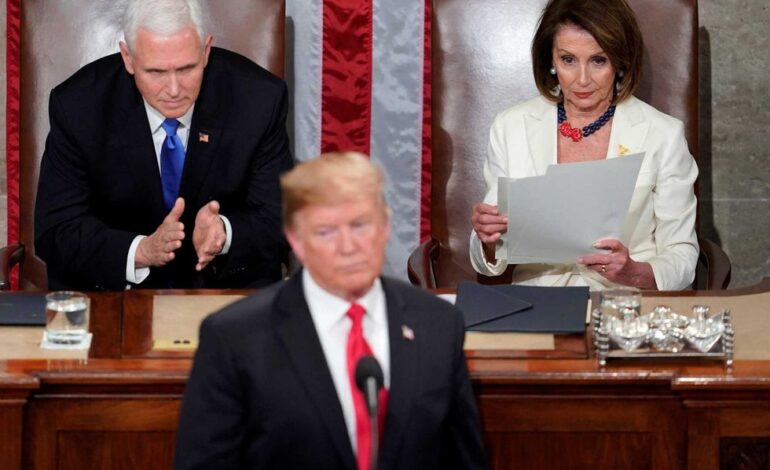

The recent leadership of Mike Johnson as Speaker of the House has raised significant concerns regarding the evolution of this pivotal position in American politics. Johnson’s alignment with former President Donald Trump marks a departure from the original vision set forth by the framers of the U.S. Constitution over two centuries ago. This shift reflects a broader trend toward centralization of power within the legislative branch, fundamentally altering its role and responsibilities.
Historical Context of Congressional Power
When the framers drafted the Constitution in the summer of 1787, they established a clear hierarchy of governmental authority. Article I, which outlines the powers of Congress, emphasizes the importance of a representative legislative branch. It grants Congress the ability to levy taxes, declare war, and impeach officials, positioning it as the primary policymaking body. In contrast, Articles II and III, which detail the responsibilities of the president and the Supreme Court, are comparatively succinct, indicating a preference for a strong legislative role.
The Speaker of the House was intended to serve as a nonpartisan leader, facilitating collaboration among representatives. However, this vision has evolved. Currently, the role of the speaker has become heavily influenced by party dynamics, with Johnson’s leadership reflecting a trend that centralizes authority around party affiliation rather than the broader interests of the House.
Historically, speakers have wielded considerable power. Henry Clay, who served as Speaker in the early 1800s, exemplified this shift. He used his position to advocate for key policy initiatives, such as the War of 1812. Similarly, Thomas Reed in 1890 implemented rules that allowed the Republican majority to dominate the legislative agenda.
The Modern Speaker’s Role
The role of the speaker has continued to evolve, particularly in the 20th century. Joseph Cannon, Speaker from 1903, famously controlled the Rules Committee, allowing him to dictate the legislative process. This trend intensified with Newt Gingrich, who, after becoming Speaker in 1995, expanded the office’s influence by centralizing resources, thereby reinforcing the speaker’s role as a party leader.
Under speakers like Sam Rayburn and Nancy Pelosi, major legislative achievements were realized. Rayburn facilitated the passage of the Marshall Plan and the Interstate Highway System. Pelosi, the first female Speaker, successfully guided the Affordable Care Act through Congress. These leaders demonstrated how a strong speaker could effectively drive party priorities while maintaining the legislative body’s integrity.
Conversely, the challenges of modern governance have exposed vulnerabilities within this evolving role. John Boehner resigned as Speaker in 2015 due to internal party conflicts, illustrating the difficulties in balancing party loyalty with congressional responsibilities. Similarly, Kevin McCarthy faced removal in 2023 for collaborating with Democrats on government funding, highlighting the precarious nature of the position.
As Speaker, Johnson has inherited a powerful office, yet he faces a critical challenge. His recent decision to keep Congress out of session for eight weeks during a government shutdown showcases a prioritization of party interests over the legislative responsibilities outlined in Article I. This absence from legislative activity resulted in a lack of oversight and diminished the House’s power to manage national policy effectively, allowing unchallenged bureaucratic decisions.
This evolving dynamic raises concerns about the future of congressional authority. While a strong party leader can enhance legislative effectiveness, there is a risk that the focus on party loyalty may undermine the foundational principles of representative government established by the Constitution’s framers. The reliance on the Speaker to uphold the House’s authority underscores the ongoing tension between party interests and the essential democratic functions of Congress.