
Netanyahu Urges Tougher Stance on Hamas in Meeting with Trump

Israeli Prime Minister Benjamin Netanyahu is set to meet with President Donald Trump at Mar-a-Lago in Palm Beach, Florida, on Monday, where he is expected to advocate for a more aggressive U.S. stance against Hamas in Gaza. This meeting, part of Netanyahu’s ongoing engagements with the U.S. leader, comes as both leaders navigate a complex relationship marked by mutual dependence despite underlying tensions.
During this latest visit, the Israeli Prime Minister will emphasize the need for a tougher approach towards Hamas, particularly in light of the new advancements in Iran’s ballistic missile program. Netanyahu’s message echoes his earlier visits this year, where he praised Trump as Israel’s staunch ally while pressing for decisive actions against Israel’s adversaries.
Trump’s reception of Netanyahu may be more cautious than in the past. Recent months have seen the U.S. President express unease about certain Israeli military actions, including strikes in Syria. Public sentiment in the United States has shifted, with increasing resistance to deeper involvement in Middle Eastern conflicts. The fragile ceasefire in Gaza, established after Trump’s diplomatic efforts in October, is facing challenges amid ongoing Israeli military operations.
Despite the visible displays of camaraderie, including Trump’s extraordinary suggestion for Israel’s president to pardon Netanyahu amid corruption allegations, their relationship has grown increasingly complicated. Aaron David Miller, a former Middle East negotiator now affiliated with the Carnegie Endowment for International Peace, stated, “I think both of these guys don’t trust one another. I’m not even sure they like one another. But the reality is they need one another.”
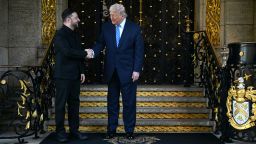
The meeting marks another significant diplomatic engagement for Trump, coming just a day after hosting Ukrainian President Volodymyr Zelensky to discuss peace initiatives. This follows Trump’s journey to Egypt to sign a peace agreement for Gaza, which remains in a precarious state. Key elements of the agreement, including Hamas’ disarmament and the establishment of governance in Gaza, have yet to be finalized.
Trump has proposed the formation of a “Board of Peace” to oversee Gaza’s administration, a concept he described as “one of the most legendary boards ever.” The United States is eager to advance to the next phase of the peace plan, which includes announcing specifics related to governance and the potential deployment of an international stabilization force.
The Israeli government’s reluctance to withdraw from Gaza without Hamas disarming has prompted concerns among some White House advisers. They suspect Netanyahu may be delaying progress on the next phase of the agreement. Anna Kelly, Deputy Press Secretary for the White House, emphasized the strong ties between the U.S. and Israel, stating, “Israel has had no better friend in its history than President Trump.”
Tensions have emerged on various issues, including Israel’s military actions against Hamas leaders in Qatar, a crucial U.S. ally. Trump’s frustration over these strikes was palpable, as they threatened to undermine his peace efforts. He even insisted that Netanyahu apologize to Qatari leaders during a tense Oval Office meeting.
Additionally, differences persist regarding Syria and Lebanon, where U.S. diplomatic efforts clash with Israeli military strategies. Iran remains a significant point of contention, especially following Trump’s decision to target Iranian nuclear facilities. The Israeli government is closely monitoring Tehran’s nuclear enrichment activities and missile advancements.
Despite their differences, Trump and Netanyahu have maintained a public front of unity. Trump has often dismissed the corruption investigations surrounding Netanyahu as distractions from significant wartime efforts. At a speech to Israel’s Knesset in October, he even suggested to President Isaac Herzog the possibility of a pardon for Netanyahu, trivializing the allegations as mere “cigars and champagne.”
As the two leaders prepare for their meeting, the stakes remain high. Both must navigate their respective political landscapes while addressing the challenges that persist in the Middle East. The outcome of their discussions could influence the trajectory of U.S.-Israel relations and the broader geopolitical landscape in the region.