

OpenAI Executive Highlights Three Jobs Facing Automation Risks
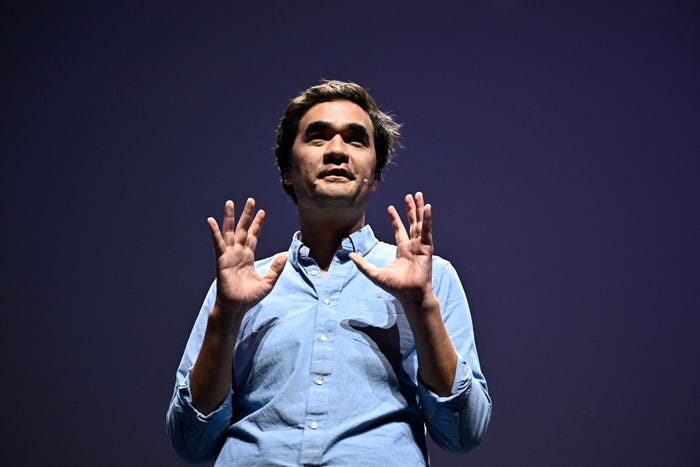

The head of business products at OpenAI, Olivier Godement, has identified three job sectors that could undergo significant automation in the coming years. Speaking on the “Unsupervised Learning” podcast, Godement highlighted the life sciences, customer service, and computer engineering industries as particularly vulnerable to changes driven by artificial intelligence.
Godement pointed to the life sciences sector, especially pharmaceutical companies like Amgen, as a prime candidate for automation. He noted that much of the work involves time-consuming administrative tasks that AI could streamline. “The time it takes from once you lock the recipe of a drug to having that drug on the market is months, sometimes years,” he explained. AI models are capable of efficiently aggregating vast amounts of data and identifying changes in documentation, potentially accelerating the drug development process.
In addition to life sciences, Godement mentioned the automation of roles in customer service. He has been collaborating with T-Mobile, a major telecommunications company in the United States, to enhance customer experiences. “We’re starting to achieve fairly good results in terms of quality at a meaningful scale,” he said, suggesting that the automation landscape in this sector might surprise many within the next few years.
The discussion around automation in the tech industry has gained traction, particularly concerning software engineering. Although Godement acknowledged that AI may not yet completely replace the role of a software engineer, he expressed optimism about the future. “We have a line of sight essentially to get there,” he stated, reflecting the ongoing debate about AI’s role in coding and software development.
A study from Indeed published in October 2023 indicated that tech jobs such as software engineers, quality assurance engineers, product managers, and project managers have been significantly impacted by layoffs and reorganizations. This context underscores the urgency surrounding the automation discussion, as companies increasingly look to integrate AI into their workflow.
The concerns regarding job automation are not limited to these sectors. Geoffrey Hinton, often referred to as the “Godfather of AI,” has also weighed in on the topic, suggesting that while AI capabilities are expanding, certain fields may remain less affected for the time being. Hinton noted that “for mundane intellectual labor, AI is just going to replace everybody.” He specifically mentioned paralegals as being at risk and conveyed apprehension for those working in call centers.
As AI continues to evolve, it appears that various white-collar jobs are on the threshold of transformation. Godement’s insights offer a glimpse into the potential future of work, where automation may redefine roles across multiple industries. While the complete automation of any job remains a complex challenge, advancements in AI are set to change the employment landscape significantly in the near future.