
Yale’s 2025 Highlights: Innovations, Celebrations, and Discoveries
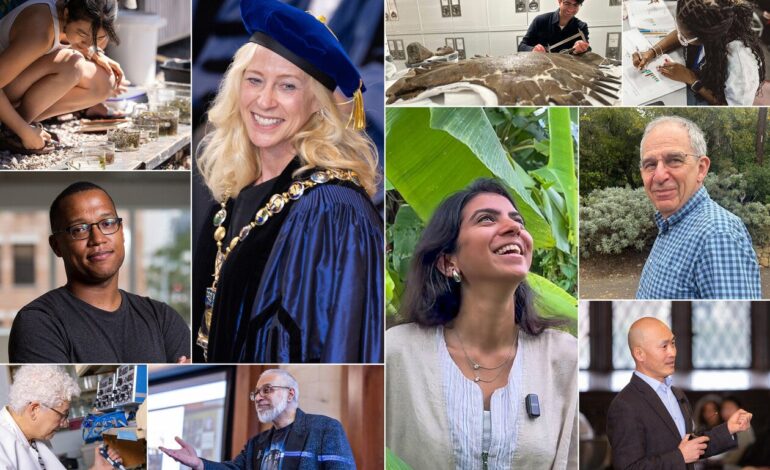

Yale University experienced a remarkable year in 2025, marked by significant milestones, innovative research, and community engagement. The inauguration of President Maurie McInnis in April highlighted the university’s commitment to tradition while embracing future challenges. This event was celebrated with a week of activities that brought together students, faculty, and the city of New Haven.
The year also saw the launch of the “Living Village,” a state-of-the-art student housing complex focused on environmental sustainability. This ambitious project, which took 13 years to complete, stands as a testament to Yale Divinity School’s commitment to ecotheology. It aims to give back more to the environment than it consumes, setting a benchmark for future developments.
In the realm of scientific advancement, groundbreaking research continued to emerge from Yale’s laboratories. A notable study led by Marie Egan from the Yale School of Medicine proposed a revolutionary approach to treating cystic fibrosis (CF). By utilizing in utero gene editing techniques, the researchers demonstrated potential pathways to cure CF and other genetic disorders before birth.
The academic community celebrated extraordinary achievements in chess as well. At Trumbull College, two students, Arthur Guo and Nicolas Checa, earned the prestigious title of chess grandmaster, an accomplishment that is exceptionally rare among college students.
Yale’s commitment to educational outreach also shone through with the Global Teaching Project’s Advanced STEM Access Program. Founded by Matt Dolan (Yale ’82), this initiative provides free Advanced Placement STEM classes to underprivileged students in the Mississippi Delta, illustrating the university’s dedication to increasing access to quality education in underserved communities.
Among the year’s significant scientific contributions, a retrospective on a landmark 1983 study by William Jorgensen, a Sterling Professor of Chemistry, revealed the ongoing impact of his water simulations on drug discovery worldwide. This foundational work continues to influence various fields of research.
As interest in Korean language and culture surged, Yale expanded its course offerings and faculty in this area. Aaron Gerow, chair of the East Asian languages and literatures department, noted the broad support for this growth, which reflects the university’s commitment to diversifying its academic programs.
In December, Craig Crews, a pioneering chemist, discussed the importance of translating innovative research into viable business ventures after his startup, Halda Therapeutics, was acquired by Johnson & Johnson. This trend indicates a growing synergy between academic research and the business sector.
A concerning trend emerged from a decade-long study conducted by Yale researchers, which indicated an increase in cognitive disabilities reported by U.S. adults, particularly among younger demographics aged 18 to 39. This calls for further investigation into the implications of these findings for public health and workplace productivity.
In another intriguing study, Yale researchers examined why memories from infancy are often elusive. Contrary to previous beliefs, findings suggested that the development of the hippocampus does not fully account for the lack of early memories.
Yale’s endeavors also included the establishment of the Center for Civic Thought, aimed at fostering civic engagement and thoughtful discourse among students. Inaugural director Bryan Garsten emphasized the center’s mission to promote responsible public discourse and informed citizenship.
Research published in February highlighted potential immune markers associated with post-vaccination syndrome, shedding light on chronic symptoms reported by some individuals post COVID-19 vaccinations. This study may guide future research and treatment approaches for affected individuals.
The topic of firearm safety was addressed in a Q&A with Megan Ranney, dean of the Yale School of Public Health, who underscored the importance of framing firearm injury as a public health issue. This perspective opens avenues for innovative solutions and community engagement.
The 2025 DeVane Lectures featured esteemed historians David Blight, Joanne Freeman, and Beverly Gage, who explored American identity in anticipation of the nation’s 250th anniversary in 2026. Their course, “America at 250: A History,” engaged students in critical discussions about the evolution of national identity.
In a unique collaboration with the Yale Ancient Pharmacology Program, researchers provided new insights into the medical knowledge of the infamous Roman emperor Caligula, suggesting a complex understanding of medicinal plants.
As the year concluded, Yale’s vibrant community continued to flourish, with an array of initiatives addressing diverse topics from architectural impacts of artificial intelligence to genomic studies on the effects of violence. Each story from 2025 illustrates the university’s ongoing commitment to innovation, education, and community engagement, solidifying its role as a leader in both academia and public service.