


Eos Foundation Urges Massachusetts Schools to Adopt Breakfast in the Classroom
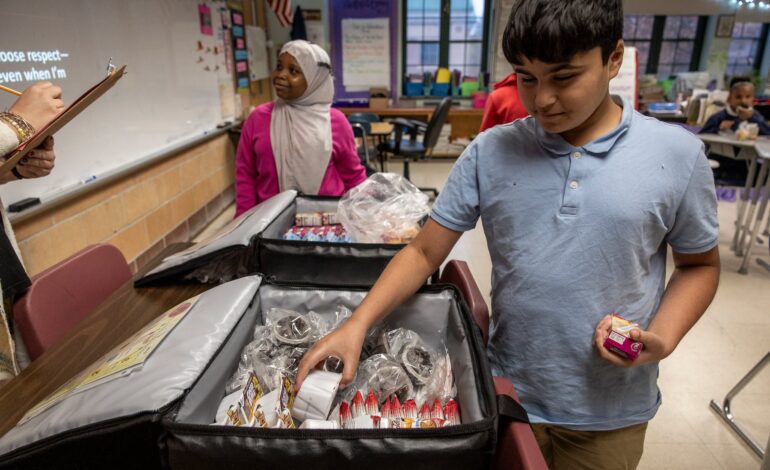

A recent study by the Eos Foundation highlights the urgent need for Massachusetts schools to implement the Breakfast in the Classroom initiative. The report, titled *Ending Hunger in Our Classrooms with Breakfast in the Classroom*, reveals that schools could potentially feed an additional 303,000 students breakfast daily through this program. This change could also attract an estimated $73 million in federal funding to support school meal programs.
The Eos Foundation, a private family trust dedicated to addressing issues of hunger and poverty, has focused on the implementation of this initiative since 2013. Their study uncovers significant disparities in breakfast participation across Massachusetts’ high-poverty schools. While 595,000 students access school lunches each day, only 292,000 partake in breakfast, indicating a substantial “breakfast gap” of over 300,000 students.
In March 2023, Massachusetts passed the School Meals for All legislation, ensuring free meals for all K-12 students. According to Andrea Silbert, President of the Eos Foundation, this legislation opens a critical opportunity to combat childhood hunger in the state. The Foundation is advocating for schools to learn from the successful model established in Springfield Public Schools, which has implemented the Breakfast in the Classroom initiative across its district.
Over the past decade, Springfield has significantly increased breakfast participation, rising from 44% in 2015 to an impressive 84% in 2025. Springfield’s approach includes utilizing increased federal reimbursements to enhance its culinary programs, including a 62,000 square-foot Culinary Center that serves over 19,000 breakfasts daily, with more than 60% of meals prepared from scratch.
Silbert emphasizes the importance of local sourcing, noting that Springfield Public Schools purchases 25% of its food from local farms and businesses. “It’s bigger than just feeding kids; it’s about buying fresh, local food and supporting local companies,” she stated.
The impact of the Breakfast in the Classroom initiative was echoed by Dr. Patrick Tutwiler, Massachusetts Secretary of Education. He praised Springfield’s model for its ability to engage students and incorporate local products. “Every child I met with that day was happy, engaged, and enjoyed their meal,” he remarked.
In contrast, other districts in Massachusetts, such as Chicopee, have seen a decline in breakfast participation, dropping from 77% to 57.3% over the past year. Achieving an 80% participation rate in Chicopee would mean serving an additional 2,066 students and generating an extra $1.05 million in USDA reimbursements.
The Eos Foundation report highlights that high-poverty schools across the state are currently forgoing $73 million in federal funding due to low breakfast participation rates. If all high-poverty schools reached an 80% participation threshold, many of which had previously achieved, Massachusetts could leverage these federal resources to better support its students.
To facilitate the transition to the Breakfast in the Classroom program, the Eos Foundation is offering grants of up to $20,000 per school. The report provides clear recommendations for superintendents, principals, teachers, and legislators on how to effectively implement this program.
For those interested in accessing detailed performance data for individual schools or viewing the full report, the Eos Foundation’s website offers additional resources at eosfoundation.org. This initiative represents a significant step towards addressing food insecurity among students in Massachusetts, ensuring that they have the nourishment needed to thrive academically.