
Business
Small Investors Earn $2.75 Million from Real Estate in 3 Months

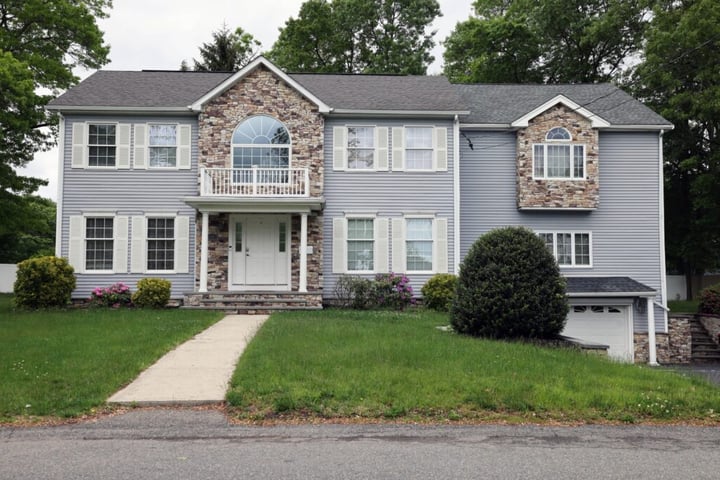
In the third quarter of 2025, small investors utilizing the platform Arrived collectively generated over $2.75 million in dividend income. This income stemmed from fractional shares of income-producing assets and real-estate-backed loans, rather than from owning entire rental properties. The payout represented an approximately 15% increase from the previous quarter during a time when most U.S. savers faced yields of under 1% in traditional savings accounts.
Investors capitalized on a simple strategy: rather than allowing excess cash to sit in low-yield accounts, they allocated as little as $100 per offering into funds and properties that targeted annualized dividends exceeding 4% and 8%. While these investments carry risks and lack the liquidity of cash, they provided significantly greater returns.
Understanding the Income Sources
During Q3 2025, Arrived managed a total of 456 properties across its platform, which included single-family rentals, vacation rentals, and credit investments. The income generated from these assets came from various sources. Individual single-family rental properties paid an average annualized dividend of 4%. However, the actual returns varied based on factors such as rent, expenses, and occupancy rates. Vacation rentals averaged around 2.4% annualized, influenced by seasonal dynamics, with individual property performance varying widely.
In addition to individual properties, Arrived’s pooled funds helped smooth and concentrate cash flows. The Single-Family Residential Fund achieved a 4.2% annualized dividend in that quarter, supported by 56 homes and an occupancy rate exceeding 92%. The Private Credit Fund, which focuses on short-term, first-lien loans to real estate operators, yielded an impressive 8.4% annualized return, backed by over $64 million deployed and 30 new loans initiated during the period.
Investment Strategies and Market Context
What makes these figures particularly noteworthy is the distinct approaches to income generation within the same platform. The Single-Family Residential Fund caters to investors seeking rental-like income with potential long-term appreciation, historically framing this strategy as mid-single-digit dividends complemented by eventual price increases. On the other hand, the Private Credit Fund focuses primarily on interest income, positioning investors as lenders who receive payments on short-term loans secured by residential properties.
As of early 2026, the national average yield for savings accounts hovered around 0.6% APY, with many traditional accounts yielding closer to 0.4%. High-yield accounts that promise better returns often require proactive management, yet many consumers do not take action to move their funds. Against this backdrop, the returns from Arrived’s offerings stand in stark contrast, with the Single-Family Residential Fund providing an average of 4.2% and the Private Credit Fund achieving 8.4% annualized income.
The significant disparity highlights a crucial narrative. While the majority of cash remains stagnant, a segment of investors is willing to assume more risk and sacrifice liquidity for mid- to high-single-digit returns.
The low $100 starting investment threshold is particularly impactful, as it democratizes access to real estate investments. Instead of needing tens of thousands of dollars for a down payment, individuals can diversify their investments across multiple funds or properties. This approach allows them to spread risk and gain insight into dividend behaviors before committing larger amounts of capital.
It is essential to note that while these investments provide an alternative to traditional savings, they do not replace the necessity of an emergency fund. Dividends are not guaranteed, and capital is at risk. However, for those who have established their safety nets and are still earning minimal interest on surplus cash, the figures from Q3 2025 serve as a reminder of an alternative investment landscape. Entry into this market does not require ownership of property or accredited investor status, making it an appealing option for many.
As this trend continues to develop, it will be interesting to observe how small investors adapt and respond to the evolving landscape of real estate investment opportunities.

Italy Stuns Team USA 8-6, Advances to WBC Knockout Stage

Lowe’s Offers Free DEWALT Batteries to Boost Home Improvement Efforts

NFL Offseason Signings: Key Moves and Fantasy Implications for 2026

Team USA Beats Mexico as Skenes and Jax Bring Air Force to Game

Colleges Adapt to Declining Engagement and AI in Learning

Jayda Cheaves Claims Lil Baby and Ari Fletcher Had an Affair

Rachel Campos-Duffy Exits FOX Noticias; Andrea Linares Steps In

Terry Bradshaw Updates Fans on Health After Absence from FOX NFL Sunday

Piper Rockelle Shatters Record with $2.3M First Day on OnlyFans

Rosenior Slams Referee Decision After Chelsea’s 2-2 Draw with Leeds
-
Entertainment2 months ago
Jayda Cheaves Claims Lil Baby and Ari Fletcher Had an Affair
-
Top Stories3 months ago
Rachel Campos-Duffy Exits FOX Noticias; Andrea Linares Steps In
-
Health4 months ago
Terry Bradshaw Updates Fans on Health After Absence from FOX NFL Sunday
-
Top Stories2 months ago
Piper Rockelle Shatters Record with $2.3M First Day on OnlyFans
-
Sports4 weeks ago
Rosenior Slams Referee Decision After Chelsea’s 2-2 Draw with Leeds
-
 Science2 months ago
Harvard Physicist Proposes Cosmic Location for Heaven at 273 Billion Trillion Miles
-
 Sports2 months ago
Leon Goretzka Considers Barcelona Move as Transfer Window Approaches
-
 Top Stories2 months ago
Meta’s 2026 AI Policy Sparks Outrage Over Privacy Concerns
-
 Top Stories2 weeks ago
EASA Issues Urgent Airspace Risk Advisory for Middle East
-
 Top Stories2 months ago
Urgent Update: Denver Fire Forces Mass Evacuations, 100+ Firefighters Battling Blaze
-
 Entertainment1 week ago
SAG Awards 2026 Honors Late Stars in Emotional In Memoriam Segment
-
 Top Stories2 months ago
OnlyFans Creator Lily Phillips Reconnects with Faith in Rebaptism