

Goldman Sachs’ David Kostin Guides Gen Z on Career Success
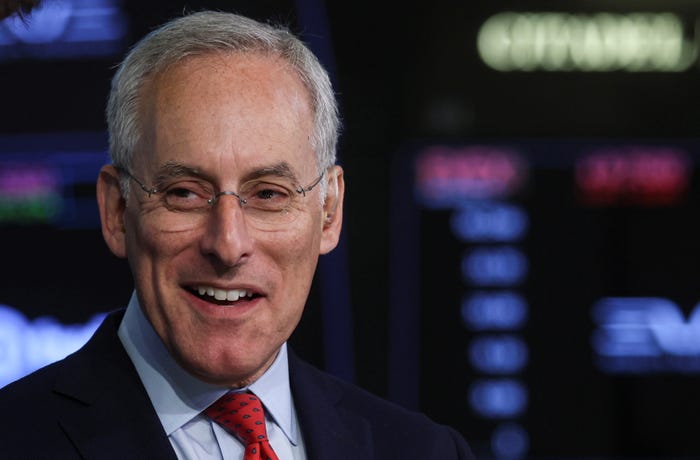

Goldman Sachs’ US equity chief, David Kostin, has shared essential career guidance for young professionals entering the workforce. His advice emphasizes the importance of understanding how individual roles contribute to the broader business landscape. Kostin, who is set to retire this year after decades with the firm, articulated his insights during his final appearance on “Goldman Sachs Exchanges.”
In a rapidly changing work environment, Kostin stated, “Think about one’s role and how that fits into the broader business environment.” He believes that grasping how one’s contributions affect the overall commercial process allows employees to track their growth and adapt as circumstances evolve. This perspective stems from his extensive experience, having joined Goldman Sachs in 1994, where he engaged with various financial entities, including hedge funds and sovereign wealth funds.
Kostin’s guidance underscores that while technical skills are valuable, a profound understanding of clients and market dynamics is crucial for developing sound judgment. He encourages young workers to focus on the impact of their daily tasks rather than merely pursuing job titles.
Adapting to the Future of Work
Gen Z faces unique challenges as they enter a workforce increasingly influenced by technology and artificial intelligence (AI). According to James Ransom, a research fellow at University College London, young professionals should prioritize skills that AI cannot easily replicate, such as judgment, oversight, leadership, and persuasion. Ransom suggests that the most successful Gen Z workers will be those who can effectively manage and enhance AI systems while demonstrating tangible results.
Expanding on this idea, Ethan Mollick, a professor at Wharton, noted that the rapid development of AI often renders specific technical skills obsolete shortly after they are acquired. He suggests that job seekers should identify their unique strengths, allowing AI to handle tasks that are less suited to their capabilities. Mollick refers to this strategy as “task distribution,” which emphasizes the importance of combining deep knowledge in specific areas with a broad understanding of various disciplines, including the humanities.
Looking Beyond Traditional Career Paths
Financial veteran Quentin Nason, a former managing director of investment banking, has raised concerns about the traditional career ladder for new graduates. He highlighted the shrinking availability of graduate schemes, urging young professionals to explore emerging fields in automation, robotics, blockchain, and drones. Nason advised, “Rather than chasing yesterday’s jobs, chase tomorrow’s.”
As the landscape of employment continues to evolve, the guidance from seasoned professionals like Kostin, Ransom, Mollick, and Nason serves as a valuable resource for Gen Z. By focusing on how they fit within their organizations, adapting to technological advancements, and seeking opportunities in innovative sectors, young workers can navigate their careers more effectively in an increasingly complex environment.