


Elon Musk Predicts AI Will Solve US Debt Crisis by 2026
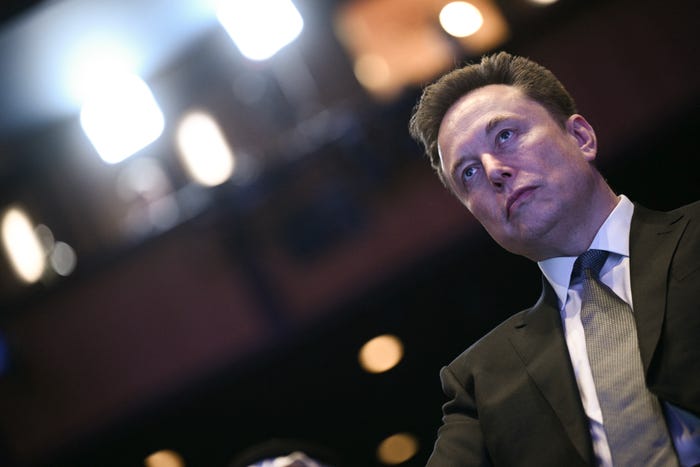

Elon Musk asserts that artificial intelligence (AI) and robotics are crucial to resolving the United States’ escalating debt crisis, which currently stands at an alarming $38.34 trillion. During a recent discussion with investor and podcaster Nikhil Kamath, Musk emphasized that productivity driven by these technologies is the only viable solution to the nation’s financial challenges.
Musk stated, “That’s pretty much the only thing that’s going to solve for the US debt crisis,” suggesting that advancements in AI could lead to significant economic changes, including deflation. He predicted that within three years, the output of goods and services would surpass inflation rates, a shift he believes will revolutionize the economy.
Transforming Labor and Economy
Musk’s vision extends beyond mere economic recovery. He envisions a future in which robots, particularly his Optimus robot, could eliminate poverty and the necessity for human labor. He described this potential outcome as “universal high income,” where productivity is so high that basic needs can be met without traditional work. Musk noted that advancements in AI and robotics could bring society to a point where working becomes optional within the next two decades.
At a Tesla shareholder event last month, Musk reiterated his belief that the Optimus robot could fundamentally change society. “People often talk about eliminating poverty, giving everyone amazing medical care,” he stated, adding that the only path to achieving these goals is through the deployment of the Optimus robot.
In a recent appearance at the US-Saudi Investment Forum, Musk claimed that in the future, traditional currency may become obsolete. “There will still be constraints on power like electricity and mass,” he explained, but he believes money could “stop being relevant.”
Broader Implications of AI
Musk’s comments echo a growing discourse among technology leaders regarding AI’s role in reshaping economies. Sundar Pichai, CEO of Google, recently highlighted AI’s potential for “extraordinary benefits,” while also acknowledging the societal disruptions it may cause. “It will create new opportunities,” Pichai noted, emphasizing the need for society to adapt to changes in the job market.
Investor Vinod Khosla predicted that AI could handle up to 80% of the work across various jobs, which he believes may lead to a decrease in the value of human labor. Khosla advocates for implementing a universal basic income to mitigate potential increases in inequality.
Not all experts share an optimistic view of AI’s socioeconomic impact. Geoffrey Hinton, often referred to as the “godfather of AI,” warned that while AI could generate substantial profits, these gains may disproportionately benefit a select few. He stated that the capitalist system could exacerbate wealth inequality, leading to “massive unemployment.”
As the debate over AI’s future continues, Musk’s assertions highlight both the potential and the challenges that come with integrating advanced technologies into the economy. The next few years will be crucial in determining whether AI can indeed provide a solution to pressing economic issues, including the United States’ growing debt crisis.