

Trump Escalates Venezuela Conflict with CIA Strike on Port Facility
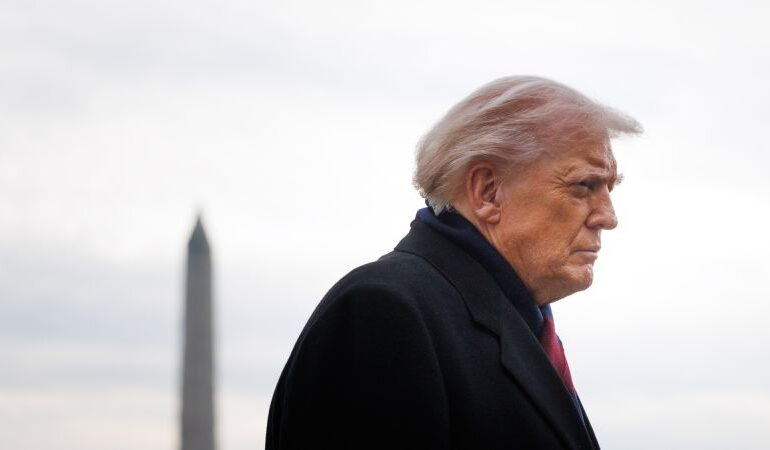

President Donald Trump has intensified the United States’ confrontation with Venezuela following a CIA strike on a port facility. This development raises pressing questions regarding the administration’s strategy and future actions as the situation escalates. Despite the gravity of the circumstances, Trump and his team have not provided a coherent public rationale for their approach, leaving many to speculate about the intended outcomes.
The CIA operation marks a significant escalation in the U.S. response to Venezuela’s ongoing turmoil, which has included diplomatic pressure and strikes against vessels allegedly involved in drug trafficking. The latest strike, which reportedly did not result in fatalities, demonstrates the U.S. willingness to utilize military force on Venezuelan soil, prompting concerns about potential legal and constitutional ramifications.
As Trump moves closer to making critical decisions regarding Venezuela, officials have yet to clarify the duration of the U.S. naval buildup in the Caribbean or outline the roles of American service members in the ongoing operations. Critics, including Rep. Adam Smith, the top Democrat on the House Armed Services Committee, have expressed apprehension about the implications of this strategy. Smith noted, “Where it goes from here… is the thing to be concerned about, because Trump clearly wants to drive Maduro from power.” He questioned the effectiveness of boat strikes and other means, emphasizing the uncertainty surrounding the administration’s next steps.
The uncertainty may serve a strategic purpose for the Trump administration. It is possible that the ongoing military buildup is part of a psychological campaign aimed at destabilizing Maduro’s regime by creating confusion among its leaders. The CIA strike serves as a warning, showcasing the U.S. military’s capabilities while simultaneously raising the stakes in the confrontation.
Although many Venezuelans may not lament the Maduro regime, which has been characterized as corrupt and destructive, the lack of clarity surrounding U.S. intentions has led to skepticism. Some critics argue that the administration’s motives are questionable, as there has been minimal public communication regarding the rationale behind the military actions. This absence of a coherent narrative is concerning, especially in light of past U.S. interventions that resulted in protracted conflicts.
The Trump administration has labeled the Cartel of the Suns, a group allegedly intertwined with Maduro’s government, as a foreign terrorist organization. This designation theoretically grants the U.S. authorization to use military force against Venezuela based on claims of narcoterrorism threatening U.S. security. However, this controversial stance has drawn criticism even from some members of Trump’s party.
The details surrounding the CIA’s operation remain murky. Trump acknowledged a “major explosion in the dock area” but provided few specifics. This lack of transparency raises questions about the administration’s approach to covert actions and its potential impact on future military engagements.
Former Admiral James Stavridis, a senior CNN military analyst, suggested that further covert strikes against drug targets in Venezuela are likely. He indicated that if the current operations are primarily aimed at regime change, Trump may face tough decisions about escalating military involvement, including targeting Venezuelan military assets and leadership.
The use of the CIA for what appears to be relatively straightforward operations compels scrutiny. Covert actions do not necessarily require congressional approval, thus enabling the president to circumvent traditional checks on military power. This development amplifies concerns about the potential for prolonged covert engagements without adequate legal or constitutional oversight.
President Trump’s recent military actions extend beyond Venezuela. On December 25, 2023, he announced strikes against Islamist groups in Nigeria, yet did not provide further details. This pattern of impulsive decision-making adds to the growing perception of a president acting on whims rather than a well-defined strategy.
Despite the administration’s justification that Venezuela is a significant player in the narcotics trade, critics point out that it is not a major route for fentanyl, the substance driving the U.S. drug crisis. This inconsistency undermines the administration’s narrative and raises questions about its true objectives in Venezuela.
The internal logic behind the Trump administration’s actions is complex. A shift toward a U.S.-friendly government in Venezuela could facilitate the return of undocumented migrants to the U.S., a priority for White House Deputy Chief of Staff Stephen Miller. Additionally, Secretary of State Marco Rubio has long advocated for destabilizing leftist regimes in the region, and the ongoing military presence serves to bolster Defense Secretary Pete Hegseth‘s assertive posture.
The administration’s actions align with its recently released national security strategy, which emphasizes a commitment to reasserting the Monroe Doctrine. This strategy advocates for preventing non-Western powers from establishing a foothold in the region and utilizes military force to combat drug trafficking and bolster regional stability.
As the situation unfolds, the lack of transparency and clear communication from the Trump administration raises significant legal and ethical questions. The potential for an open-ended covert conflict, similar to past U.S. engagements, necessitates greater scrutiny and accountability, particularly as American service members remain deployed and at risk in Venezuela.