

SiriusXM Declares ‘Recession Pop’ Playlist of the Year for 2025
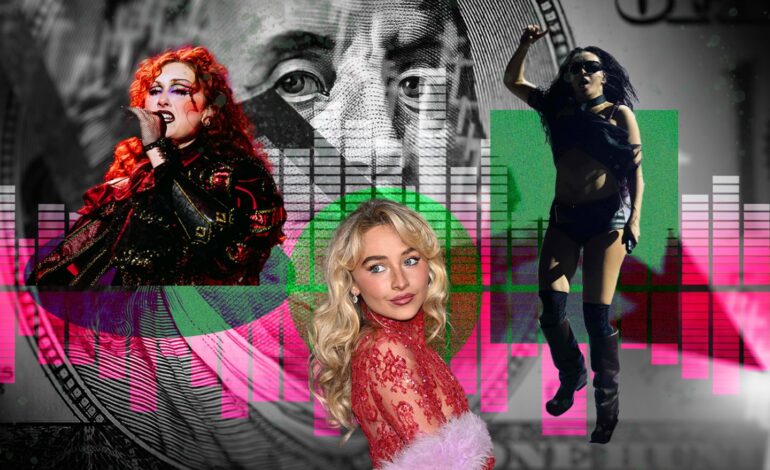

SiriusXM has dubbed “recession pop” the “playlist of the year” for 2025, a genre that has rekindled interest among listeners and sparked discussions about its implications for both music lovers and the broader economy. This term describes a vibrant and upbeat style of pop music that gained prominence during the economic turmoil of the Great Recession.
The genre draws inspiration from artists like Lady Gaga, whose early work features electronic beats reminiscent of those that characterized the late 2000s. Other notable artists associated with this trend include Katy Perry and Kesha, both of whom produced bubblegum pop anthems that captured the public’s imagination during challenging economic times. The concept of recession pop resurfaced on social media platforms such as TikTok and Instagram, gaining traction throughout the summer of 2024 and continuing into 2025.
According to Luminate, an entertainment data analytics platform, the term has become a cultural reference point. Millions of posts on TikTok are tagged with “recession pop,” and SiriusXM’s recognition of the genre highlights its growing significance in the music industry. The label suggests a connection between the popularity of this music and the state of the economy, with some joking that it serves as a “recession indicator.”
While the term has captured the public’s imagination, experts caution against taking it too literally. Erica Knowles, a music psychology professor at Berklee College of Music, notes that the concept of recession pop may provide a sense of comfort during times of uncertainty. As economic pressures such as rising grocery prices and climbing housing costs weigh on consumers, people often gravitate toward familiar music styles that evoke feelings of nostalgia and security.
Knowles explains that the brain categorizes stimuli—like music—into schemas, which help individuals process information quickly. During times of distress, these schemas can become less accurate, leading listeners to associate upbeat music with economic stability. “If anything is to give us a prediction about how to behave, we’ll queue up any information we can take from our environment,” she states. The rise of recession pop, according to Knowles, reflects this psychological tendency to seek comfort in the familiar.
Listeners often relate contemporary artists like Charli XCX, Chappell Roan, and Sabrina Carpenter to the original recession pop artists, citing the high beats per minute and carefree lyrics as common threads. This connection likely stems from their formative years during the genre’s early popularity from 2007 to 2012. Knowles emphasizes that musical tastes formed during adolescence tend to stick with individuals for life.
Despite the popularity of the term, there are notable discrepancies in what qualifies as recession pop. For instance, it raises questions as to why iconic songs like “Poker Face” and “Abracadabra” by Lady Gaga are included, while her 2020 collaboration “Rain On Me” with Ariana Grande is not. The inconsistency suggests that the label may be more about social media trends than an accurate reflection of musical evolution.
Furthermore, many established artists from the original recession pop era, such as the Black Eyed Peas and Jessie J, have not maintained their presence on the charts in 2025. Songs that once defined the landscape of pop music during economic downturns have faded from public consciousness. Even artists like Justin Timberlake and Ne-Yo, who enjoyed significant success during the Great Recession, have not achieved the same level of cultural relevance in recent years.
Ultimately, the phenomenon of recession pop may be an entertaining social media quip rather than a reliable economic indicator. As listeners enjoy the nostalgic beats and catchy lyrics, this genre serves as a lighthearted reminder of the past while offering a temporary escape from current challenges. The music industry may continue to embrace this playful concept, contributing to the creation of enjoyable tracks that resonate with audiences.
For now, the term “recession pop” remains a fascinating discussion point, merging the worlds of music and economics in a way that is both intriguing and, at times, humorous. As the music landscape evolves, it will be interesting to see how artists navigate these influences and what new trends emerge in the coming years.