

Reduce Cable Failures in Robots: Key Strategies for Success
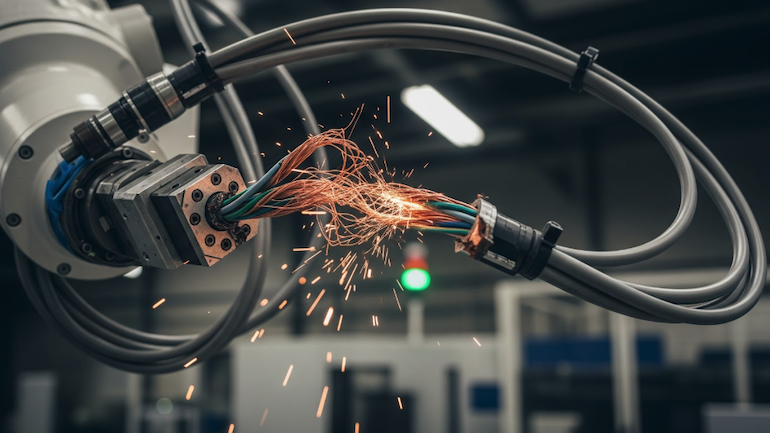

Robotic systems are increasingly integral to modern industries, yet cable failures remain a significant challenge. These cables are responsible for powering motors and ensuring seamless operation in various applications, from robotic arms on assembly lines to autonomous guided vehicles (AGVs) navigating warehouses. When cables fail, the repercussions can lead to costly downtimes and operational inefficiencies. Understanding the causes of cable failures and implementing effective strategies is essential for optimizing robotic performance.
Understanding Cable Failures in Robotics
In robotic applications, cables endure dynamic flexing that significantly differs from their usage in fixed electrical installations. Each motion cycle places stress on both the conductors and insulation. As robots operate thousands or even millions of cycles, this repeated strain can lead to breakdowns unless the cables are specifically designed for such conditions. Selecting the right cable design is crucial for enhancing durability and reducing failures.
Choosing the Right Cable Design
To minimize cable failures, it is essential to use cables engineered for dynamic applications. Not all cables are created equal; those intended for high-flex scenarios require specialized construction. Cables with fine-stranded conductors, as opposed to solid or rough-stranded options, are more pliable and can withstand repeated bending. Many specialized cables feature stranding classes of five or six, suitable for environments with high flex requirements.
The choice of insulation material also plays a critical role. Materials such as polyurethane (PUR) and thermal plastic elastomers (TPE) offer superior flexibility and durability compared to standard PVC. These materials resist abrasion, maintain their properties over a wide temperature range, and endure continuous movement without cracking or degrading. Partnering with a reputable cable assembly manufacturer familiar with robotic applications can further aid in selecting or designing cables tailored to specific movement profiles and environmental conditions.
Optimal Cable Routing and Installation
Even the most advanced cables can fail if improperly installed. The method of routing cables through robotic systems significantly impacts their longevity. It is crucial to minimize stress and strain during movement. Using guides that provide a consistent bend radius can help prevent tangling, excessive twisting, or abrasion against sharp edges.
When installing cables, adhering to the manufacturer’s minimum bend radius specifications is vital. Sharp bends during installation can compromise the internal structure of the cables, leading to premature failure. Additionally, cables should be secured without overly tight clamps or zip ties, which can create stress points. Visualizing cables as essential components requiring space and flexibility can inform better installation practices.
Considerations for Cable Construction
Beyond material selection, the internal construction of cables is a key determinant of their lifespan. Quality manufacturers pay close attention to strain relief at connection points, where many failures occur. Replacing flexible cable bodies with rigid connectors creates weak points, necessitating the use of strain relief boots, molded connections, or specially designed backshells to enhance durability.
Importance of Maintenance and Monitoring
Selecting and installing cables correctly is only part of the equation. Regular maintenance and monitoring are critical for identifying potential issues before they escalate into failures. Conducting routine inspections, particularly in high-cycle areas, can prevent unexpected downtimes. Many organizations discover cable problems only after a complete failure, leading to costly emergency repairs.
In critical applications, utilizing cables with built-in monitoring capabilities or employing thermal imaging inspections can help detect hotspots indicating electrical resistance due to damaged conductors. Advanced robotic systems equipped with predictive maintenance software can track electrical properties and alert operators to signs of degradation before failures occur.
Partnering with Experienced Suppliers
Investing in high-quality cables is essential, but working with knowledgeable suppliers can further enhance outcomes. Collaborating with professionals specializing in industrial and robotic applications can provide insights and strategies that may not be readily apparent. Companies like WellPCB Spain often have engineering staff capable of analyzing movement patterns, environmental factors, and performance requirements to recommend optimal solutions.
Engaging with suppliers who offer testing and verification services ensures that cable selections will meet operational demands before large-scale implementation.
A Comprehensive Approach to Cable Management
There is no single solution to completely eliminate cable failures in moving robots. However, a combination of selecting appropriate cables, implementing intelligent routing and installation techniques, ensuring high manufacturing quality, and maintaining regular oversight can significantly reduce the frequency of failures. By focusing on these factors, organizations can enhance cable longevity, minimize downtimes, and ensure their robotic systems operate smoothly and efficiently.