

Trump’s Economic Claims Face Scrutiny Amid Rising Inflation
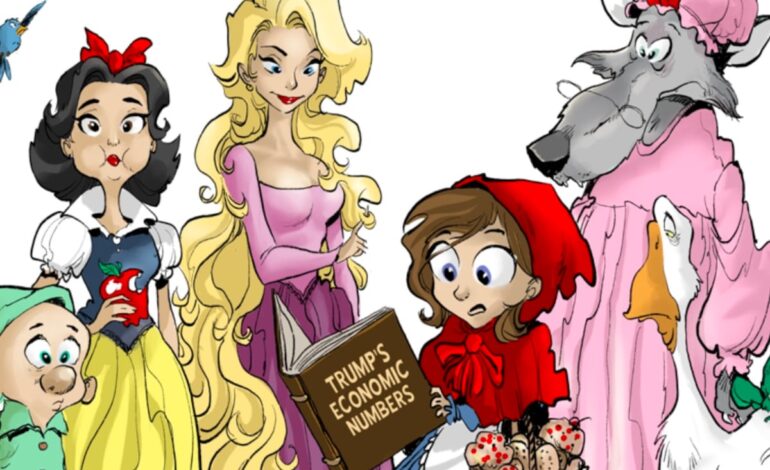

Donald Trump’s portrayal of the U.S. economy has come under significant scrutiny as inflation continues to challenge American consumers. Despite the former president’s claims of strong economic growth, many citizens feel the pinch at grocery stores and gas stations. With rising prices affecting everyday life, a growing number of voters are questioning the narrative presented by Trump and his administration.
The former president recently celebrated an estimated growth rate of 4.3 percent in the last quarter, citing positive metrics. According to data from the Bureau of Labor Statistics, this figure reflects a surge in investment, particularly in artificial intelligence (AI) technologies. However, this reliance on a small number of tech companies, such as Nvidia, raises concerns among economists about the sustainability of this growth. Critics argue that basing economic success on a few flourishing sectors may lead to a precarious situation, potentially creating what some refer to as an AI bubble.
Despite the positive indicators, the reality for many Americans is starkly different. Supermarket prices have surged, leaving consumers frustrated and disillusioned. According to recent consumer surveys, a significant portion of the electorate—approximately 65 percent—is skeptical of the president’s economic narrative. For them, the statistics touted by the administration do not align with their lived experiences, where paychecks no longer stretch as far as they once did.
Trump’s administration has also faced criticism for its handling of inflation-related concerns. When voters express dissatisfaction about rising costs, the former president has been known to downplay these worries. He has held press conferences urging the public to disregard their personal observations, insisting that the economy is thriving. Yet, for many, the numbers speak for themselves. As inflation continues to rise, grocery bills and utility costs have become a daily reminder of the economic challenges facing American households.
The administration’s approach to economic data has also come under fire. Critics note that when revenue figures do not align with the desired narrative, there appears to be a tendency to adjust those figures or dismiss them altogether. For instance, while Trump boasts of record tariff revenues, it is essential to recognize that these figures ultimately translate into higher costs for consumers. Critics argue that the burden of tariffs has led to a complex web of economic consequences, including a $12 billion bailout for struggling American farmers, who have been adversely affected by fluctuating commodity prices.
As the economic landscape evolves, the impact of technological advancements, particularly in AI, cannot be overlooked. While investment in this sector has driven some growth, there are significant concerns about job displacement and rising costs associated with data centers. Many voters are left to wonder whether the administration’s focus on technology is overshadowing the more pressing economic realities faced by the majority of Americans.
In light of these developments, the narrative surrounding Trump’s economy appears increasingly fragile. As inflation persists and consumer confidence wavers, the gap between official statistics and public perception grows wider. With the next election cycle approaching, the former president’s economic claims will likely be a focal point of debate, as voters seek clarity on the true state of the economy and its impact on their daily lives.
Moving forward, the challenge for Trump will be to reconcile the optimistic economic narrative with the realities faced by millions of Americans. Without addressing the concerns of his constituents, the once-promising tale of economic recovery may struggle to find an audience in the face of persistent inflation and rising costs.