

Exoplanets May Shift Rotation Patterns Like Venus, Study Reveals
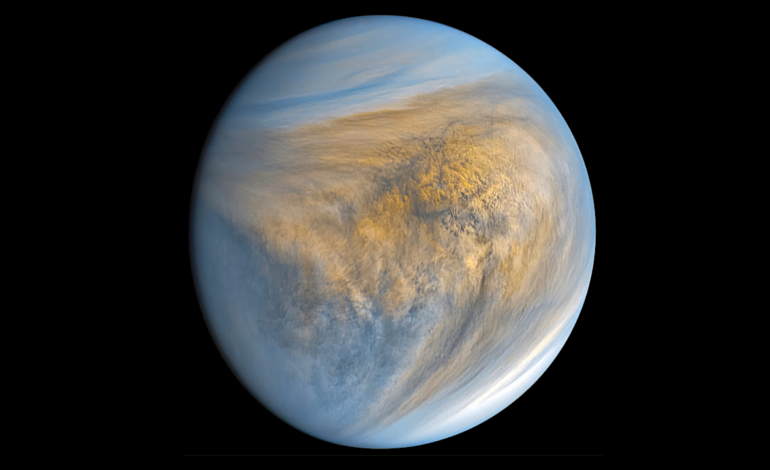

A recent study revisits the rotational dynamics of Venus to explore potential outcomes for exoplanets located within the habitable zone of solar-type stars. Conducted by astrophysicist Sylvio Ferraz-Mello, the research suggests that the evolution of a dense atmosphere can significantly alter a planet’s primordial rotation, potentially leading to a retrograde motion similar to that observed on Venus.
Understanding how atmospheres affect planetary rotation is critical, as it helps scientists predict the long-term behavior of exoplanets. The study highlights that over time, a planet’s rotation may stabilize into either synchronous or asynchronous states due to gravitational and atmospheric influences. The findings were presented at the XIII Taller de Ciencias Planetarias in Montevideo in 2026, where Ferraz-Mello discussed the implications of these results for future explorations in astrobiology.
To analyze these dynamics, the research employs the creep tide theory, which calculates gravitational tidal torque acting on a planet. This theoretical framework helps in understanding the interplay between tidal forces and atmospheric torques. The research further utilizes a mathematical approach to study the differential equations arising from these joint contributions, providing a comprehensive view of how these forces can modify a planet’s rotation.
The results indicate that a planet with a thick atmosphere may gradually shift from a prograde to a retrograde rotation. This transformation can alter several rotational elements, including the planet’s obliquity and equinox positions before and after such a reversal. For Venus, known for its retrograde rotation, this study offers insights into how similar mechanisms might operate on exoplanets.
The results are visually represented through graphs that illustrate variations in rotational elements, such as the rotation period and orbital period, alongside the longitude of the First Equinoctial Point, which marks the intersection of the planet’s equator and orbit. These findings could serve as a guide for understanding the rotational behavior of planets in similar conditions across the universe.
The implications of this study extend beyond theoretical astrophysics. As researchers continue to discover more exoplanets within habitable zones, understanding their dynamics could inform the search for extraterrestrial life. The ability to predict how these planets might behave over time could refine the criteria scientists use to identify promising candidates for further study.
In summary, the research led by Sylvio Ferraz-Mello emphasizes the significance of atmospheric conditions on planetary rotation. The insights gained from Venus’s rotational dynamics could potentially reshape our understanding of exoplanets, offering a new perspective on the factors that could support life beyond Earth. For those interested in the intersection of planetary science and astrobiology, this study provides a vital resource, available for further reading on arXiv under the identifier arXiv:2512.06526.