

AI Revolutionizes Indian Education System with Urgent Innovations
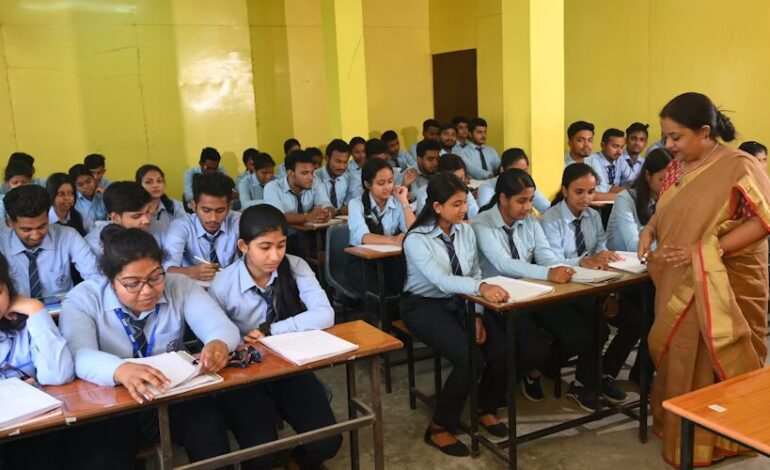

URGENT UPDATE: Artificial Intelligence (AI) is rapidly transforming the educational landscape in India, shifting from traditional rote learning to personalized and innovative teaching methods. As of October 2023, schools and educational platforms are leveraging AI to enhance student engagement, streamline operations, and bridge the educational divide between urban and rural areas.
AI-powered tools are now delivering tailored learning experiences, marking a significant shift in how education is approached. Platforms like BYJU’S and Vedantu are using adaptive learning technologies to customize lessons based on individual student needs and progress. This means that if a student struggles with a specific topic, the system can instantly provide additional resources or exercises, making learning not only more effective but also more engaging.
AI is also redefining content delivery in classrooms. Traditional textbooks are being supplemented with interactive materials that incorporate audio, video, and even virtual reality (VR). For instance, platforms such as Khan Academy and Coursera utilize machine learning to recommend resources based on students’ preferences, significantly improving retention and understanding.
In addition to revolutionizing learning, AI is automating administrative tasks that previously burdened educators. AI-driven grading systems can assess student assignments and provide feedback within minutes, allowing teachers to focus more on teaching rather than paperwork. This automation leads to more accurate assessments and timely insights into student performance.
The impact of AI extends beyond classroom innovations; it is crucial in addressing the educational disparities in India. Students in remote areas can now access high-quality educational resources through AI-driven virtual classrooms and online tutoring services. This access helps overcome geographical barriers that have historically hindered education for many.
AI is equally beneficial for teachers. With intelligent assistant systems, educators can receive real-time insights into student engagement and performance, enabling them to adjust teaching strategies effectively. This support allows for a more interactive and personalized learning environment.
Looking ahead, the future of AI in Indian education is bright. The government is backing digital education initiatives such as SWAYAM and DIKSHA, which aim to enhance the accessibility of education across the country. As AI technology evolves, we can expect advancements like AI chatbots providing 24/7 student support and simulations for training in critical fields like medicine and engineering.
However, challenges remain. Concerns over data privacy and security are mounting, particularly regarding sensitive student information. Additionally, the digital divide could limit access to AI tools for students in less connected areas. Collaboration among the government, educational institutions, and tech companies is essential to address these issues and ensure that all students can benefit from AI advancements.
As these developments unfold, the urgency for stakeholders to adapt and embrace AI in education has never been greater. For students and educators alike, the integration of AI promises not only to enhance learning experiences but also to ensure equitable access to quality education across India.
Stay tuned for more updates as the integration of AI in education continues to evolve. This is a pivotal moment for the future of learning in India, and its implications will be felt for generations to come.