

Unraveling the Mysteries: Science’s Pursuit of the Unknown

During a recent episode of The Will Cain Show, Jared Isaacman, the 15th Administrator of NASA, discussed the ongoing challenges in understanding the universe and life itself. As scientific exploration continues, there remain significant questions that elude even the most dedicated researchers. These mysteries range from the origins of the universe to fundamental aspects of human consciousness.
Key Scientific Questions Yet to be Answered
Despite remarkable advancements in medical science, researchers still grapple with the fundamental causes of aging and the complexities of consciousness. For instance, scientists have yet to pinpoint why humans experience phenomena such as sleepwalking, dreaming, and déjà vu. They also struggle to fully understand the mechanisms behind memory formation, retrieval, and loss, as well as the physical expressions of emotions such as laughter and tears.
The ongoing quest for knowledge extends beyond individual experiences. On a broader scale, the scientific community remains puzzled by the workings of the Earth’s magnetic field, particularly the process behind its reversal approximately every 250,000 years. While it is understood that the planet’s core generates magnetic fields, the trigger for these pole reversals remains a mystery.
The Enigmas of the Universe
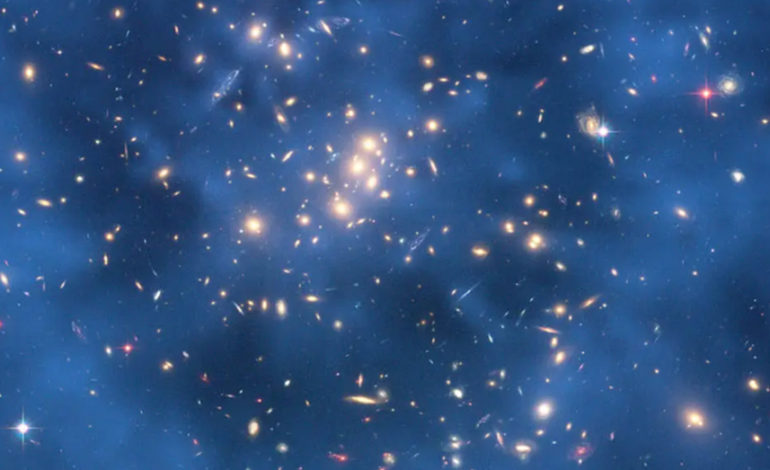
On a cosmic scale, questions about the universe itself loom large. Researchers have yet to determine the nature of dark energy, which constitutes about 70% of the universe and appears to be accelerating its expansion. Similarly, dark matter makes up roughly 85% of all matter, yet its exact composition and properties are still unidentified. Scientists infer its presence through its gravitational effects on visible matter, but its elusive nature challenges understanding.
Current theories regarding the end of the universe predominantly revolve around the concept of “The Big Freeze,” where the universe continues to expand indefinitely until stars extinguish, leaving a cold and dark void. Other hypotheses suggest potential collapse or fragmentation of the universe, but definitive answers remain out of reach.
One of the most profound challenges in theoretical physics is the search for a unified theory that reconciles quantum mechanics with general relativity. This quest, often referred to as “A Theory of Everything,” aims to provide a comprehensive framework for understanding the fundamental forces of nature.
As humanity continues to explore its own existence, scientists estimate that between 6 million and 10 million species remain undiscovered on Earth. This highlights our limited understanding of biodiversity and the complexities of life forms on our planet.
While scientific inquiry may illuminate many aspects of reality, it will inevitably encounter limits when addressing existential questions. Queries such as the reason for existence, the nature of free will, and the essence of life itself provoke deep contemplation beyond empirical science.
In moments of reflection, many turn to spirituality for answers. As stated in Psalm 19:1, “The heavens declare the glory of God; the skies proclaim the work of his hands,” highlighting the intersection of faith and the quest for understanding. Similarly, 1 Corinthians 13:12 expresses the yearning for clarity in the face of mystery: “For now we see through a glass, darkly; but then face to face.”
The journey of uncovering the unknown continues, with humanity standing at the frontier of discovery, poised to explore the vast, uncharted territories of science and existence.