

Urgent Discovery: Scientists Identify 20 New Species in Pacific

BREAKING: Scientists have just announced the discovery of at least 20 new species deep in the Pacific Ocean, igniting excitement in the field of marine biology. This groundbreaking find comes from researchers at the California Academy of Sciences, who retrieved data from 13 autonomous reef monitoring devices off the coast of Guam, which had been collecting vital information since 2018.
Over a two-week period in November, researchers pulled up 2,000 specimens from depths of 180 to 330 feet—an area known as the “twilight zone” of the ocean, where sunlight barely penetrates. This region, often difficult to access due to intense pressure, has revealed 100 species previously unknown to science, with preliminary assessments suggesting the number of new species could soar beyond 20.
According to Luiz Rocha, curator of ichthyology at the California Academy of Sciences, the team is currently analyzing genetic data to confirm these new species. “It’s probably going to be higher than that because one of the things we do is confirm everything with genetics,” Rocha told NPR. He explained that during this rigorous process, some species initially thought to be known may actually turn out to be entirely new, based on genetic differences.
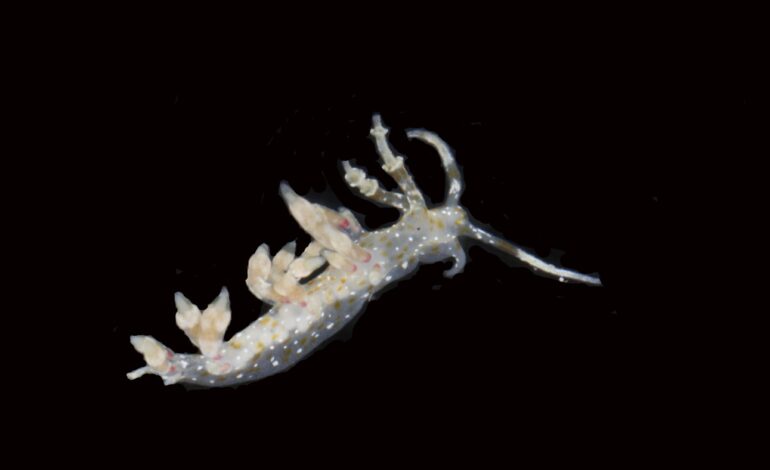
Among the potential new discoveries are various marine life forms, including crabs, sponges, ascidians, and new gorgonians—a type of coral. The expedition has already yielded unexpected surprises, such as a hermit crab using a clam shell for protection, a behavior Rocha found fascinating. “When they first showed me the picture of it, I’m like, ‘What, wait, what is that?'” he recounted.
The team has embarked on a two-year expedition to retrieve an additional 76 deep reef monitoring devices across the Pacific, with plans to study regions in Palau and French Polynesia. This ambitious effort aims to further explore these critical ecosystems, which are home to countless species and serve vital ecological functions.
Rocha emphasized the importance of protecting these deep coral reefs, stating, “They should have as much right to exist as we do.” The urgency to study and conserve these habitats is more critical than ever as climate change and human activities continue to threaten marine biodiversity.
As researchers continue their work, the world watches with anticipation for further revelations from the depths of the Pacific. This significant discovery not only adds to our understanding of marine life but also highlights the pressing need to safeguard these underwater treasures for future generations.