


Study Reveals AI Image Generators Default to 12 Visual Styles
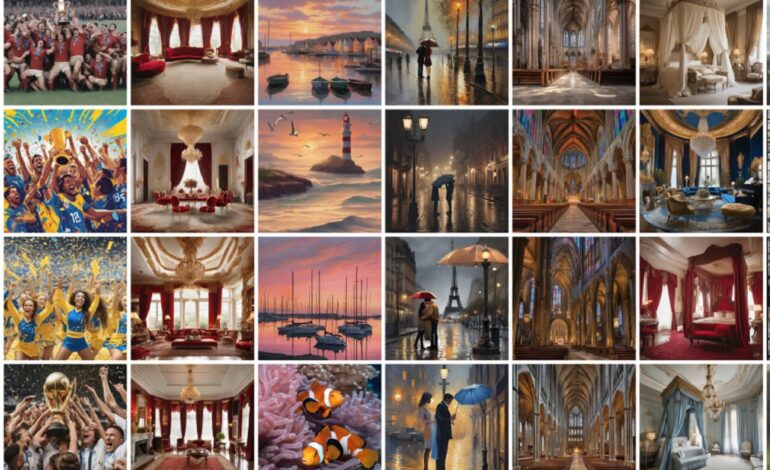

Research has revealed that popular AI image generation models consistently revert to a limited selection of visual styles, despite vast datasets intended to inspire creativity. A study published in the journal Patterns examined two AI models, Stable Diffusion XL and LLaVA, and discovered they default to just twelve distinct motifs when tasked with producing images from gradually shifting prompts.
The researchers designed an experiment akin to a visual game of telephone. The process started with the Stable Diffusion XL model receiving a descriptive prompt, such as, “As I sat particularly alone, surrounded by nature, I found an old book with exactly eight pages that told a story in a forgotten language waiting to be read and understood.” After generating an image based on this prompt, the LLaVA model was instructed to describe the resulting image. That description was then used to create a new image, and this cycle continued for a total of 100 rounds.
As anticipated, the original images quickly transformed into something significantly different, resembling the well-known phenomenon of human telephone games. Nevertheless, researchers were surprised to find that the generated images gravitated towards a mere twelve dominant styles, a phenomenon they likened to “visual elevator music.” Common themes included maritime lighthouses, formal interiors, urban night scenes, and rustic architecture.
Analyzing 1,000 iterations of this experiment revealed an intriguing trend. While the convergence towards these visual motifs typically occurred around the 100th round, the variations that emerged in subsequent rounds still predominantly fell within these familiar styles. Even when researchers switched between different models for both generation and description, the same patterns persisted, suggesting a systemic limitation in creative output.
This limitation highlights a significant contrast between AI and human creativity. In human telephone games, each participant’s personal biases and interpretations lead to diverse outcomes. Conversely, AI models consistently revert to a narrow range of styles, regardless of the initial prompt’s complexity. This raises questions about the inherent creativity of AI systems, as they rely on human-generated data sets that may not reflect the full spectrum of artistic expression.
As the findings indicate, the challenge lies not just in the technology itself but in the data it learns from. The results suggest that while AI can replicate styles effectively, fostering genuine creativity remains a complex endeavor. The implications of this study may serve as a reminder that while AI technology can mimic human artistic preferences, the nuances of taste and originality are yet to be fully captured.