

Lawmakers Push for Nursing Inclusion in Professional Programs List
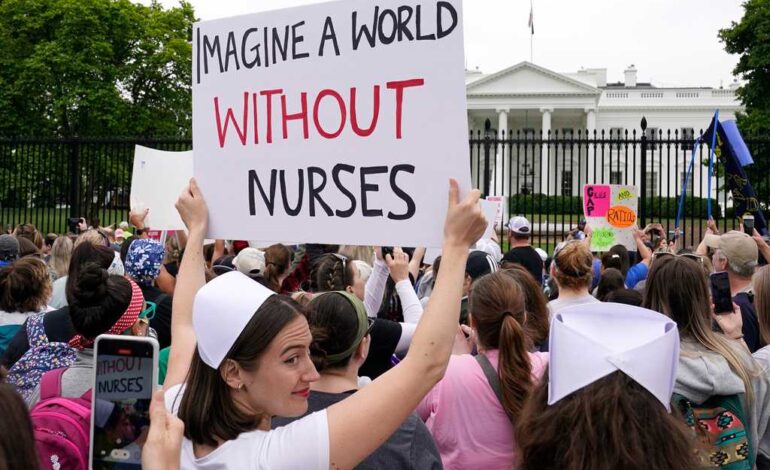

A bipartisan group of lawmakers is advocating for the inclusion of nursing in the U.S. Department of Education’s list of recognized “professional” programs. This push follows the exclusion of nursing from a newly defined category that currently includes fields like medicine, law, and theology. The omission has sparked significant concern among nursing advocates and educators, who argue that it unfairly limits students’ access to necessary financial resources for graduate education.
The Trump administration’s definition allows students in designated professional programs to borrow substantial federal student loans—up to $200,000 in total, which includes an annual limit of $50,000. In contrast, students in other graduate programs face stricter borrowing caps, limited to $100,000 overall and $20,500 per year. This disparity poses challenges for nursing students, particularly those pursuing advanced degrees in high-demand specialties such as nurse anesthetists.
In a letter sent on March 15, 2024, over 140 lawmakers signed a request urging the Education Department to reconsider its stance. Notable signatories include Senator Jeff Merkley (D-Ore.), Senator Roger Wicker (R-Miss.), Representative Suzanne Bonamici (D-Ore.), and Representative Jen Kiggans (R-Va.). They argue that the current borrowing limits will make it increasingly difficult for nursing students to finance their education, particularly in rigorous programs that span multiple terms annually, often exceeding tuition costs of $20,500.
The lawmakers challenge the Education Department’s assertion that few nursing students would be impacted by the proposed caps. For instance, programs for certified nurse anesthetists can cost more than $200,000, and these graduates are vital for providing anesthesia services in rural and underserved areas. As Senator Merkley noted, excluding nursing from the professional programs list may force students into riskier private loans or deter them from pursuing their education entirely.
Representative Ritchie Torres of New York expressed deep concern over the implications of this restrictive classification. He stated, “A restrictive interpretation would undermine our healthcare and education systems, weaken our workforce, and close doors for low-income, first-generation, and immigrant students who make up much of my district.” This sentiment reflects a broader apprehension about the potential workforce shortages in the healthcare sector.
The Trump administration has indicated that the new loan caps aim to motivate colleges to lower tuition costs. The Education Department based its definition of professional degrees on a 1965 law, which provides examples of eligible fields but does not limit the classification to those listed. The current definition includes pharmacy, dentistry, veterinary medicine, chiropractic, law, medicine, optometry, osteopathic medicine, podiatry, theology, and clinical psychology.
The exclusion of nursing and other fields, such as physical therapy and social work, has drawn criticism from various industry organizations. As the Education Department moves forward with the federal rulemaking process, officials have suggested that the proposal may evolve. The outcome of this advocacy may significantly influence the financial landscape for nursing students across the United States, as they navigate the costs of advanced education in an essential and rapidly evolving field.