
Limited Series Like ‘The Beast in Me’ Spark Debate on Quality

Recent limited series such as The Beast in Me and All Her Fault have sparked discussions about the evolving landscape of television. While these shows feature talented actors and captivating storylines, many viewers and critics are questioning their quality and depth, describing them as “prestigey” rather than true prestige television. This rise of what some call “prestige lite” reflects a shift in the industry, as content creators respond to changes in audience expectations and viewing habits.
Television critic James Poniewozik of The New York Times recently examined this phenomenon, coining the term “mid TV” to describe a growing number of series that are visually appealing but lack the complexity and nuance typically associated with high-caliber programming. Poniewozik noted that the abundance of streaming platforms has resulted in an oversaturation of content, leading to many shows that are merely “fine.” For instance, while the first season of Big Little Lies in 2017 was critically acclaimed, its recent adaptation of Liane Moriarty’s work, Apples, has received more lukewarm responses.
As audiences navigate this changing landscape, the second wave of mid TV has emerged, where shows resemble Monets—visually stunning from a distance but lacking detail upon closer inspection. This dilution of quality raises concerns about storytelling integrity. For example, in the series Task, which carries echoes of the acclaimed Mare of Easttown, the climax felt predictable, leaving viewers less engaged and more apathetic about the plot twists.
The series The Beast in Me, which premiered on Netflix on November 13, 2023, showcases notable actors like Claire Danes and Matthew Rhys. Despite its initial popularity, the show has been critiqued for its lack of gripping suspense. Audience members found themselves disengaged by convoluted plot points, such as the use of a mystical therapist’s office that blurred the lines between reality and imagination.
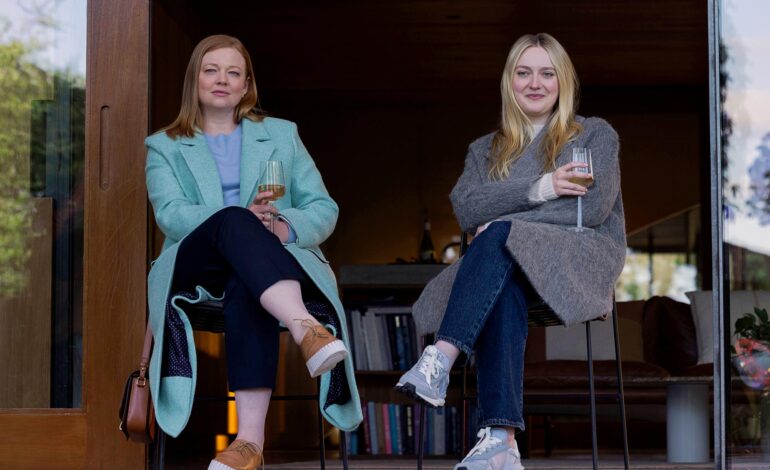
Similarly, All Her Fault, featuring Sarah Snook and Dakota Fanning, attempts to tackle significant themes regarding the dynamics of domestic relationships. However, the show’s execution has been criticized for its heavy-handed approach, often sacrificing subtlety for overt exposition. Critics argue that the narrative lacks the depth necessary to resonate meaningfully with viewers, relying instead on contrived drama to maintain interest.
In contrast, some series embrace their identity without attempting to masquerade as prestige television. For example, All’s Fair, with its campy aesthetic and self-awareness, stands apart from the mid TV phenomenon. Similarly, Hunting Wives has gained attention for its unapologetic approach to storytelling, merging elements of reality television with scripted drama.
The current landscape of television invites reflection on audience expectations. As viewing habits shift, with many opting for binge-watching over traditional viewing patterns, there is a growing concern about the sustainability of quality storytelling. The industry faces the challenge of producing engaging content that meets the demands of a diverse audience while not compromising artistic integrity.
As Erin Strecker, deputy executive editor, points out, the nature of mid TV reflects a need for more content across various platforms. This demand has resulted in shows that, while visually appealing and featuring well-known actors, often lack the narrative depth that once defined prestige television. The challenge lies in recalibrating expectations, recognizing these productions as entertaining yet average rather than flawed attempts at high art.
Ultimately, the evolving definition of quality in television requires a nuanced understanding. While not every series can achieve the excellence of past hits, the sheer volume of content available today offers viewers a variety of experiences. The ability to engage audiences, even in the realm of mid TV, is still a testament to the creativity and dedication of writers and performers. As viewers, perhaps the best approach is to appreciate the diversity of storytelling available, regardless of its categorization.