

Pearl Harbor Day: Remembering the First Targets of the Attack

UPDATE: On this significant day, we reflect on the December 7, 1941 attack on Pearl Harbor, which catalyzed America’s entry into World War II. The surprise assault lasted approximately 90 minutes, resulting in over 3,000 casualties among military personnel and civilians. This historic moment reminds us of the critical importance of the U.S. airfields that were the first targets of the attack.
At 7:48 a.m., a wave of 181 Japanese planes began bombarding airfields in Oahu, aiming to incapacitate American defenses before a potential counter-offensive. The assault was methodically planned, with a second wave of 170 aircraft striking just an hour later. The attacks concluded before 10 a.m., leaving a devastating mark on the U.S. military.
Among the airfields targeted were Wheeler Air Field, Hickam Field, Bellow’s Field, Kaneohe Naval Air Station, Ewa Marine Air Station, and Ford Island Naval Air Base. Despite having 402 American aircraft stationed in Hawaii, only eight pilots managed to take off during the chaos, with six credited for downing enemy planes.
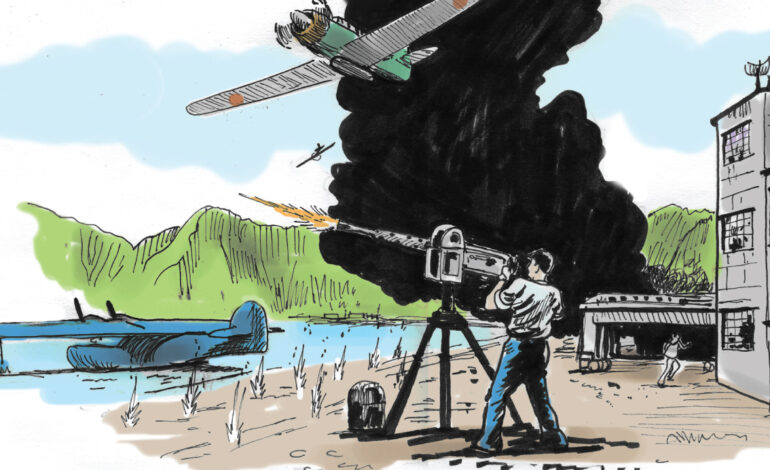
One of the most heroic figures of that day was Chief John Finn, who defended Kaneohe Bay. His bravery earned him the first Medal of Honor awarded in World War II. Finn, despite sustaining multiple wounds from enemy fire, operated a machine gun and fought back against the attackers. His extraordinary actions serve as a testament to the courage displayed that day, and he remained in service until his retirement in 1956.
The toll of the attack was staggering: the U.S. suffered 2,341 military dead and 49 civilian fatalities, while Japan lost 64 personnel in the assault. A total of 188 American aircraft were destroyed, and 159 were damaged. In contrast, Japan lost just 29 planes and 74 were damaged.
Today, the Pearl Harbor Aviation Museum stands as a poignant reminder of this historic event. Opened on December 7, 2006, the museum occupies vital locations on Ford Island, showcasing over 50 aircraft, including a B-17 Flying Fortress and a B-52 Stratofortress. It has undergone significant expansions and was named an affiliate of the Smithsonian Institution in 2012.
Visitors can explore the museum’s historic Operations Building, which played a crucial role during the attack and has been designated a National Historic Landmark. The building, once in disrepair, has been restored, allowing guests to gain insight into the events of that fateful day.
As we commemorate Pearl Harbor Day, we honor the sacrifices made by countless individuals during the attack. With only five of the fifteen Medal of Honor recipients from that day still alive, their stories remain vital to understanding the impact of this historic event. As we reflect on the past, we also look to the future, ensuring that the lessons learned from Pearl Harbor resonate for generations to come.
Stay tuned for further developments as we remember this pivotal moment in history.